
Can I Work With Rheumatoid Arthritis?
TELL US WHAT HAPPENED SO WE CAN HELP. FREE CONSULTATION

Contact Us About Your Case
FREE Consultation Today.
Can I Work With Rheumatoid Arthritis?
Many people with rheumatoid arthritis want to keep working as long as they can. Some people are able to continue working with rheumatoid arthritis when symptoms are controlled, flares are limited, and job duties are compatible with their physical limitations. Others reach a point where joint pain, swelling, stiffness, fatigue, hand problems, medication side effects, or unpredictable flares make full-time work unrealistic.
The question is not simply whether you have rheumatoid arthritis.
The better question is:
Can you work reliably, safely, and consistently despite rheumatoid arthritis?
Rheumatoid arthritis does not automatically qualify someone for Social Security Disability benefits. Social Security evaluates how the condition affects the ability to perform work activities such as standing, walking, lifting, carrying, reaching, handling, fingering, concentrating, maintaining pace, attending work, and completing a full workday.
Rheumatoid arthritis may affect work when it causes:
- joint pain
- joint swelling
- morning stiffness
- hand and finger problems
- reduced grip strength
- difficulty typing or writing
- difficulty standing or walking
- fatigue
- flares
- medication side effects
- immune suppression
- missed workdays
- inability to sustain full-time work
This guide explains when a person may still be able to work with rheumatoid arthritis, when RA may become disabling, how Social Security evaluates RA work limitations, and what evidence may help support a disability claim.

What Is Rheumatoid Arthritis?
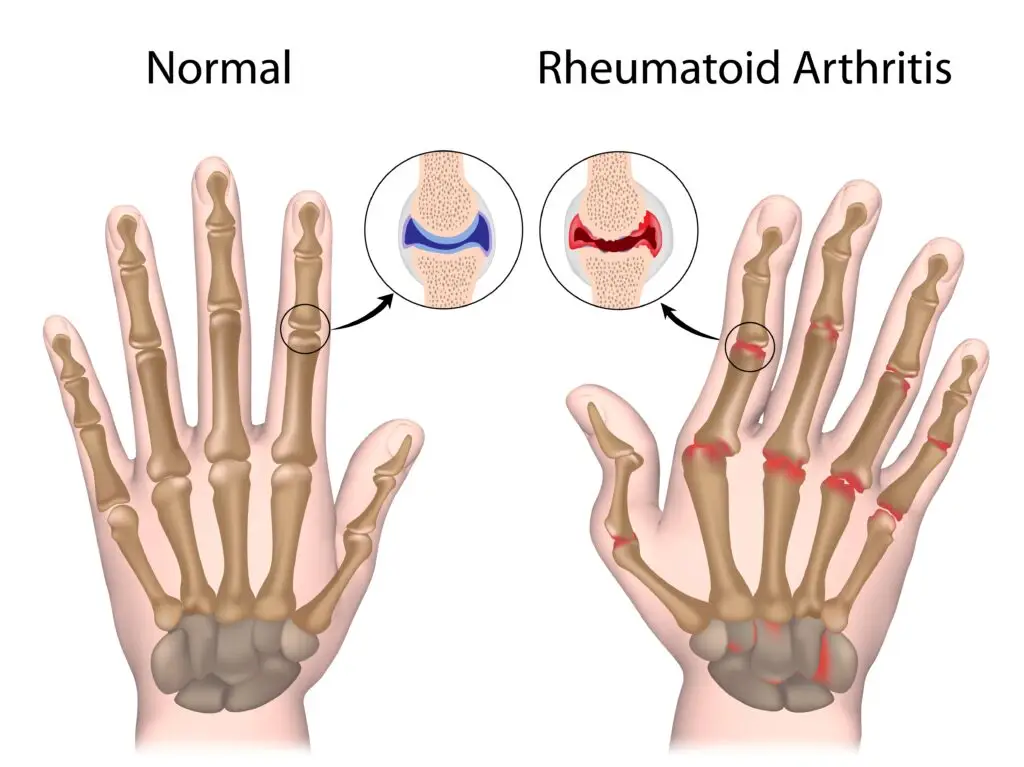
Rheumatoid arthritis, often called RA, is a chronic autoimmune disease that causes inflammation in the joints. Unlike ordinary wear-and-tear arthritis, rheumatoid arthritis involves the immune system attacking the body’s own tissues.
RA commonly affects the:
- hands
- fingers
- wrists
- elbows
- shoulders
- knees
- ankles
- feet
- neck in some cases
Rheumatoid arthritis may cause:
- pain
- swelling
- stiffness
- warmth in the joints
- reduced range of motion
- fatigue
- weakness
- flares
- joint deformity over time
- difficulty using the hands
- difficulty standing or walking
For disability purposes, the issue is not just the diagnosis. The issue is how rheumatoid arthritis affects the ability to work on a regular and continuing basis.
Can You Work With Rheumatoid Arthritis?
Yes, some people can work with rheumatoid arthritis. Whether you can work depends on the severity of your symptoms, your treatment response, your job duties, and your ability to function consistently over time.
A person with rheumatoid arthritis may be able to keep working if:
- symptoms are mild or well controlled
- flares are rare
- pain does not significantly interfere with job duties
- hand function remains strong enough for required tasks
- standing and walking are not severely limited
- fatigue is manageable
- medication side effects do not interfere with work
- the job allows flexibility during bad days
- accommodations are effective
A person may have more difficulty working if RA causes:
- severe morning stiffness
- swollen hands or wrists
- reduced grip strength
- difficulty typing, writing, or using tools
- difficulty standing or walking
- inability to lift or carry reliably
- frequent flares
- severe fatigue
- medication side effects
- repeated infections from immune-suppressing medications
- missed workdays
- inability to complete a full workday
Social Security looks at whether rheumatoid arthritis prevents full-time competitive employment, not whether a person can perform limited activities at home or function briefly on a good day.
When Does Rheumatoid Arthritis Make Working Difficult?
Rheumatoid arthritis can make working difficult when joint inflammation, pain, stiffness, fatigue, and flares interfere with ordinary job demands.
Work often requires more than showing up. Many jobs require repeated hand use, standing, walking, lifting, carrying, sitting in one position, interacting with others, maintaining pace, and attending consistently.
RA may interfere with work when symptoms limit:
- typing
- writing
- gripping
- reaching
- lifting
- carrying
- standing
- walking
- climbing stairs
- staying on task
- maintaining pace
- attending work consistently
- completing full workdays
A person may appear functional during a short medical appointment but struggle to sustain work activity over an eight-hour day, five days a week. That difference matters in a disability claim.
Rheumatoid Arthritis and Hand Problems at Work
Hand limitations are one of the most important issues in rheumatoid arthritis disability claims.
RA may affect the hands by causing:
- swollen fingers
- painful knuckles
- wrist pain
- reduced grip strength
- difficulty making a fist
- difficulty pinching
- an inability to open jars or containers
- difficulty holding a pen
- reduced typing ability
- difficulty using a mouse
- difficulty buttoning clothing
- dropping objects
- reduced fine motor control
Hand limitations can affect both physical and sedentary jobs.
A person may struggle with jobs involving:
- computer work
- typing
- writing
- filing
- customer service
- healthcare
- food service
- cashier work
- warehouse work
- manufacturing
- assembly
- cleaning
- tool use
- driving
- childcare
- office work
This is important because Social Security may assume a person can do sedentary work if standing and walking are limited. But many sedentary jobs still require frequent handling, fingering, keyboarding, writing, and reaching.
Rheumatoid Arthritis and Morning Stiffness
Morning stiffness is common in rheumatoid arthritis. For some people, stiffness improves after moving around. For others, stiffness may last for hours and interfere with getting ready for work, commuting, and beginning job duties on time.
Morning stiffness may affect work by causing:
- late arrivals
- slow start to the workday
- difficulty dressing
- difficulty driving
- limited typing ability early in the day
- difficulty gripping objects
- difficulty walking
- reduced productivity
- need for delayed start times
- missed work during severe flares
If morning stiffness is severe or persistent, it should be documented in medical records and explained in functional terms.
Rheumatoid Arthritis and Fatigue at Work
Fatigue is often one of the most disabling symptoms of rheumatoid arthritis. RA fatigue can come from inflammation, chronic pain, poor sleep, anemia, medication effects, depression, or the effort required to move through the day with pain and stiffness.
RA fatigue may affect work by causing:
- reduced stamina
- slower pace
- need for rest breaks
- poor concentration
- difficulty completing tasks
- inability to work full shifts
- inability to work consecutive days
- recovery time after activity
- missed work after flares
Fatigue can be disabling even when joint pain is not the only problem. Social Security should consider whether fatigue prevents sustained work throughout a normal workday and workweek.
Rheumatoid Arthritis and Flares
Rheumatoid arthritis often involves flares. During a flare, joint pain, swelling, stiffness, fatigue, and weakness may become much worse.
Flares may cause:
- severe hand pain
- swollen joints
- inability to grip
- difficulty walking
- increased fatigue
- poor sleep
- reduced concentration
- need for medication changes
- doctor visits
- missed workdays
- inability to complete daily tasks
A person may function on some days but still be unable to maintain full-time work if flares are frequent, unpredictable, or severe.
Social Security should evaluate whether the person can work reliably over time, not just whether they can function during a better period.
Rheumatoid Arthritis and Standing Limitations
RA may affect the knees, ankles, feet, hips, or spine. This can make standing difficult.
Standing limitations may affect jobs involving:
- retail
- food service
- healthcare
- security
- teaching
- manufacturing
- warehouse work
- assembly work
- cleaning
- maintenance
- construction
- delivery
A person with RA may need to sit frequently, avoid prolonged standing, use supportive footwear, limit walking, or reduce physically demanding duties.
If standing is limited, medical records should describe how long the person can stand and what symptoms occur with prolonged standing.
Rheumatoid Arthritis and Walking Limitations
Walking limitations may occur when RA affects the feet, ankles, knees, hips, or overall stamina.
RA may limit walking because of:
- foot pain
- ankle swelling
- knee pain
- hip pain
- fatigue
- weakness
- poor endurance
- balance problems
- morning stiffness
- flares
Walking limitations may affect jobs that require moving throughout a workplace, climbing stairs, walking from a parking lot, reaching restrooms, attending meetings, or responding to workplace demands.
Even sedentary work may be affected if the person cannot safely and reliably move around the workplace.
Rheumatoid Arthritis and Lifting or Carrying
RA may limit lifting and carrying because of pain, swelling, weakness, reduced grip strength, shoulder involvement, elbow pain, wrist pain, or fatigue.
Work restrictions may involve limits on:
- heavy lifting
- frequent lifting
- carrying objects while walking
- pushing
- pulling
- overhead work
- repetitive exertion
- gripping tools or handles
- carrying files or supplies
These restrictions are especially important for people whose past work involved construction, warehouses, delivery, healthcare, retail stocking, manufacturing, childcare, cleaning, or food service.
Rheumatoid Arthritis and Reaching
RA may affect the shoulders, elbows, wrists, and hands. This can limit reaching overhead, reaching in front, or reaching away from the body.
Reaching limitations may interfere with:
- stocking shelves
- filing
- lifting supplies
- patient care
- cleaning
- assembly work
- tool use
- driving
- computer work
- overhead tasks
- kitchen or food preparation work
If shoulder, elbow, wrist, or hand symptoms limit reaching, those restrictions should be included in the RFC analysis.
Rheumatoid Arthritis and Sedentary Work
Some people assume that if RA prevents physical work, the person can still do a desk job. That is not always true.
Sedentary jobs still require:
- regular attendance
- sitting upright
- using the hands
- typing
- writing
- using a mouse
- answering phones
- maintaining pace
- concentrating
- interacting with supervisors and coworkers
- completing a full workday
Rheumatoid arthritis may prevent sedentary work if the person:
- cannot type or write reliably
- cannot use the hands frequently
- needs excessive breaks
- has severe fatigue
- has frequent flares
- misses too much work
- struggles to maintain pace because of pain
- cannot sit comfortably because of stiffness
- cannot complete a full workday
A strong disability claim should explain why even seated work is not realistic when hand limitations, fatigue, flares, or pain interfere with basic job demands.
Rheumatoid Arthritis and Physical Work
RA may prevent physical work earlier than sedentary work because physical jobs often require lifting, carrying, standing, walking, climbing, bending, reaching, gripping, or repetitive activity.
RA may interfere with jobs requiring:
- heavy lifting
- frequent lifting
- prolonged standing
- frequent walking
- climbing
- crouching
- kneeling
- reaching
- tool use
- repetitive hand use
- fast-paced production
- patient care
- cleaning
- warehouse work
- food service
- childcare
- manufacturing
- retail stocking
- construction
A person with RA may be unable to return to past work if that work required physical strength, endurance, or hand function that the condition has taken away.
Rheumatoid Arthritis and Past Work
Social Security considers whether a person can return to past work.
Rheumatoid arthritis may prevent past work involving:
- lifting and carrying
- standing most of the day
- walking throughout the day
- repetitive hand use
- typing or writing
- gripping tools
- overhead reaching
- fast pace
- high productivity demands
- patient care
- childcare
- warehouse duties
- production work
- construction
- cleaning
- food service
- retail
The more physically demanding or hand-intensive the past work, the more important RA-related restrictions may become.
Rheumatoid Arthritis, Age, and Vocational Factors
Social Security also considers age, education, and work history.
This can be important for older workers with rheumatoid arthritis.
For example:
- Workers over 50 with a history of physical labor may have fewer realistic job options.
- A person with limited education may have fewer transferable skills.
- People with severe hand limitations may be unable to perform many sedentary jobs.
- A person who cannot sustain attendance, pace, or full workdays may be unable to perform competitive work at any exertional level.
The medical evidence must still support the functional restrictions.
Rheumatoid Arthritis and Residual Functional Capacity
Residual Functional Capacity, or RFC, is Social Security’s assessment of what a person can still do despite medical limitations.
In a rheumatoid arthritis claim, RFC limitations may involve:
- limited lifting
- limited carrying
- reduced standing
- no walking
- limited sitting during severe stiffness
- reduced reaching
- limited handling
- limited fingering
- restrictions from gripping
- no repetitive hand use
- limited climbing
- limited kneeling, crouching, or crawling
- need to alternate positions
- reduced pace due to pain or fatigue
- need for rest breaks
- absences from flares
- medication side effects
- inability to complete a full workday
A strong RA disability claim explains how symptoms translate into work restrictions.
For example:
- Hand swelling may limit typing, writing, gripping, and handling.
- Wrist pain may limit tool use and computer work.
- Knee or foot pain may limit standing and walking.
- Shoulder pain may limit reaching.
- Fatigue may reduce pace and attendance.
- Flares may cause absences.
- Medication side effects may affect stamina, infection risk, or concentration.
Can You Work Full-Time With Rheumatoid Arthritis?
Some people can work full-time with rheumatoid arthritis. Others cannot.
The key question is whether the person can work on a regular and continuing basis. Full-time work generally requires the ability to sustain activity throughout a normal workday and workweek.
A person with RA may struggle with full-time work if they have:
- severe joint pain
- significant hand limitations
- persistent swelling
- prolonged morning stiffness
- frequent flares
- severe fatigue
- difficulty standing or walking
- medication side effects
- immune suppression and infections
- excessive absences
- inability to maintain pace
- inability to complete a full workday
Being able to perform limited chores, attend appointments, or function briefly on a good day does not necessarily mean a person can sustain full-time competitive employment.
Can You Work Part-Time With Rheumatoid Arthritis?
Some people with rheumatoid arthritis can work part-time but not full-time. This may happen when a person can function for limited periods but cannot sustain a full schedule.
A person may be limited to part-time activity because of:
- fatigue
- pain
- swelling
- hand problems
- need for rest after activity
- medication side effects
- flares
- doctor appointments
- difficulty working consecutive days
For Social Security Disability, the issue is usually whether the person can perform substantial gainful activity on a sustained basis. Part-time work may or may not affect a disability claim depending on earnings, hours, limitations, and circumstances.
If a person tries to work but cannot sustain the job because of RA, that failed work attempt may be important evidence.
Should I Quit Working Because of Rheumatoid Arthritis?
This is a medical, financial, and legal decision. A person should not quit work based only on a diagnosis.
Before stopping work, it may help to consider:
- what your doctor says about your restrictions
- whether your job worsens symptoms
- whether accommodations are possible
- if flares are becoming more frequent
- whether absences are becoming excessive
- whether hand problems prevent essential job duties
- if fatigue prevents full shifts
- whether medication side effects affect safety or reliability
- whether your earnings affect SSDI or SSI eligibility
- if your medical records document your work limitations
Our social security disability lawyers can help evaluate how RA-related work problems may affect a potential Social Security Disability claim.
Workplace Accommodations for Rheumatoid Arthritis
Some people with rheumatoid arthritis may continue working with accommodations. Possible accommodations may include:
- ergonomic keyboard or mouse
- voice-to-text software
- modified duties
- reduced lifting
- ability to sit or stand as needed
- flexible schedule
- later start time for morning stiffness
- reduced repetitive hand use
- closer parking
- more frequent breaks
- remote work if job duties allow
- modified tools
- reduced standing or walking
- time off for infusions, injections, appointments, or flares
Accommodations are not always available or effective. If accommodations do not allow a person to work reliably, the person may need to consider whether disability benefits are appropriate.
What Jobs Are Harder With Rheumatoid Arthritis?
Rheumatoid arthritis may make certain jobs especially difficult, particularly jobs involving repetitive hand use, physical labor, prolonged standing, or high production demands.
Difficult jobs may include:
- construction
- warehouse work
- factory work
- manufacturing
- cleaning
- food service
- delivery
- retail stocking
- cashier work
- healthcare
- nursing assistance
- childcare
- dental or medical assisting
- assembly work
- hair styling
- auto repair
- maintenance
- landscaping
- office jobs requiring heavy typing
The exact limitations depend on the person’s symptoms, joints affected, treatment response, flares, and fatigue.
What Jobs Might Be Easier With Rheumatoid Arthritis?
Some people with mild or controlled RA may do better in jobs that are:
- flexible
- low exertion
- not fast-paced
- not physically demanding
- climate-controlled
- low stress
- compatible with breaks
- compatible with ergonomic equipment
- limited in repetitive hand use
- limited in standing and walking
However, even easier jobs may be unrealistic if RA causes severe fatigue, frequent flares, hand limitations, medication side effects, or excessive absences.
Rheumatoid Arthritis Medications and Work Limitations
Medication history can help show ongoing treatment, but taking medication alone does not prove disability.
Common RA treatments may include:
- NSAIDs
- steroids
- methotrexate
- hydroxychloroquine
- sulfasalazine
- biologic medications
- JAK inhibitors
- infusion medications
- pain medications
- physical therapy or occupational therapy
Examples may include:
The key issue is whether symptoms remain work-limiting despite treatment.
Medication Side Effects and Rheumatoid Arthritis Work Problems
Medication side effects may affect work if they are documented and interfere with functioning.
Possible side effects may include:
- fatigue
- nausea
- dizziness
- brain fog
- headaches
- stomach problems
- increased infection risk
- immune suppression
- sleep problems from steroids
- mood changes from steroids
- infusion reactions
- injection site reactions
- need for lab monitoring
- absences for treatment
For example:
- Methotrexate may cause fatigue or nausea for some people.
- Steroids may affect sleep, mood, blood sugar, or energy.
- Biologics and JAK inhibitors may raise infection concerns.
- Infusions may require time away from work.
- Pain medications may affect alertness or concentration.
Social Security may consider side effects when they affect attendance, pace, safety, or ability to remain productive.
Rheumatoid Arthritis and Immune Suppression
Some RA medications affect the immune system. This may become relevant when a person has frequent infections, prolonged recovery, medication interruptions, or work in high-exposure environments.
Immune-related work concerns may include:
- missed work from infections
- avoiding crowded or high-exposure workplaces
- difficulty working in healthcare or childcare
- treatment interruptions
- frequent doctor visits
- fatigue after illness
- medication monitoring
- hospitalizations in severe cases
Immune suppression alone does not prove disability. But repeated infections or serious complications may support limitations on attendance, exposure, and reliability.
Medical Evidence That Helps Prove Rheumatoid Arthritis Work Limitations
Strong medical evidence is important because Social Security needs more than a diagnosis.
Helpful evidence may include:
- rheumatology records
- primary care records
- physical examination findings
- joint swelling documentation
- joint tenderness documentation
- reduced range of motion
- hand and wrist findings
- grip strength findings
- imaging studies
- X-rays
- ultrasound or MRI if used
- lab testing
- inflammatory markers
- rheumatoid factor or anti-CCP testing when applicable
- medication history
- records of medication failures
- biologic or infusion records
- physical therapy records
- occupational therapy records
- records of flares
- fatigue documentation
- provider statements about work limitations
The strongest records connect RA symptoms to specific work problems.
Evidence of Hand and Finger Limitations
Because hand use is so important in many jobs, evidence of hand and finger limitations may be especially valuable.
Helpful evidence may include:
- swelling in the fingers
- wrist inflammation
- reduced grip strength
- difficulty making a fist
- deformities
- pain with motion
- difficulty writing
- problems typing
- difficulty using tools
- occupational therapy notes
- hand X-rays or imaging
- provider statements about handling and fingering limits
If hand problems limit work, the records should explain how often the hands can be used and what tasks are affected.
Evidence of Flares and Absences
Flares can be central to a rheumatoid arthritis disability claim.
Helpful evidence may include:
- flare frequency
- flare duration
- joints affected during flares
- medication changes
- steroid bursts
- urgent visits
- missed workdays
- inability to use the hands during flares
- inability to stand or walk during flares
- fatigue after flares
- provider statements about expected absences
- symptom logs
Social Security evaluates whether a person can sustain work over time, not just whether they can function during one appointment.
Doctor Statements for Rheumatoid Arthritis Work Limitations
A treating provider’s statement may help explain how RA affects work.
A useful statement may address:
- sitting tolerance
- standing tolerance
- walking tolerance
- lifting and carrying limits
- reaching limits
- handling limits
- fingering limits
- grip limitations
- need to change positions
- need for rest breaks
- fatigue severity
- flare frequency
- likely absences
- medication side effects
- whether symptoms persist despite treatment
- expected duration of limitations
The most helpful opinions are specific, consistent with treatment records, and tied to work-related functions.
Tracking Rheumatoid Arthritis Symptoms for a Disability Claim
A symptom log may help document how RA affects daily life. A useful log may include:
- pain level
- joints affected
- morning stiffness duration
- hand function problems
- swelling
- fatigue level
- flare dates
- walking distance
- standing tolerance
- typing or writing problems
- difficulty gripping
- medication side effects
- missed work or activities
- doctor appointments
- infusion or injection dates
- recovery time after activity
- sleep problems
A symptom log is not a substitute for medical evidence, but it may help support treatment records and testimony.
Signs Rheumatoid Arthritis May Prevent Full-Time Work
Rheumatoid arthritis may support disability eligibility when it causes:
- severe joint pain
- persistent swelling
- significant hand limitations
- inability to type or write reliably
- inability to grip or handle objects
- difficulty standing or walking
- prolonged morning stiffness
- frequent flares
- severe fatigue
- medication side effects
- immune-related complications
- excessive absences
- lack of ability to maintain pace
- inability to complete a full workday
- inability to sustain full-time work
When these limitations are medically documented and persistent, the claim may be stronger.
When to Speak With a Social Security Disability Lawyer
Rheumatoid arthritis disability claims can be challenging because symptoms may fluctuate, treatment may help but not fully restore function, and Social Security may assume a person can perform sedentary work.
Many people seek legal help when:
- their disability claim has been denied
- they have RA but do not meet a listing
- hand limitations prevent typing, writing, or gripping
- fatigue prevents full shifts
- flares cause absences
- medication side effects affect functioning
- they cannot return to past work
- they are unsure whether part-time work affects their claim
- their records do not clearly explain RFC limitations
- they are preparing for a disability hearing
Our social security disability attorneys can help evaluate how rheumatoid arthritis affects RFC and what evidence may be needed.

FAQs: Can I Work With Rheumatoid Arthritis?
Can I work with rheumatoid arthritis?
Some people can work with rheumatoid arthritis if symptoms are controlled and job duties are compatible with their limitations. Others cannot sustain full-time work because of joint pain, hand problems, fatigue, flares, medication side effects, or absences.
Does rheumatoid arthritis automatically qualify for Social Security Disability?
No. Rheumatoid arthritis does not automatically qualify someone for Social Security Disability. Social Security evaluates the severity of the condition, medical evidence, treatment history, symptoms, and work-related limitations.
What rheumatoid arthritis symptoms make working difficult?
RA symptoms that may affect work include joint pain, swelling, morning stiffness, hand and finger problems, reduced grip strength, difficulty standing or walking, fatigue, flares, and medication side effects.
Can rheumatoid arthritis prevent sedentary work?
Yes. Sedentary work may still be difficult if RA causes hand limitations, typing problems, writing problems, pain with sitting, fatigue, flares, excessive breaks, absences, or inability to complete a full workday.
Can I get disability if rheumatoid arthritis affects my hands?
Yes, hand limitations can be very important in an RA disability claim. Social Security may consider whether you can handle, finger, grip, type, write, use tools, and perform repetitive hand tasks reliably.
Can rheumatoid arthritis fatigue support a disability claim?
Yes. Fatigue may support a disability claim if it is medically documented and affects stamina, pace, concentration, attendance, or the ability to complete full workdays and workweeks.
What evidence helps prove rheumatoid arthritis work limitations?
Helpful evidence may include rheumatology records, joint exams, swelling documentation, hand findings, grip strength findings, imaging, lab tests, medication history, records of flares, fatigue documentation, occupational therapy records, and doctor statements about work restrictions.
Can RA flares affect a Social Security Disability claim?
Yes. Flares may affect a disability claim if they cause missed workdays, inability to use the hands, difficulty standing or walking, severe fatigue, medication changes, or inability to sustain reliable work over time.
What should I do if rheumatoid arthritis prevents me from working?
You may want to speak with a Social Security Disability attorney to evaluate whether your RA symptoms, treatment history, medical evidence, RFC limitations, and work history may support a disability claim.
Contact MLF Legal for a Free Disability Case Evaluation
If rheumatoid arthritis, joint pain, hand limitations, fatigue, flares, medication side effects, or another medical condition prevents you from working, you may qualify for Social Security Disability benefits.
MLF Legal represents disability applicants nationwide. Based in Dallas, Texas, we help individuals across the country pursue disability benefits.
Our social security lawyers can review your situation for free and explain your options.
📞 Call MLF Legal at 214-357-1782 to request a free consultation.
Next Steps:
1st Sign up For a Free One-on-One Disability Case Evaluation
Contact us today to schedule your personalized one-on-one free phone consultation with one of our dedicated legal professionals. Our experienced social security lawyers are here to provide the expert legal guidance and support you need throughout the entire process of your case.
We understand the complexities involved in social security disability claims and are committed to helping you achieve the best possible outcome. Don’t hesitate to reach out and take the first step toward securing the justice you deserve.
2nd Download Free E-Books
Social Security Disability
Navigating the Social Security Disability Benefits process can be complex, but understanding the key steps can help. From gathering medical records to completing the application, this process ensures eligible individuals receive the support they need. Seeking guidance from experts can simplify the journey and increase the chances of a successful outcome.
Call MLF Legal today
214-357-1782
Fill out our online form
for a free consultation.
We only get paid if we win your case.