
Achalasia and Social Security Disability Benefits
TELL US WHAT HAPPENED SO WE CAN HELP. FREE CONSULTATION

Contact Us About Your Case
FREE Consultation Today.
Achalasia and Social Security Disability Benefits
If you searched for “achalaise,” you may have been looking for achalasia. Achalasia is a rare swallowing disorder involving the esophagus, the tube that carries food and liquid from the mouth to the stomach. It can cause trouble swallowing, regurgitation, chest pain, weight loss, aspiration, fatigue, and difficulty eating enough to maintain strength.
Achalasia does not automatically qualify someone for Social Security Disability benefits. However, it may support a disability claim when symptoms, complications, treatment history, and functional limitations prevent reliable full-time work.
Achalasia may be involved in disability claims when it causes:
- trouble swallowing
- food sticking in the chest
- regurgitation of food or liquid
- choking or coughing while eating
- aspiration
- aspiration pneumonia
- chest pain
- weight loss
- malnutrition
- fatigue
- weakness
- inability to eat enough during the workday
- frequent medical appointments
- procedures or surgeries
- anxiety around eating
- reduced stamina
- absences from complications or treatment
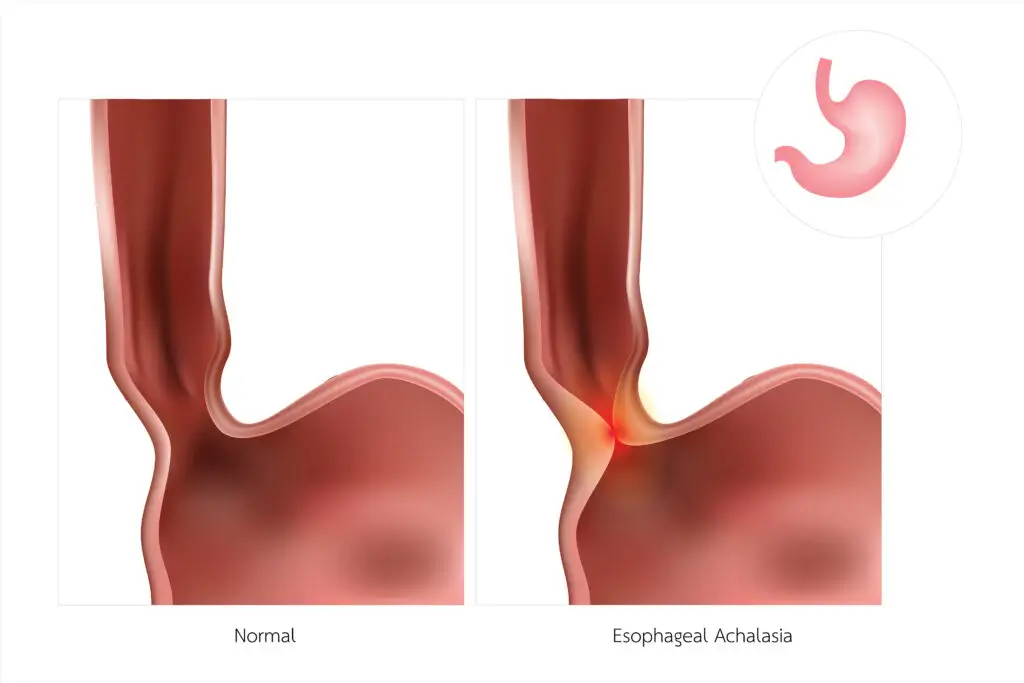
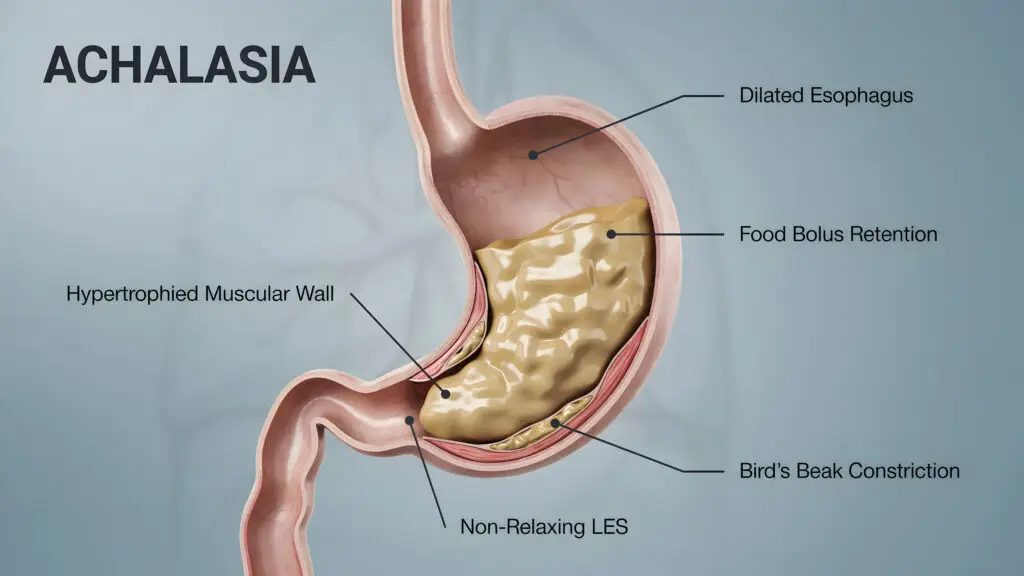
Achalasia is an esophageal motility disorder involving impaired esophageal peristalsis and failure of the lower esophageal sphincter to relax properly during swallowing. In practical terms, food and liquid may have difficulty moving into the stomach.
This guide explains what achalasia is, how it may affect work, how Social Security evaluates achalasia-related disability claims, what medical evidence may help, and when it may be time to speak with a disability lawyer.

What Is Achalasia?
Achalasia is a disorder of the esophagus. The esophagus normally uses coordinated muscle contractions to move food and liquid into the stomach. At the lower end of the esophagus, the lower esophageal sphincter should relax to allow food to pass into the stomach.
With achalasia, that process does not work normally. The esophagus may not move food properly, and the lower esophageal sphincter may fail to relax enough during swallowing.
Common symptoms of achalasia may include:
- difficulty swallowing
- trouble swallowing both solids and liquids
- food feeling stuck in the chest
- regurgitation of undigested food or liquid
- chest pain
- coughing or choking while eating
- heartburn-like symptoms
- weight loss
- nighttime regurgitation
- fatigue from poor nutrition or poor sleep
Achalasia may be overlooked or misdiagnosed because its symptoms can resemble other digestive conditions. Mayo Clinic notes that achalasia can be overlooked or misdiagnosed because symptoms may be similar to other digestive disorders.
Is “Achalaise” the Same as Achalasia?
“Achalaise” appears to be a common misspelling or search variation for achalasia. People may hear the word from a doctor, commercial, video, or medical discussion and type what they think they heard.
The correct medical term is achalasia.
A website page about achalasia can reasonably include both terms because someone searching for “achalaise” may still need accurate information about achalasia, swallowing problems, and disability benefits.
Can Achalasia Qualify for Social Security Disability?
Yes, achalasia may qualify for Social Security Disability in some cases, but the diagnosis alone is not enough.
Social Security evaluates whether achalasia causes functional limitations severe enough to prevent full-time work. SSA may consider:
- severity of trouble swallowing
- frequency of regurgitation
- weight loss
- malnutrition
- fatigue
- aspiration or pneumonia
- chest pain
- treatment history
- response to procedures
- complications after treatment
- need for frequent meals or special eating routines
- ability to maintain stamina throughout the workday
- absences from treatment or complications
- ability to sustain full-time work
Social Security’s digestive disorder listings evaluate severe dysfunction of the gastrointestinal tract and include weight loss due to any digestive disorder under Listing 5.08. Achalasia itself may not have a simple automatic approval rule, so many claims depend on whether the condition meets a listing through complications such as severe weight loss or whether residual functional capacity shows the person cannot sustain work.
For example, achalasia may support a disability claim when it causes:
- severe weight loss
- inability to maintain nutrition
- repeated aspiration pneumonia
- frequent choking or regurgitation
- severe fatigue
- chest pain interfering with activity
- need for repeated procedures
- inability to eat safely or efficiently during a workday
- excessive absences
- inability to complete a full workday
The strongest disability claims connect the diagnosis to specific work limitations.
Achalasia and Trouble Swallowing
Trouble swallowing is often the central symptom in achalasia. Medical professionals may call this dysphagia.
Dysphagia may affect work when a person:
- cannot eat meals normally
- needs extra time to eat
- must avoid certain foods
- has food stick in the chest
- coughs or chokes while eating
- regurgitates food or liquid
- cannot maintain nutrition
- loses weight
- becomes fatigued or weak
Merck notes that dysphagia evaluation includes whether a patient has difficulty swallowing solids, liquids, or both, and whether coughing, choking, nasal regurgitation, drooling, food impaction, or aspiration symptoms are present. (Merck Manuals)
For disability purposes, the question is not just whether swallowing is difficult. The question is whether swallowing problems interfere with nutrition, stamina, safety, attendance, and the ability to work reliably.
Achalasia and Regurgitation
Achalasia can cause regurgitation of food or liquid. This may happen after eating, when bending over, or at night while lying down.
Regurgitation may affect work by causing:
- embarrassment
- coughing
- choking
- need to leave the workstation
- need to avoid eating during work
- poor nutrition
- sleep disruption
- aspiration risk
- anxiety around meals
- reduced concentration
Nighttime regurgitation can be especially disruptive because it may interfere with sleep and increase the risk of aspirating food or liquid into the lungs.
Achalasia and Aspiration
Aspiration occurs when food, liquid, or stomach contents enter the airway or lungs. Achalasia may increase the risk of aspiration, especially when regurgitation occurs during sleep.
Merck’s consumer medical information explains that if regurgitated material is inhaled into the lungs, it can cause coughing, airway infection, aspiration pneumonia, and eventually bronchiectasis. (Merck Manuals)
Aspiration-related problems may affect work by causing:
- coughing episodes
- shortness of breath
- recurrent respiratory infections
- pneumonia
- fatigue
- absences
- emergency treatment
- hospitalizations
- need to avoid certain eating situations
- reduced stamina after illness
If aspiration or pneumonia occurs, medical records should document the episodes, treatment, imaging, hospitalizations, antibiotics, and recovery time.
Achalasia and Weight Loss
Weight loss can be one of the most important disability-related complications of achalasia.
Weight loss may occur because the person:
- cannot swallow enough food
- avoids eating because of choking or regurgitation
- eats very slowly
- cannot tolerate solid food
- loses calories through regurgitation
- becomes afraid to eat
- develops poor nutrition
- has ongoing inflammation or complications
Merck lists trouble swallowing, regurgitation, chest pain, and weight loss as main symptoms of achalasia. (Merck Manuals)
Social Security specifically evaluates weight loss due to any digestive disorder under Listing 5.08. Even when a person does not meet the listing, weight loss can still support residual functional capacity limitations when it causes fatigue, weakness, poor stamina, or inability to sustain work.
Achalasia and Malnutrition
Achalasia can interfere with nutrition when swallowing problems prevent a person from eating enough. Malnutrition may cause weakness, fatigue, dizziness, poor concentration, immune problems, and reduced recovery after illness.
Malnutrition-related work limitations may include:
- reduced stamina
- weakness
- inability to lift or carry
- dizziness
- poor concentration
- need for frequent medical monitoring
- inability to work full shifts
- absences from complications
- recovery time after procedures or illness
If malnutrition is part of the claim, the medical evidence may include weight records, BMI, lab testing, nutritionist records, gastroenterology notes, dietary restrictions, and documentation of treatment attempts.
Achalasia and Chest Pain
Achalasia may cause chest pain or chest discomfort. This can be confusing because chest pain may also raise concerns about heart disease.
Achalasia-related chest pain may affect work by causing:
- need to stop activity
- difficulty concentrating
- anxiety or panic-like symptoms
- emergency room visits
- missed work
- reduced productivity
- difficulty eating during the workday
Medical records should explain whether chest pain has been evaluated, what triggers it, how often it occurs, and how it affects daily activity.
Achalasia and Fatigue
Fatigue may occur with achalasia because of poor nutrition, weight loss, poor sleep, aspiration, infections, anxiety around eating, repeated medical procedures, or the effort required to manage meals.
Fatigue may affect work by causing:
- reduced stamina
- slower pace
- need for breaks
- difficulty concentrating
- inability to complete full shifts
- inability to work consecutive days
- absences after complications
- reduced ability to recover after activity
A person with achalasia may be able to perform some activities briefly but be unable to sustain full-time work if fatigue is persistent and medically supported.
Achalasia and Eating at Work
Eating may become a work-related issue for people with achalasia.
A person may need:
- extra time to eat
- access to water
- soft or liquid foods
- small frequent meals
- time to sit upright after eating
- avoidance of eating quickly
- avoidance of certain foods
- privacy due to regurgitation or coughing
- flexibility after symptoms occur
These needs may interfere with jobs that have short meal breaks, strict production schedules, limited restroom access, public-facing duties, or no flexibility for eating routines.
If a person cannot safely or efficiently eat during the workday, that may affect stamina, concentration, and attendance.
Achalasia and Sleep Problems
Nighttime regurgitation, coughing, choking, chest discomfort, or anxiety about symptoms can interfere with sleep.
Poor sleep may worsen:
- fatigue
- concentration
- memory
- mood
- stamina
- pain sensitivity
- work attendance
- productivity
If sleep disruption affects daytime functioning, it should be documented in treatment records.
Achalasia and Anxiety Around Eating
Some people with achalasia develop anxiety around eating because they worry about choking, regurgitation, embarrassment, or chest pain. This can be especially difficult in workplaces, restaurants, break rooms, or public-facing jobs.
Anxiety around eating may affect work by causing:
- skipped meals
- poor nutrition
- social avoidance
- panic symptoms
- reduced concentration
- embarrassment
- difficulty attending work lunches or meetings
- avoidance of workplace meal breaks
If anxiety, depression, or social withdrawal become significant, they should be documented and considered as part of the overall disability claim.
Achalasia Diagnosis and Testing
Achalasia usually requires objective testing. Symptoms alone may not be enough to confirm the diagnosis.
Diagnostic testing may include:
- esophageal manometry
- upper endoscopy
- barium swallow or esophagram
- FLIP testing in some cases
- imaging or evaluation to rule out other causes
- nutritional assessment
- evaluation for aspiration if respiratory symptoms occur
The American College of Gastroenterology guideline notes that achalasia is suspected based on classic symptoms and confirmed with objective diagnostic tests. (PubMed Central (PMC)) Mayo Clinic also notes that FLIP may help confirm achalasia when other tests are not enough. (Mayo Clinic)
Medical evidence is important because Social Security needs more than a symptom description.
Achalasia Treatment and Disability Claims
Treatment may improve symptoms, but some people continue to have swallowing problems, reflux, chest pain, regurgitation, weight loss, or complications.
Treatment may include:
- pneumatic dilation
- Heller myotomy
- peroral endoscopic myotomy, also known as POEM
- botulinum toxin injection in some cases
- medications in selected situations
- dietary changes
- treatment for reflux after procedures
- nutritional support
- monitoring for complications
Mayo Clinic notes that treatment depends on age, health, and severity, and that some people may develop GERD after Heller myotomy. (Mayo Clinic) StatPearls notes that available therapies target symptom relief by reducing lower esophageal sphincter outflow resistance while limiting complications such as GERD, weight loss, aspiration, and progression to megaesophagus. (NCBI)
For disability purposes, the key question is what limitations remain despite treatment.
Achalasia After Surgery or Procedures
Some people improve significantly after treatment. Others continue to experience symptoms or develop new problems.
Post-treatment issues may include:
- ongoing dysphagia
- reflux
- chest pain
- regurgitation
- need for repeat procedures
- dietary limitations
- weight loss
- aspiration risk
- fatigue
- missed work for recovery or follow-up care
If symptoms continue after treatment, the medical records should document the remaining limitations and how they affect work.
Achalasia and Residual Functional Capacity
Residual Functional Capacity, or RFC, describes what a person can still do despite medical limitations.
For achalasia, RFC may involve limitations related to:
- fatigue from poor nutrition
- weakness from weight loss
- need for extended meal breaks
- a need for small frequent meals
- need to remain upright after eating
- absences from procedures or complications
- off-task time from regurgitation, coughing, or chest pain
- reduced pace from fatigue
- environmental restrictions if aspiration or respiratory complications are present
- difficulty performing physically demanding work
- difficulty sustaining full-time work
A strong disability claim explains how achalasia affects specific work functions.
For example:
- Dysphagia may make eating during the workday difficult.
- Regurgitation may cause off-task time and embarrassment.
- Weight loss may reduce strength and stamina.
- Aspiration may cause respiratory symptoms and absences.
- Chest pain may interrupt tasks and reduce pace.
- Treatment and procedures may cause absences.
- Fatigue may prevent full shifts or consecutive workdays.
Achalasia and Sedentary Work
Some people assume that digestive disorders only affect physical work. That is not true.
Sedentary jobs still require:
- regular attendance
- staying on task
- maintaining pace
- sitting upright
- concentrating
- speaking
- using a computer or phone
- attending meetings
- eating during scheduled breaks
- completing a full workday
Achalasia may prevent sedentary work if the person:
- cannot maintain nutrition
- becomes fatigued or weak
- needs excessive meal time
- regurgitates during the workday
- has coughing or choking episodes
- misses work for procedures or complications
- has chest pain that interrupts tasks
- cannot maintain pace due to fatigue
- has aspiration-related respiratory symptoms
The claim should explain why even seated work is not sustainable when that is the issue.
Achalasia and Physical Work
Achalasia may interfere with physical work when weight loss, fatigue, weakness, chest pain, aspiration, or poor nutrition reduce stamina.
Physical jobs may be difficult if they require:
- lifting
- carrying
- prolonged standing
- walking throughout the day
- climbing
- bending
- fast-paced activity
- outdoor work
- limited breaks
- limited access to food or water
- strict productivity requirements
A person with achalasia who cannot eat enough or maintain energy may struggle with physical labor, even if the condition is located in the esophagus rather than the muscles or joints.
Achalasia and Past Work
Social Security considers whether a person can return to past work.
Achalasia may prevent past work involving:
- heavy labor
- fast-paced production
- jobs with short or inflexible breaks
- jobs requiring constant speaking
- limited access to water
- limited restroom or break access
- jobs where coughing or regurgitation creates safety or public-facing problems
- consistent stamina
- jobs where absences are not tolerated
The more rigid or physically demanding the job, the more important achalasia-related limitations may become.
Achalasia, Age, and Vocational Factors
Social Security also considers age, education, and work history.
This can be important for people with achalasia who have:
- a history of physically demanding work
- limited education
- few transferable skills
- significant weight loss
- reduced stamina
- frequent absences
- complications despite treatment
For example, an older worker with a history of heavy labor may have difficulty adjusting to other work if achalasia has caused fatigue, weakness, and inability to sustain a normal work schedule.
Relevant Social Security Blue Book Listings for Achalasia
Achalasia may be evaluated under Social Security’s digestive disorder framework. SSA evaluates digestive disorders involving severe dysfunction of the gastrointestinal tract, and the digestive listings include weight loss due to any digestive disorder under Listing 5.08.
Depending on complications, achalasia-related claims may also involve:
- digestive disorder analysis
- weight loss analysis
- malnutrition-related limitations
- respiratory complications if aspiration occurs
- mental health analysis if anxiety or depression is significant
- RFC analysis if the condition does not meet a listing
Many achalasia claims are likely decided through RFC rather than a listing alone. The question becomes whether dysphagia, regurgitation, weight loss, fatigue, aspiration, chest pain, treatment history, and absences prevent reliable full-time work.
Medical Evidence That May Support an Achalasia Disability Claim
Strong medical evidence is important because Social Security needs more than a diagnosis.
Helpful evidence may include:
- gastroenterology records
- primary care records
- esophageal manometry results
- barium swallow or esophagram results
- upper endoscopy records
- FLIP testing if performed
- surgical or procedure records
- records of Heller myotomy, POEM, dilation, or Botox treatment
- weight records
- BMI documentation
- nutritionist records
- lab testing related to nutrition
- records of aspiration or pneumonia
- chest imaging if aspiration is suspected
- emergency room records
- hospitalization records
- medication history
- documentation of ongoing dysphagia
- documentation of regurgitation
- provider statements about work limitations
The strongest evidence connects achalasia symptoms to specific functional problems, such as inability to eat during work, weight loss, fatigue, absences, or inability to complete full workdays.
Evidence of Weight Loss and Nutrition Problems
Weight loss and nutritional problems may be especially important in achalasia claims.
Helpful evidence may include:
- weight trend over time
- BMI records
- diet changes
- liquid diet documentation
- nutritionist referrals
- protein-calorie malnutrition documentation
- lab abnormalities
- dehydration episodes
- feeding support if needed
- physician notes explaining inability to maintain intake
- fatigue and weakness documentation
Because Social Security evaluates weight loss due to digestive disorders under Listing 5.08, weight records can be important evidence.
Evidence of Aspiration and Respiratory Complications
If achalasia causes aspiration, the claim should include records showing the respiratory impact.
Helpful evidence may include:
- coughing or choking reports
- aspiration pneumonia records
- chest X-rays
- CT scans
- antibiotics
- hospitalizations
- pulmonology records
- oxygen saturation readings
- shortness of breath documentation
- recurrent respiratory infection records
Aspiration may connect achalasia to broader work limitations involving fatigue, absences, reduced stamina, and respiratory restrictions.
Doctor Statements for Achalasia Work Limitations
A treating provider’s statement may help explain how achalasia affects work.
A useful statement may address:
- severity of dysphagia
- whether solids, liquids, or both are affected
- frequency of regurgitation
- eating restrictions
- need for extra meal time
- need to remain upright after meals
- weight loss
- malnutrition
- fatigue
- aspiration risk
- chest pain
- need for procedures or follow-up care
- likely absences
- whether symptoms persist despite treatment
- expected duration of limitations
The most helpful opinions are specific, consistent with treatment records, and tied to work-related functions.
Tracking Achalasia Symptoms for a Disability Claim
A symptom log may help document how achalasia affects daily life. A useful log may include:
- difficulty swallowing episodes
- foods or liquids that trigger symptoms
- regurgitation episodes
- choking or coughing episodes
- chest pain episodes
- meals skipped
- time needed to eat
- weight changes
- fatigue level
- sleep disruption
- aspiration symptoms
- doctor visits
- procedures
- emergency care
- missed work or activities
- recovery time after symptoms or treatment
A symptom log is not a substitute for medical evidence, but it may help support treatment records and testimony.
Examples of Work Limitations Caused by Achalasia
Achalasia may support disability eligibility when it causes limitations such as:
- inability to eat normally during the workday
- need for extended or unscheduled meal breaks
- a need for small frequent meals
- need to remain upright after eating
- off-task time from regurgitation or chest pain
- reduced stamina from weight loss
- fatigue from poor nutrition
- absences from aspiration pneumonia
- absences from procedures or complications
- inability to maintain pace
- inability to complete a full workday
- an inability to sustain full-time work
At a disability hearing, these limitations may be important because a vocational expert may consider whether a person with those restrictions could sustain competitive employment.
Signs Achalasia May Support a Disability Claim
You may want to explore disability eligibility if achalasia causes:
- severe trouble swallowing
- difficulty swallowing both solids and liquids
- frequent regurgitation
- choking or coughing while eating
- aspiration pneumonia
- significant weight loss
- malnutrition
- severe fatigue
- chest pain
- repeated procedures
- persistent symptoms despite treatment
- missed workdays
- inability to eat enough to maintain stamina
- failed attempts to keep working
When achalasia prevents reliable, sustained full-time employment, disability benefits may be available.
When to Speak With a Social Security Disability Lawyer
Achalasia disability claims can be challenging because Social Security may not automatically understand how swallowing problems affect full-time work. The claim should explain the real-world impact of dysphagia, regurgitation, weight loss, aspiration, fatigue, and treatment history.
Many people seek legal help when:
- their disability claim has been denied
- they have achalasia but do not meet a listing
- trouble swallowing prevents normal eating
- weight loss or malnutrition affects stamina
- aspiration or pneumonia causes absences
- procedures have not restored work capacity
- fatigue prevents full-time work
- their records do not clearly explain RFC limitations
- they are preparing for a disability hearing
Our social security disability attorneys can help evaluate how achalasia affects RFC and what evidence may be needed.
FAQs: Achalasia and Social Security Disability Benefits
Is achalaise the same as achalasia?
“Achalaise” is likely a misspelling of achalasia, which is the correct medical term for an esophageal motility disorder that can cause trouble swallowing, regurgitation, chest pain, and weight loss.
Can achalasia qualify for Social Security Disability?
Yes, achalasia may qualify for Social Security Disability if it causes severe symptoms or complications that prevent full-time work. Social Security may evaluate weight loss, malnutrition, aspiration, fatigue, treatment history, and residual functional capacity.
Does achalasia automatically qualify for SSDI?
No. Achalasia does not automatically qualify someone for SSDI. Social Security evaluates the severity of the condition, medical evidence, treatment response, complications, and work-related limitations.
What symptoms of achalasia matter most in a disability claim?
Important symptoms may include trouble swallowing, regurgitation, chest pain, coughing or choking while eating, weight loss, malnutrition, aspiration, fatigue, and inability to eat enough to maintain stamina.
Can trouble swallowing support a disability claim?
Yes. Trouble swallowing may support a disability claim if it causes weight loss, poor nutrition, aspiration, fatigue, inability to eat during the workday, excessive breaks, or other limitations that prevent reliable full-time work.
Can achalasia cause aspiration pneumonia?
Yes. Regurgitated food or liquid may be inhaled into the lungs, which can cause coughing, airway infection, aspiration pneumonia, and other respiratory complications.
What evidence helps prove achalasia in an SSDI claim?
Helpful evidence may include gastroenterology records, esophageal manometry, barium swallow studies, endoscopy reports, procedure records, weight records, BMI documentation, nutrition records, aspiration or pneumonia records, and provider statements about work limitations.
Can achalasia prevent sedentary work?
Yes. Sedentary work may still be difficult if achalasia causes fatigue, poor nutrition, regurgitation, coughing, chest pain, excessive meal breaks, absences from complications, or inability to complete a full workday.
What should I do if achalasia prevents me from working?
You may want to speak with a Social Security Disability attorney to evaluate whether your achalasia symptoms, treatment history, medical evidence, RFC limitations, and work history may support a disability claim.
Contact MLF Legal for a Free Disability Case Evaluation
If achalasia, trouble swallowing, regurgitation, weight loss, aspiration, fatigue, chest pain, treatment complications, or another medical condition prevents you from working, you may qualify for Social Security Disability benefits.
MLF Legal represents disability applicants nationwide. Based in Dallas, Texas, we help individuals across the country pursue disability benefits.
Our social security lawyers can review your situation for free and explain your options.
📞 Call MLF Legal at 214-357-1782 to request a free consultation.
Next Steps:
1st Sign up For a Free One-on-One Disability Case Evaluation
Contact us today to schedule your personalized one-on-one free phone consultation with one of our dedicated legal professionals. Our experienced social security lawyers are here to provide the expert legal guidance and support you need throughout the entire process of your case.
We understand the complexities involved in social security disability claims and are committed to helping you achieve the best possible outcome. Don’t hesitate to reach out and take the first step toward securing the justice you deserve.
2nd Download Free E-Books
Social Security Disability
Navigating the Social Security Disability Benefits process can be complex, but understanding the key steps can help. From gathering medical records to completing the application, this process ensures eligible individuals receive the support they need. Seeking guidance from experts can simplify the journey and increase the chances of a successful outcome.
Call MLF Legal today
214-357-1782
Fill out our online form
for a free consultation.
We only get paid if we win your case.