
Residual Functional Capacity for ALS When Filing for Social Security Disability
TELL US WHAT HAPPENED SO WE CAN HELP. FREE CONSULTATION

Contact Us About Your Case
FREE Consultation Today.
Residual Functional Capacity for ALS When Filing for Social Security Disability
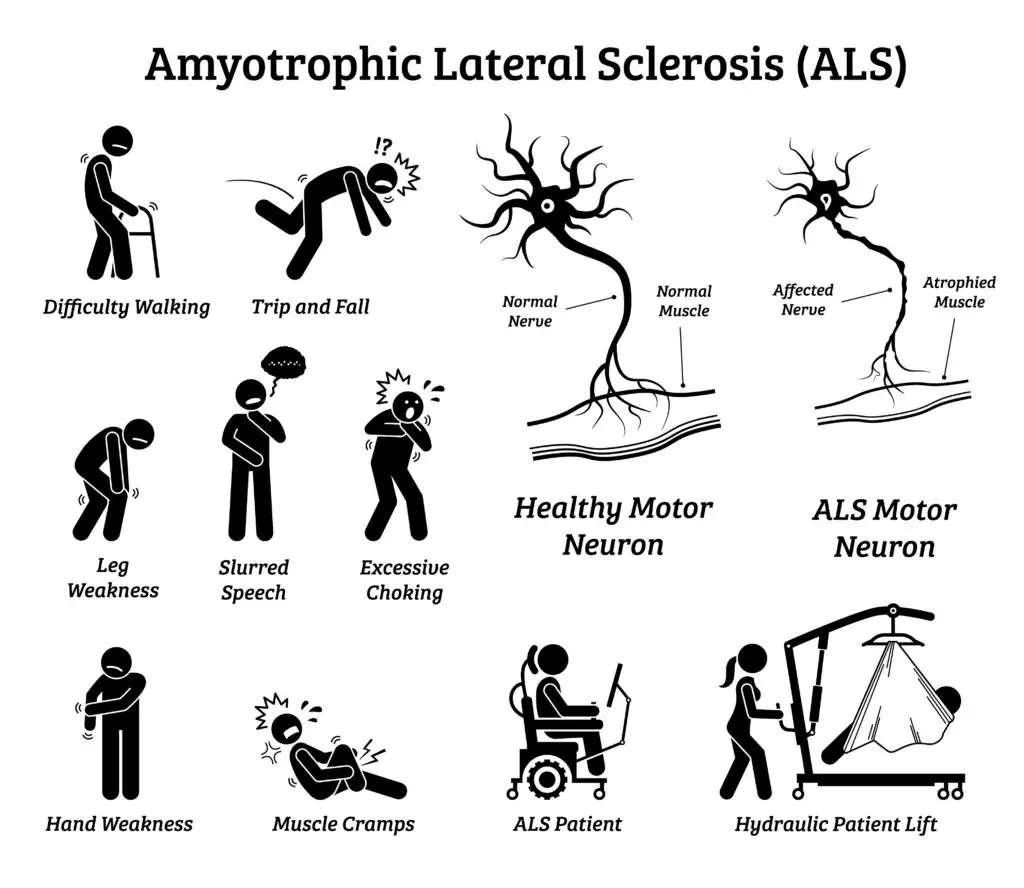
Amyotrophic lateral sclerosis, commonly called ALS or Lou Gehrig’s disease, is one of the most serious neurological conditions evaluated by Social Security. ALS can affect strength, walking, hand use, speech, swallowing, breathing, fatigue, safety, and the ability to perform even basic work activity.
For many ALS claims, the most important issue may be whether the condition meets Social Security Blue Book Listing 11.10 or qualifies for faster processing through Compassionate Allowances. Social Security’s Blue Book includes Listing 11.10 for amyotrophic lateral sclerosis established by clinical and laboratory findings, and SSA lists adult ALS as a Compassionate Allowances condition.
But residual functional capacity, or RFC, can still matter. RFC explains what a person can still do despite medical limitations. In an ALS claim, RFC may help show why the person cannot sustain full-time work even if Social Security needs additional functional evidence.
An ALS RFC may involve limitations related to:
- muscle weakness
- loss of hand function
- difficulty walking
- balance problems
- falls
- foot drop
- use of a cane, walker, wheelchair, or power chair
- speech problems
- swallowing problems
- breathing problems
- fatigue
- cramps or spasticity
- reduced stamina
- need for assistance with daily activities
- safety restrictions
- inability to complete a full workday
ALS is progressive. That means the RFC analysis should consider not only current limitations, but also the disease course, expected decline, treatment records, assistive device needs, and whether the person can sustain work reliably over time.
What Is Residual Functional Capacity?
Residual Functional Capacity is Social Security’s assessment of what a person can still do despite physical and mental limitations.
Residual functional capacity for ALS may address whether a person can:
- sit
- stand
- walk
- lift
- carry
- reach
- handle objects
- use the fingers
- speak clearly
- swallow safely
- breathe adequately during activity
- maintain posture
- avoid falls
- operate equipment safely
- maintain pace
- attend work consistently
- complete a normal workday and workweek
RFC is usually considered when Social Security cannot approve a case based on medical factors alone. SSA’s RFC policy explains that when a claim cannot be decided by the listings alone, the sequential evaluation process continues with an assessment of the person’s functional limitations and remaining ability to perform work-related activities.
For ALS, however, the listing issue is often very strong because Social Security has a specific ALS listing.
ALS and Social Security Blue Book Listing 11.10
ALS has its own listing in the neurological section of the Social Security Blue Book.
Listing 11.10 covers:
Amyotrophic lateral sclerosis established by clinical and laboratory findings.
This is important. Many disability claims require a detailed RFC analysis because the person does not meet a listing. ALS is different because the diagnosis itself, when properly established by clinical and laboratory findings, may satisfy the listing.
Social Security’s POMS guidance also describes ALS as a progressive, invariably fatal neurological disease that attacks motor neurons responsible for controlling voluntary muscles.
Because of that, an ALS disability claim should strongly emphasize:
- the confirmed diagnosis
- neurologist records
- clinical findings
- EMG or nerve conduction studies when performed
- ruling out other causes
- progression of weakness
- bulbar symptoms if present
- respiratory symptoms if present
- functional decline
- assistive device use
- need for caregiver help
If the evidence clearly establishes ALS, the claim may be evaluated very differently than a typical RFC-only case.
ALS and Compassionate Allowances
ALS is also included on Social Security’s Compassionate Allowances list.
Compassionate Allowances are designed to help Social Security identify claims where the applicant’s condition clearly meets the disability standard. SSA’s Compassionate Allowances page explains that the program identifies diseases and conditions that clearly meet Social Security’s statutory standard for disability.
This does not mean no evidence is needed. The medical file should still document the ALS diagnosis and supporting clinical information. But ALS claims may be processed more quickly when the diagnosis is clearly supported.
Why RFC Still Matters in ALS Claims
If ALS often meets a Blue Book listing, why discuss RFC at all?
RFC still matters because it helps tell the functional story. It may be important when:
- the diagnosis is still being confirmed
- Social Security needs more evidence
- the record does not clearly document clinical and laboratory findings
- a person has an ALS variant or related motor neuron disease
- the claim involves onset date issues
- the person continued working briefly after symptoms began
- a person’s limitations must be explained at a hearing
- the medical records do not fully describe day-to-day function
- caregiver evidence needs to be connected to work limitations
RFC helps explain why ALS prevents work in real-world terms.
For example:
- Hand weakness may prevent typing, writing, gripping, handling, and tool use.
- Leg weakness may prevent standing, walking, climbing, and safe movement.
- Bulbar symptoms may prevent speaking, swallowing, and public-facing work.
- Respiratory weakness may prevent exertion, stamina, and sustained work.
- Fatigue may prevent full shifts.
- Progressive decline may make reliable attendance and productivity impossible.
ALS Symptoms That May Affect RFC
ALS can affect different people in different ways. Some people first notice weakness in the hands. Others first develop foot drop, falls, speech changes, swallowing problems, or breathing symptoms.
Work-related ALS symptoms may include:
- hand weakness
- reduced grip strength
- muscle wasting
- difficulty writing
- limited typing ability
- difficulty buttoning clothing
- foot drop
- tripping
- falls
- difficulty climbing stairs
- difficulty rising from a chair
- muscle cramps
- spasticity
- stiffness
- slurred speech
- weak voice
- swallowing difficulty
- choking or coughing with meals
- shortness of breath
- fatigue
- weight loss
- emotional changes
- need for assistive devices
- need for help with daily activities
Social Security should evaluate the combined effect of all ALS symptoms.
ALS and Hand Limitations
Hand limitations can be one of the earliest and most work-limiting signs of ALS.
ALS may affect hand function by causing:
- weakness
- muscle wasting
- reduced grip
- dropping objects
- difficulty typing
- difficulty writing
- limitations using tools
- difficulty opening containers
- difficulty handling small objects
- an inability to use a phone or computer
- difficulty performing repetitive hand tasks
Hand limitations can affect both physical and sedentary work. Even desk jobs often require typing, writing, phone use, document handling, mouse use, and fine motor control.
An ALS RFC should clearly document whether the person can perform:
- reaching
- handling
- fingering
- gripping
- keyboarding
- writing
- tool use
- repetitive hand activity
When hand function is declining, the ability to sustain full-time work may quickly become unrealistic.
ALS and Walking Limitations
ALS may affect walking through leg weakness, foot drop, balance problems, spasticity, fatigue, or falls.
Walking limitations may involve:
- difficulty walking across a room
- inability to walk across a workplace
- need for a cane
- reliance on a walker
- need for a wheelchair
- tripping
- foot drag
- falls
- difficulty walking on uneven surfaces
- difficulty getting from a parking lot to a workstation
- inability to walk to restrooms or meetings reliably
Walking limitations may eliminate many physical and light jobs. They may also affect sedentary jobs if the person cannot safely move around the workplace.
ALS and Standing Limitations
Standing may become difficult as ALS progresses. Leg weakness, balance problems, fatigue, and reduced endurance may limit the ability to stand safely.
Standing limitations may affect work in:
- retail
- food service
- healthcare
- security
- teaching
- manufacturing
- warehouse work
- assembly work
- maintenance
- construction
- delivery
- cleaning
A person with ALS may need to sit frequently, use a mobility device, avoid standing tasks, or stop working altogether as weakness progresses.
ALS and Falls
Falls are a serious safety issue in ALS. They may occur because of foot drop, leg weakness, balance problems, spasticity, poor coordination, or fatigue.
Falls may create RFC restrictions involving:
- ladders
- scaffolds
- unprotected heights
- dangerous machinery
- uneven surfaces
- work requiring rapid movement
- carrying objects while walking
- safety-sensitive work
- use of an assistive device
Fall risk can affect both job safety and employability. An employer may not be able to accommodate unpredictable falls, especially in jobs involving hazards, movement, equipment, or public safety.
ALS and Assistive Devices
Assistive devices are often important in ALS claims.
A person may need:
- cane
- walker
- ankle-foot orthosis
- wheelchair
- power wheelchair
- lift chair
- hospital bed
- communication device
- feeding support
- respiratory support
- caregiver assistance
The need for assistive devices can help show progression and functional decline.
Medical records should document:
- why the device is needed
- who prescribed or recommended it
- whether it is used inside or outside the home
- whether it is needed all the time or only with fatigue
- how it affects work activity
- whether the person needs help transferring or moving safely
ALS and Lifting or Carrying Restrictions
ALS can reduce the ability to lift and carry because of weakness, muscle wasting, fatigue, balance problems, or hand dysfunction.
RFC restrictions may involve limits on:
- heavy lifting
- frequent lifting
- carrying objects while walking
- overhead lifting
- pushing and pulling
- gripping objects
- using tools
- carrying supplies
- moving equipment
These limitations can eliminate physical work and may also affect sedentary work when hand weakness prevents even light object handling.
ALS and Reaching, Handling, and Fingering
ALS may affect the arms, shoulders, hands, and fingers. This can limit repetitive use and fine motor tasks.
Work-related problems may include difficulty:
- typing
- writing
- gripping
- using a mouse
- using a phone
- handling papers
- buttoning or dressing for work
- using tools
- reaching overhead
- reaching in front
- sorting objects
- lifting files
- feeding oneself during work hours
In a social security disability claim, these limitations should be described specifically because “weakness” alone may not fully explain the work impact.
ALS and Speech Problems
ALS can affect the muscles used for speech. This is often called dysarthria.
Speech problems may include:
- slurred speech
- weak voice
- slow speech
- difficulty being understood
- vocal fatigue
- need for communication devices
- inability to speak for long periods
- reduced ability to use a phone
Speech limitations may affect jobs involving:
- customer service
- phone work
- teaching
- sales
- healthcare
- management
- public-facing duties
- meetings
- emergency response
- legal, administrative, or professional communication
A person with ALS may be unable to perform work that depends on clear, reliable speech.
ALS and Swallowing Problems
ALS may affect swallowing. This is often called dysphagia.
Swallowing problems may cause:
- choking
- coughing during meals
- aspiration risk
- weight loss
- dehydration
- fatigue from eating
- need for modified diet
- need for feeding tube
- longer meal times
- inability to eat during normal work breaks
Swallowing problems can affect work because a person may need extended meal time, medical treatment, nutritional support, or protection from aspiration risk.
ALS and Breathing Problems
ALS can affect the muscles used for breathing. Respiratory involvement may be one of the most serious complications of the disease.
Breathing limitations may involve:
- shortness of breath
- weak cough
- difficulty clearing secretions
- fatigue with talking
- morning headaches
- sleep disruption
- reduced stamina
- need for noninvasive ventilation
- need for respiratory equipment
- increased risk during infections
Respiratory symptoms may affect work by limiting exertion, speech, stamina, attendance, and the ability to complete a full day.
ALS and Fatigue
Residual Functional Capacity, or RFC, is Social Security’s assessment of what a person can still do despite medical limitations.
In a rheumatoid arthritis claim, RFC limitations may involve:
- limited lifting
- limited carrying
- reduced standing
- no walking
- limited sitting during severe stiffness
- reduced reaching
- limited handling
- limited fingering
- restrictions from gripping
- no repetitive hand use
- limited climbing
- limited kneeling, crouching, or crawling
- need to alternate positions
- reduced pace due to pain or fatigue
- need for rest breaks
- absences from flares
- medication side effects
- inability to complete a full workday
A strong RA disability claim explains how symptoms translate into work restrictions.
For example:
- Hand swelling may limit typing, writing, gripping, and handling.
- Wrist pain may limit tool use and computer work.
- Knee or foot pain may limit standing and walking.
- Shoulder pain may limit reaching.
- Fatigue may reduce pace and attendance.
- Flares may cause absences.
- Medication side effects may affect stamina, infection risk, or concentration.
ALS and Pain, Cramps, and Spasticity
ALS is often thought of as a weakness condition, but pain, cramps, and spasticity can also affect functioning.
These symptoms may cause:
- muscle cramps
- stiffness
- painful spasms
- difficulty sleeping
- reduced mobility
- difficulty positioning
- difficulty sitting or standing
- fatigue
- need for medication
- need for stretching or therapy
Pain and spasticity may worsen the person’s ability to sustain posture, move safely, and complete tasks.
ALS and Communication Devices
As speech declines, some people with ALS may need communication devices.
This may include:
- text-to-speech devices
- tablet-based communication
- eye-gaze communication systems
- writing aids
- caregiver assistance
- speech therapy support
The need for communication support may strongly affect work capacity. Even jobs with limited physical demands often require communication with supervisors, coworkers, customers, or clients.
ALS and Cognitive or Behavioral Changes
Some people with ALS may also experience cognitive or behavioral changes, including executive functioning problems or frontotemporal dementia features.
Work-related problems may include:
- poor judgment
- difficulty planning
- reduced attention
- impulsivity
- personality changes
- difficulty adapting
- reduced insight
- inability to manage complex tasks
If cognitive or behavioral symptoms are present, they should be documented and considered along with physical limitations.
ALS and Mental Health
A diagnosis of ALS can also lead to depression, anxiety, grief, panic symptoms, social withdrawal, and sleep disruption. These symptoms may affect work when combined with physical decline.
Mental health symptoms may affect:
- concentration
- motivation
- sleep
- social interaction
- stress tolerance
- attendance
- ability to complete tasks
- ability to cope with progressive loss of function
Social Security should consider the combined effect of ALS and any documented mental health symptoms.
ALS Medications and Treatment History
Treatment history can help document the seriousness and progression of ALS.
Medical care may include:
- neurology visits
- ALS clinic visits
- physical therapy
- occupational therapy
- speech therapy
- respiratory therapy
- nutrition support
- assistive device prescriptions
- medications such as riluzole or edaravone when prescribed
- treatment for cramps or spasticity
- treatment for saliva, swallowing, breathing, or sleep issues
- feeding tube evaluation
- noninvasive ventilation evaluation
Treatment does not need to cure ALS for the claim to be strong. In ALS claims, treatment history often helps document diagnosis, progression, and functional decline.
Medication Side Effects and ALS RFC
Medication side effects may affect RFC if they are documented and interfere with work.
Possible issues may include:
- fatigue
- dizziness
- nausea
- weakness
- liver monitoring issues
- sleep disruption
- sedation from medications used for cramps, spasticity, pain, anxiety, or sleep
- gastrointestinal symptoms
- reduced alertness
Medication side effects should be discussed with the treating provider and documented if they affect daily functioning or work capacity.
ALS and Sedentary Work
Social Security may sometimes consider whether a person can perform sedentary work. In ALS claims, sedentary work may still be unrealistic.
Sedentary jobs still require:
- regular attendance
- sitting upright
- using the hands
- typing or writing
- speaking or communicating
- staying on task
- maintaining pace
- moving safely to and from the workstation
- using the restroom
- eating during the workday
- completing full workdays and workweeks
ALS may prevent sedentary work if the person:
- cannot use the hands reliably
- cannot speak clearly
- needs a communication device
- cannot sit upright long enough
- has severe fatigue
- needs frequent rest breaks
- has breathing limitations
- has swallowing problems
- needs caregiver assistance
- cannot maintain attendance
- is progressively declining
The claim should explain why even seated or simple work is not sustainable.
ALS and Physical Work
ALS usually makes physical work impossible as weakness progresses.
ALS may prevent work involving:
- lifting
- carrying
- standing
- walking
- climbing
- balancing
- bending
- use of tools
- driving
- operating machinery
- patient care
- construction
- warehouse work
- manufacturing
- delivery
- cleaning
- maintenance
- emergency response
The more physically demanding the past work, the more clearly ALS-related weakness, mobility problems, and fatigue may prevent return to that job.
ALS and Past Work
RFC is used to determine whether a person can return to past work.
ALS may prevent past work involving:
- hand use
- walking
- standing
- lifting
- speech
- phone communication
- driving
- safety-sensitive tasks
- independent decision-making
- fast pace
- public interaction
- physical labor
- computer use
- equipment operation
Even if a person could perform the job before diagnosis, progressive decline may make continued work unsafe or impossible.
ALS, Age, and Vocational Factors
Social Security also considers age, education, and work history when deciding whether a person can adjust to other work.
In ALS claims, however, the listing and Compassionate Allowances issues may be more important than vocational factors. Still, vocational factors may matter if the claim is evaluated through RFC.
For example:
- A person with a history of physical labor may be unable to return to past work once weakness begins.
- Someone with hand weakness may be unable to transfer to desk work.
- A person with speech problems may be unable to perform customer service or phone work.
- A person with fatigue and respiratory involvement may be unable to sustain any full-time work.
The progressive nature of ALS should be considered throughout the vocational analysis.
Medical Evidence That May Support an ALS RFC
Strong medical evidence is essential.
Helpful evidence may include:
- neurologist records
- ALS clinic records
- EMG results
- nerve conduction studies
- clinical examination findings
- muscle weakness documentation
- muscle wasting documentation
- reflex findings
- gait observations
- speech evaluations
- swallowing studies
- pulmonary function testing
- respiratory therapy records
- physical therapy records
- occupational therapy records
- assistive device prescriptions
- medication history
- feeding tube records if applicable
- noninvasive ventilation records if applicable
- caregiver statements
- provider statements about work limitations
The strongest evidence connects ALS diagnosis and progression to specific functional limitations.
Clinical and Laboratory Findings in ALS Claims
Because Listing 11.10 requires ALS established by clinical and laboratory findings, the medical record should clearly support the diagnosis.
Helpful evidence may include:
- neurological examination findings
- upper motor neuron signs
- lower motor neuron signs
- EMG findings
- progression of weakness
- exclusion of other causes
- specialist diagnosis
- records from an ALS clinic
- speech, swallowing, or respiratory evaluations
The goal is to make the ALS diagnosis clear and well-supported so Social Security can evaluate the claim correctly.
Evidence of Progression
ALS is progressive, so evidence over time is important.
Helpful evidence may include documentation of:
- worsening weakness
- increasing difficulty walking
- transition from cane to walker to wheelchair
- declining hand function
- worsening speech
- worsening swallowing
- weight loss
- declining respiratory function
- dependence on caregiver assistance
- increased falls
- increased fatigue
- need for home modifications
- increasing dependence with activities of daily living
Progression can help explain why work became impossible and why limitations are expected to continue.
Doctor Statements for ALS Work Limitations
A treating provider’s statement may help explain how ALS affects work.
A useful statement may address:
- confirmed diagnosis
- disease progression
- hand limitations
- walking limitations
- fall risk
- assistive device needs
- speech limitations
- swallowing limitations
- respiratory limitations
- fatigue severity
- need for rest breaks
- need for caregiver assistance
- safety restrictions
- likely absences
- expected progression
- whether the person can sustain full-time work
The most helpful opinions are specific, consistent with medical records, and tied to work-related functions.
Caregiver and Family Statements in ALS Claims
Caregiver and family statements may help document daily functioning.
Helpful statements may describe:
- difficulty dressing
- difficulty eating
- needing help when bathing
- falls
- choking episodes
- speech changes
- inability to use hands
- need for mobility assistance
- need for help transferring
- fatigue after small tasks
- breathing problems
- changes in daily independence
- need for supervision or assistance
- progression over time
Concrete examples are more helpful than general statements.
Tracking ALS Symptoms for an RFC Claim
A symptom log may help document how ALS affects daily life. A useful log may include:
- weakness changes
- walking distance
- falls
- use of assistive devices
- hand function problems
- dropped objects
- speech difficulty
- swallowing problems
- choking episodes
- fatigue level
- breathing symptoms
- therapy visits
- medical appointments
- medication side effects
- caregiver help needed
- missed work or activities
- progression over time
A symptom log is not a substitute for medical evidence, but it may help support treatment records and testimony.
Examples of RFC Restrictions for ALS
Residual functional capacity for ALS may include restrictions such as:
- no lifting or carrying beyond minimal weight
- limited standing
- limited walking
- no ladders, ropes, or scaffolds
- no unprotected heights
- prohibition from using dangerous machinery
- no driving if weakness or safety issues are present
- limited handling and fingering
- limited reaching
- necessity of a wheelchair or walker
- need for communication assistance
- need for frequent rest breaks
- reduced pace
- absences from treatment or worsening symptoms
- inability to speak reliably
- inability to complete a full workday
- lack of ability to sustain full-time work
The exact RFC depends on the medical evidence, symptoms, progression, and work history.
Signs an ALS RFC May Support Disability
An ALS RFC may support disability when the evidence shows:
- confirmed ALS diagnosis
- progressive weakness
- declining hand function
- difficulty walking
- falls
- assistive device use
- speech problems
- swallowing problems
- breathing problems
- severe fatigue
- need for caregiver help
- inability to perform past work
- no ability to perform sedentary work
- inability to complete a full workday
- inability to sustain full-time employment
Because ALS is specifically listed by Social Security and included in Compassionate Allowances, the claim should also directly address Listing 11.10 and fast-track processing.
Common Mistakes in ALS Disability Claims
ALS claims are often strong, but errors can still slow the process.
Common problems include:
- not clearly documenting the diagnosis
- failing to include neurologist records
- failing to submit EMG or laboratory findings when available
- not explaining progression
- not documenting speech, swallowing, or respiratory symptoms
- failing to document need for assistive devices
- not explaining why work stopped
- not reporting falls or safety issues
- failing to submit caregiver evidence
- focusing only on RFC while ignoring Listing 11.10
- not asking Social Security to identify ALS as a Compassionate Allowances condition
A strong ALS claim should make the diagnosis, listing argument, and functional limitations clear from the beginning.
When to Speak With a Social Security Disability Lawyer
ALS disability claims can often be approved more quickly than many other claims when the medical evidence clearly supports the diagnosis. But delays or denials can still happen if the record is incomplete or Social Security does not receive the right documentation.
Many people seek legal help when:
- ALS has been diagnosed and work is no longer possible
- symptoms began before the diagnosis was confirmed
- the person continued working briefly after symptoms began
- Social Security needs additional medical evidence
- the claim has not been identified as Compassionate Allowances
- onset date is disputed
- benefits have been delayed
- the person has been denied despite a serious neurological condition
- family members need help presenting caregiver evidence
Our social security disability attorneys can help evaluate whether ALS meets Listing 11.10, whether Compassionate Allowances processing applies, and what evidence may be needed to prove disability as quickly and clearly as possible.

FAQs: Residual Functional Capacity for ALS When Filing for Social Security Disability
What is residual functional capacity for ALS?
Residual Functional Capacity, or RFC, is Social Security’s assessment of what a person can still do despite ALS. It may include limits on walking, standing, lifting, hand use, speech, swallowing, breathing, fatigue, safety, attendance, and ability to complete a full workday.
Does ALS meet a Social Security Blue Book listing?
Yes. Social Security has a specific Blue Book listing for ALS. Listing 11.10 covers amyotrophic lateral sclerosis established by clinical and laboratory findings.
Is ALS a Compassionate Allowances condition?
Yes. Adult ALS is listed by Social Security as a Compassionate Allowances condition, which may allow faster processing when the medical evidence supports the diagnosis.
Why does RFC matter if ALS has its own listing?
RFC may still matter if Social Security needs more evidence, if the onset date is disputed, if the diagnosis is still being confirmed, or if the claim must explain how ALS affects real-world work activity. RFC also helps show why the person cannot perform past work or other work.
What ALS symptoms matter most for RFC?
Important symptoms may include progressive weakness, hand dysfunction, walking problems, falls, speech problems, swallowing problems, breathing limitations, fatigue, cramps, spasticity, assistive device use, and need for caregiver help.
Can ALS prevent sedentary work?
Yes. Sedentary work may still require hand use, communication, sitting upright, concentration, pace, attendance, and safe movement around the workplace. ALS may prevent sedentary work when weakness, fatigue, speech problems, breathing issues, or assistive needs interfere with those requirements.
What medical evidence helps prove ALS disability?
Helpful evidence may include neurology records, ALS clinic records, EMG results, clinical exam findings, documentation of progression, speech evaluations, swallowing studies, pulmonary testing, therapy records, assistive device prescriptions, and provider statements about work limitations.
Can ALS affect speech and swallowing?
Yes. ALS can affect the muscles used for speech and swallowing. Speech problems may limit communication at work, while swallowing problems may create choking risk, nutrition problems, aspiration risk, and extended meal-time needs.
What should I do if ALS prevents me from working?
You may want to speak with a Social Security Disability attorney to evaluate whether your ALS claim meets Listing 11.10, qualifies for Compassionate Allowances processing, and includes the medical and functional evidence needed to support approval.
Contact MLF Legal for a Free Disability Case Evaluation
If ALS, progressive weakness, walking problems, hand limitations, speech problems, swallowing problems, breathing problems, fatigue, or another neurological condition prevents you from working, you may qualify for Social Security Disability benefits.
MLF Legal represents disability applicants nationwide. Based in Dallas, Texas, we help individuals across the country pursue disability benefits.
Our social security lawyers can review your situation for free and explain your options.
📞 Call MLF Legal at 214-357-1782 to request a free consultation.
Next Steps:
1st Sign up For a Free One-on-One Disability Case Evaluation
Contact us today to schedule your personalized one-on-one free phone consultation with one of our dedicated legal professionals. Our experienced social security lawyers are here to provide the expert legal guidance and support you need throughout the entire process of your case.
We understand the complexities involved in social security disability claims and are committed to helping you achieve the best possible outcome. Don’t hesitate to reach out and take the first step toward securing the justice you deserve.
2nd Download Free E-Books
Social Security Disability
Navigating the Social Security Disability Benefits process can be complex, but understanding the key steps can help. From gathering medical records to completing the application, this process ensures eligible individuals receive the support they need. Seeking guidance from experts can simplify the journey and increase the chances of a successful outcome.
Call MLF Legal today
214-357-1782
Fill out our online form
for a free consultation.
We only get paid if we win your case.