
Traumatic Brain Injury and Social Security Disability Benefits
TELL US WHAT HAPPENED SO WE CAN HELP. FREE CONSULTATION

Contact Us About Your Case
FREE Consultation Today.
Traumatic Brain Injury and Social Security Disability Benefits
A traumatic brain injury can change far more than a person’s ability to perform physical work.
A TBI may affect:
- memory
- concentration
- processing speed
- judgment
- balance
- coordination
- speech
- vision
- headaches
- emotional control
- behavior
- fatigue
- ability to tolerate stress
Some people recover substantially after a head injury. Others continue to experience cognitive, neurological, behavioral, and physical symptoms long after the accident.
A traumatic brain injury does not automatically qualify someone for Social Security Disability benefits. Social Security evaluates the severity of the injury, the medical evidence, the duration of the symptoms, and most importantly, how the injury affects the ability to function in a workplace.
For some people, TBI may satisfy Social Security Blue Book Listing 11.18. Others may qualify because their residual functional capacity, or RFC, leaves them unable to perform their past work or adjust to other work.

What Is a Traumatic Brain Injury?
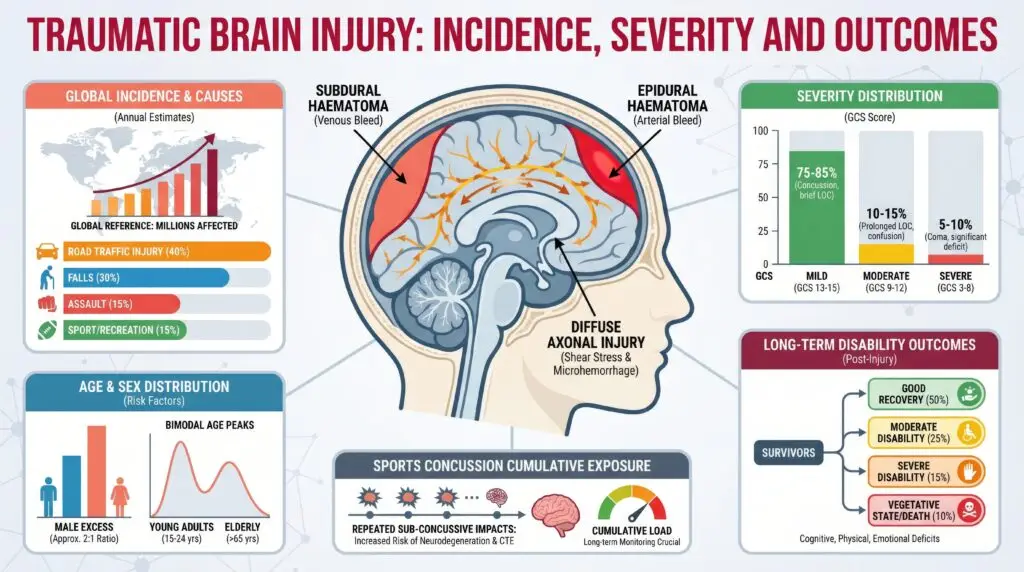
Social Security defines traumatic brain injury as damage to the brain resulting from a skull fracture, a collision with an external force causing a closed head injury, or penetration by an object that enters the skull and contacts brain tissue.
TBIs may result from:
- car accidents
- motorcycle accidents
- falls
- workplace accidents
- construction accidents
- sports injuries
- assaults
- blast injuries
- objects striking the head
The severity of a TBI can vary widely.
A person may experience a relatively brief loss of consciousness yet continue to have significant cognitive symptoms. Another person may have obvious neurological impairment immediately after the injury.
For Social Security purposes, the focus eventually becomes what limitations remain and whether those limitations prevent sustained work.
Can a Traumatic Brain Injury Qualify for Social Security Disability?
Yes.
A TBI may support a disability claim when it causes persistent limitations such as:
- severe memory loss
- difficulty learning new information
- poor concentration
- slow processing speed
- headaches
- dizziness
- balance problems
- weakness
- difficulty using the arms or hands
- impaired judgment
- emotional instability
- behavioral changes
- fatigue
- speech problems
- excessive absences
- inability to complete a normal workday
The strongest claims do more than prove that an injury occurred. They show what changed after the injury and how those changes interfere with work.
Social Security Blue Book Listing 11.18 for Traumatic Brain Injury
Social Security has a specific neurological listing for traumatic brain injury: Listing 11.18.
A TBI may satisfy Listing 11.18 in one of two ways.
One pathway involves severe disorganization of motor function in two extremities resulting in an extreme limitation in standing up from a seated position, balancing while standing or walking, or using the upper extremities.
The second pathway involves a marked limitation in physical functioning together with a marked limitation in one area of mental functioning, such as:
- understanding, remembering, or applying information
- interacting with others
- concentrating, persisting, or maintaining pace
- adapting or managing oneself
These limitations generally must persist for at least three consecutive months after the injury.
This is important because TBI is one of the conditions where Social Security specifically recognizes the combination of physical and mental impairment.
Why Social Security May Wait to Evaluate a TBI
Brain injuries can change significantly during the months after an accident.
Social Security explains that it generally needs evidence from at least three months after the TBI to evaluate the motor or combined physical-and-mental criteria under Listing 11.18.
In some severe cases, there may be enough evidence to approve the claim earlier. If not, Social Security may defer the decision until evidence is available at least three months after the injury and, in some situations, again until at least six months after the injury.
That does not mean someone should wait months before applying. It means the medical record over time can become particularly important in a TBI case.
TBI and Memory Problems
Memory problems are among the most significant work limitations after some brain injuries.
A person may have difficulty:
- remembering instructions
- learning new procedures
- keeping appointments
- remembering conversations
- recalling passwords
- following multi-step tasks
- remembering what they were doing after an interruption
At work, these problems may lead to:
- repeated mistakes
- incomplete assignments
- missed deadlines
- repeated questions
- lost information
- difficulty working independently
A person may look physically healthy while being unable to remember enough information to perform even familiar work reliably.
TBI and Concentration Problems
Brain injuries may reduce the ability to focus for sustained periods.
A person may have difficulty:
- staying on task
- reading for long periods
- following conversations
- multitasking
- working around distractions
- maintaining attention during meetings
- completing tasks without frequent breaks
Concentration problems may cause:
- reduced productivity
- mistakes
- unfinished work
- excessive off-task time
- inability to meet production expectations
This can affect physical, office, professional, and sedentary work.
TBI and Slowed Processing Speed
Some people after a TBI can understand information but need much longer to process it.
This may show up as difficulty:
- answering questions quickly
- following fast conversations
- responding to customers
- making decisions
- completing paperwork
- switching between tasks
- reacting to unexpected problems
A job does not have to be intellectually complex to require adequate processing speed.
Even routine jobs may become difficult when a person consistently falls behind because the brain cannot process information quickly enough.
TBI and Executive Function Problems
Executive functioning refers to the ability to organize, plan, prioritize, regulate behavior, and make decisions.
A TBI may impair:
- planning
- judgment
- organization
- impulse control
- problem-solving
- awareness of mistakes
- task initiation
- ability to adapt
At work, this may cause a person to:
- start tasks but not finish them
- perform steps in the wrong order
- make unsafe decisions
- become overwhelmed by changes
- need repeated supervision
- fail to recognize mistakes
Executive functioning problems may be particularly difficult to capture in routine medical visits but can have a major effect on employability.
TBI and Headaches
Headaches are common after some traumatic brain injuries.
Persistent post-traumatic headaches or migraines may cause:
- severe head pain
- nausea
- light sensitivity
- sound sensitivity
- blurred vision
- difficulty concentrating
- need to lie down
- reduced tolerance for screens
At work, headaches may lead to:
- unscheduled breaks
- reduced pace
- inability to use a computer
- early departures
- missed workdays
The frequency, duration, and intensity of headaches should be documented.
TBI, Dizziness, and Balance Problems
Brain injury may interfere with the neurological or vestibular systems that help control balance.
Symptoms may include:
- dizziness
- vertigo
- unsteadiness
- difficulty walking
- falls
- near-falls
- difficulty turning quickly
- problems on uneven surfaces
These symptoms may create restrictions involving:
- ladders
- heights
- machinery
- driving
- stairs
- uneven terrain
Even office work may become difficult if a person cannot safely move around the workplace.
TBI and Vision Problems
A traumatic brain injury may sometimes cause or worsen problems involving:
- blurred vision
- double vision
- light sensitivity
- visual tracking
- depth perception
- eye strain
These symptoms may interfere with:
- reading
- computer work
- driving
- machinery
- detailed visual tasks
- sustained concentration
Vision symptoms should be documented through appropriate medical or vision evaluations when persistent.
TBI and Speech or Communication Problems
Some brain injuries affect speech, language, or the ability to organize thoughts into words.
A person may experience:
- slurred speech
- difficulty finding words
- trouble organizing thoughts
- slow speech
- difficulty understanding complex language
- difficulty following conversation
These limitations may interfere with:
- customer service
- telephone work
- management
- teaching
- healthcare
- sales
- professional work
Speech-language pathology evaluations may provide valuable evidence in these claims.
TBI and Fatigue
Neurological fatigue can be significant after brain injury.
A person may be able to perform well for a short period but deteriorate mentally or physically as the day progresses.
Fatigue may cause:
- slower thinking
- worsening concentration
- headaches
- irritability
- need for rest
- reduced stamina
- inability to work a full day
- prolonged recovery after activity
This is an important distinction in disability cases.
The question is not simply whether the person can perform a task once. It is whether they can repeat that activity reliably throughout a normal workday and workweek.
TBI and Behavioral Changes
Brain injury can sometimes cause significant changes in personality or behavior.
Possible changes may include:
- irritability
- impulsivity
- anger
- inappropriate comments
- emotional outbursts
- reduced frustration tolerance
- apathy
- lack of insight
- poor judgment
These symptoms can interfere with:
- accepting supervision
- interacting with coworkers
- customer contact
- responding to criticism
- managing conflict
- following workplace rules
Behavioral changes may become as vocationally significant as memory or physical limitations.
TBI and Emotional Problems
A serious brain injury may also be associated with mental health conditions such as:
- depression
- anxiety
- panic symptoms
- PTSD
- emotional lability
- social withdrawal
These conditions may result from neurological changes, the traumatic event itself, the consequences of the injury, or a combination of factors.
Social Security should consider all medically determinable mental and neurological impairments together.
Mental-Only Limitations After TBI
Not every disabling TBI causes major physical limitations.
Social Security’s neurological guidance recognizes that neurological conditions can sometimes result primarily in cognitive or other mental limitations. In those situations, SSA may evaluate the impairment under the mental disorder listings rather than relying solely on the neurological listing.
This can be important when a claimant walks normally but has severe problems with:
- memory
- executive functioning
- concentration
- emotional regulation
- judgment
- social behavior
A normal gait does not necessarily mean the brain injury has no disabling effect.
TBI and Post-Concussion Symptoms
Some people continue to experience symptoms after a concussion or mild traumatic brain injury.
Possible persistent symptoms include:
- headaches
- dizziness
- light sensitivity
- sound sensitivity
- poor concentration
- memory problems
- sleep disturbance
- fatigue
- irritability
- difficulty tolerating screens
The label attached to the condition is less important than the severity, duration, and functional effects of the medically documented symptoms.
A person with a “mild” TBI may still have significant work limitations if symptoms persist.
Can You Work After a Traumatic Brain Injury?
Some people can return to work successfully after a TBI.
Others may be able to return only with:
- reduced hours
- simpler duties
- frequent breaks
- reduced screen time
- less multitasking
- written instructions
- supervision
- reduced noise
- predictable routines
For Social Security Disability, the important question is whether the person can eventually sustain competitive full-time employment, not whether they can perform limited activity.
Can a TBI Prevent Sedentary Work?
Yes.
Sedentary work still requires:
- concentration
- memory
- pace
- judgment
- attendance
- ability to follow instructions
- ability to adapt
- interaction with others
- completion of full workdays
A person may be physically capable of sitting at a desk while being unable to sustain desk work because of:
- headaches
- memory problems
- slowed processing
- brain fatigue
- vision problems
- emotional instability
- excessive off-task time
- frequent absences
This is why the cognitive effects of a brain injury should be documented as carefully as the physical effects.
TBI and Residual Functional Capacity
Residual Functional Capacity, or RFC, describes what a person can still do despite medical limitations.
A TBI RFC may include physical restrictions such as:
- limited standing
- limited walking
- limited balancing
- no ladders or heights
- no dangerous machinery
- limited driving
- limited hand use
It may also include mental restrictions such as:
- simple tasks
- short or simple instructions
- reduced multitasking
- limited workplace changes
- no fast-paced production
- reduced decision-making
- limited public interaction
- extra supervision
- additional breaks
- reduced pace
- off-task time
- absences
The most important RFC limitations depend on the symptoms actually documented in the medical record.
Medical Evidence That Helps Prove a TBI Disability Claim
Helpful medical evidence may include:
- emergency room records
- hospitalization records
- neurology records
- rehabilitation records
- CT scans
- MRI studies
- neurological examinations
- neuropsychological testing
- cognitive testing
- physical therapy records
- occupational therapy records
- speech therapy records
- vestibular evaluations
- headache treatment records
- psychiatric or psychological records
- medication history
- provider statements about work limitations
A brain scan does not always tell the entire story.
Functional testing, clinical examinations, treatment observations, and evidence of how the person functions over time may be equally important.
Neuropsychological Testing and TBI
Neuropsychological testing can be particularly useful when a brain injury primarily affects cognition.
Testing may evaluate:
- memory
- attention
- processing speed
- executive functioning
- language
- problem-solving
- visual-spatial abilities
These results may help explain why a person who appears physically capable cannot perform work requiring sustained cognitive functioning.
Rehabilitation Records
Physical, occupational, and speech therapy records can provide valuable information about:
- balance
- coordination
- memory
- speech
- task completion
- safety awareness
- need for cueing
- fatigue
- ability to perform daily activities
Therapy records often contain practical observations that may not appear in a short physician visit.
Family and Caregiver Statements
Brain injury can reduce a person’s awareness of their own limitations.
Family or caregiver observations may help document changes involving:
- memory
- personality
- judgment
- emotional control
- independence
- safety
- ability to manage medication
- ability to keep appointments
- ability to complete tasks
Specific examples are generally more useful than broad statements.
Employer Evidence After a Brain Injury
Employment records can sometimes provide powerful evidence of functional decline.
Helpful evidence may include:
- reduced productivity
- increased mistakes
- written warnings
- attendance problems
- inability to learn new duties
- reduced hours
- special accommodations
- coworker assistance
- unsuccessful return-to-work attempts
- termination related to performance problems
A documented difference between pre-injury and post-injury work performance may help illustrate the effect of the TBI.
Failed Attempts to Return to Work
Some people with TBI try to return to work because they believe they have recovered.
They may then discover that they cannot:
- keep up with the pace
- remember instructions
- tolerate screens or noise
- control headaches
- maintain attendance
- handle workplace stress
- complete a full shift
A failed return-to-work attempt may provide important evidence about actual functional capacity.
Doctor Statements for TBI Work Limitations
A treating provider may be able to address:
- memory limitations
- concentration
- processing speed
- executive functioning
- headache frequency
- balance
- walking
- vision problems
- fatigue
- emotional regulation
- ability to handle stress
- off-task time
- need for breaks
- expected absences
- ability to complete a full workday
Specific functional opinions are generally more useful than simply stating that the patient is “disabled.”
.
Tracking TBI Symptoms
A symptom log may help document:
- headaches
- dizziness
- memory problems
- concentration problems
- fatigue
- sleep disturbance
- visual symptoms
- emotional changes
- falls
- missed appointments
- missed work
- need for rest
- activities that trigger symptoms
A symptom log does not replace medical evidence, but it may help identify patterns over time.
Signs a TBI May Prevent Full-Time Work
A traumatic brain injury may support disability when it causes:
- significant memory loss
- poor concentration
- slowed processing speed
- severe headaches
- balance problems
- frequent falls
- impaired judgment
- executive functioning problems
- emotional instability
- severe fatigue
- speech or vision problems
- excessive off-task time
- frequent absences
- inability to complete full workdays
When these limitations are persistent and medically documented, the disability claim may be stronger.
Common Mistakes in TBI Disability Claims
Common problems include:
- relying only on the fact that a head injury occurred
- focusing only on CT or MRI findings
- failing to document cognitive symptoms
- not obtaining neuropsychological testing when appropriate
- ignoring headaches or fatigue
- failing to document personality or behavioral changes
- not gathering rehabilitation records
- failing to explain failed work attempts
- assuming physical recovery means full recovery
- failing to connect symptoms to specific RFC restrictions
A strong TBI claim explains what changed after the injury and why those changes prevent sustained work.
When to Speak With a Social Security Disability Lawyer
Many people seek legal help when:
- their disability claim has been denied
- memory or concentration problems prevent work
- headaches remain severe
- balance problems create safety concerns
- personality or behavioral changes interfere with employment
- they tried to return to work but could not sustain it
- Social Security focuses on normal physical findings while overlooking cognitive limitations
- they are preparing for a disability hearing
Our social security disability attorneys can help evaluate whether the evidence supports Listing 11.18, another applicable listing, or disability through residual functional capacity.
FAQs: Traumatic Brain Injury and Social Security Disability Benefits
Can a traumatic brain injury qualify for Social Security Disability?
Yes. A TBI may qualify when persistent neurological, physical, cognitive, or behavioral limitations prevent a person from sustaining substantial work.
Is there a Social Security Blue Book listing for traumatic brain injury?
Yes. Adult traumatic brain injury is evaluated under Listing 11.18. It addresses severe motor limitations or a combination of marked physical and mental functional limitations persisting for at least three consecutive months after the injury.
Does a TBI have to show up on an MRI to qualify for disability?
Not necessarily. Imaging can be important evidence, but Social Security evaluates the entire medical record and functional impact. Cognitive testing, neurological examinations, therapy records, and documented work limitations may also be important.
Can a mild TBI or concussion qualify for disability?
Potentially. The classification of the original injury does not by itself decide the claim. Persistent headaches, cognitive problems, balance issues, fatigue, or other medically documented limitations may still prevent sustained work.
Can memory loss after a TBI qualify for disability?
Yes. Significant memory problems may interfere with learning, following instructions, completing tasks, working independently, and maintaining reliable productivity.
Can headaches after a brain injury support an SSDI claim?
Yes. Frequent or severe post-traumatic headaches may interfere with concentration, screen use, attendance, pace, and completion of full workdays.
Can a TBI prevent sedentary work?
Yes. Sedentary work still requires memory, concentration, pace, judgment, attendance, adaptation, and consistent completion of job duties. Cognitive or behavioral TBI symptoms may make desk work impossible even when physical strength is relatively intact.
Why does Social Security look at evidence several months after a TBI?
Because brain injury symptoms may improve, worsen, or stabilize over time. SSA generally looks for evidence at least three months after the injury when evaluating Listing 11.18, although some severe claims can be approved earlier.
What evidence helps prove a TBI disability claim?
Helpful evidence may include hospital and neurology records, CT or MRI studies, neuropsychological testing, cognitive testing, rehabilitation records, speech and occupational therapy records, headache treatment, mental health records, employer evidence, and provider statements describing specific work restrictions.
What should I do if a traumatic brain injury prevents me from working?
You may want to speak with a Social Security Disability attorney to evaluate whether your TBI meets Listing 11.18 or whether your physical, cognitive, and behavioral limitations support disability through residual functional capacity.
Contact MLF Legal for a Free Disability Case Evaluation
If a traumatic brain injury, memory loss, headaches, balance problems, cognitive impairment, behavioral changes, or another medical condition prevents you from working, you may qualify for Social Security Disability benefits.
MLF Legal represents disability applicants nationwide. Based in Dallas, Texas, we help individuals across the country pursue disability benefits.
Our social security lawyers can review your situation for free and explain your options.
📞 Call MLF Legal at 214-357-1782 to request a free consultation.
Next Steps:
1st Sign up For a Free One-on-One Disability Case Evaluation
Contact us today to schedule your personalized one-on-one free phone consultation with one of our dedicated legal professionals. Our experienced social security lawyers are here to provide the expert legal guidance and support you need throughout the entire process of your case.
We understand the complexities involved in social security disability claims and are committed to helping you achieve the best possible outcome. Don’t hesitate to reach out and take the first step toward securing the justice you deserve.
2nd Download Free E-Books
Social Security Disability
Navigating the Social Security Disability Benefits process can be complex, but understanding the key steps can help. From gathering medical records to completing the application, this process ensures eligible individuals receive the support they need. Seeking guidance from experts can simplify the journey and increase the chances of a successful outcome.
Call MLF Legal today
214-357-1782
Fill out our online form
for a free consultation.
We only get paid if we win your case.