
Ankylosing Spondylitis and Social Security Disability Benefits
TELL US WHAT HAPPENED SO WE CAN HELP. FREE CONSULTATION

Contact Us About Your Case
FREE Consultation Today.
Ankylosing Spondylitis and Social Security Disability Benefits
Ankylosing spondylitis can cause chronic inflammatory back pain, spinal stiffness, limited mobility, fatigue, posture problems, hip pain, neck pain, difficulty sitting, difficulty standing, and unpredictable flares. For some people, symptoms improve with treatment. For others, ankylosing spondylitis remains severe enough to interfere with work on a daily basis. When this occurs, we help people file ankylosing spondylitis and social security disability claims.
While ankylosing spondylitis does not automatically qualify someone for Social Security Disability benefits, it may support a disability claim when the condition is medically documented and prevents reliable full-time work.
Ankylosing spondylitis may be involved in disability claims when it causes:
- chronic low back pain
- sacroiliac joint pain
- hip pain
- neck or upper back stiffness
- reduced spinal motion
- difficulty bending
- problems sitting
- limited ability to stand
- difficulty walking
- fatigue
- sleep disruption
- flares
- limited posture tolerance
- medication side effects
- missed workdays
- inability to complete a full workday
This guide explains how Social Security evaluates ankylosing spondylitis, what symptoms and medical evidence may matter, how residual functional capacity applies, and when it may be time to speak with a social security disability lawyer.

What Is Ankylosing Spondylitis?
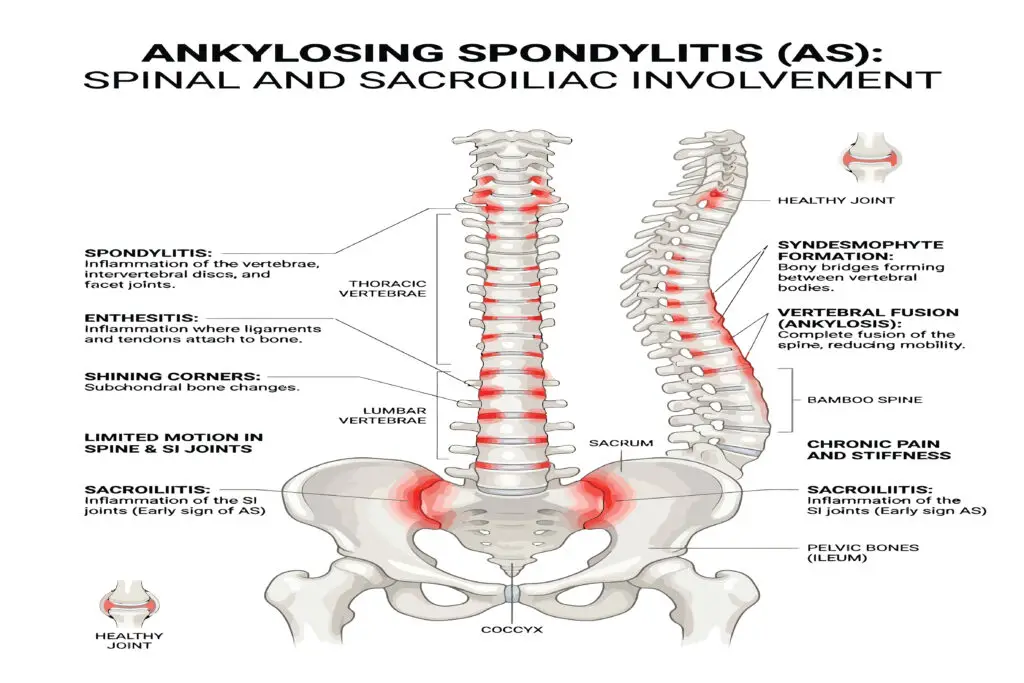
Ankylosing spondylitis, often called AS, is a chronic inflammatory arthritis that primarily affects the spine and sacroiliac joints. The sacroiliac joints connect the lower spine to the pelvis.
Unlike ordinary mechanical back pain, ankylosing spondylitis is an inflammatory condition. Symptoms often involve stiffness, pain, and reduced mobility that may be worse after rest and may improve somewhat with movement.
Common symptoms of ankylosing spondylitis include:
- chronic low back pain
- buttock or sacroiliac pain
- hip pain
- morning stiffness
- stiffness after sitting or lying down
- neck pain
- upper back pain
- reduced spinal flexibility
- difficulty bending
- difficulty twisting
- fatigue
- sleep problems
- pain that improves with movement but worsens after inactivity
- flares of severe pain and stiffness
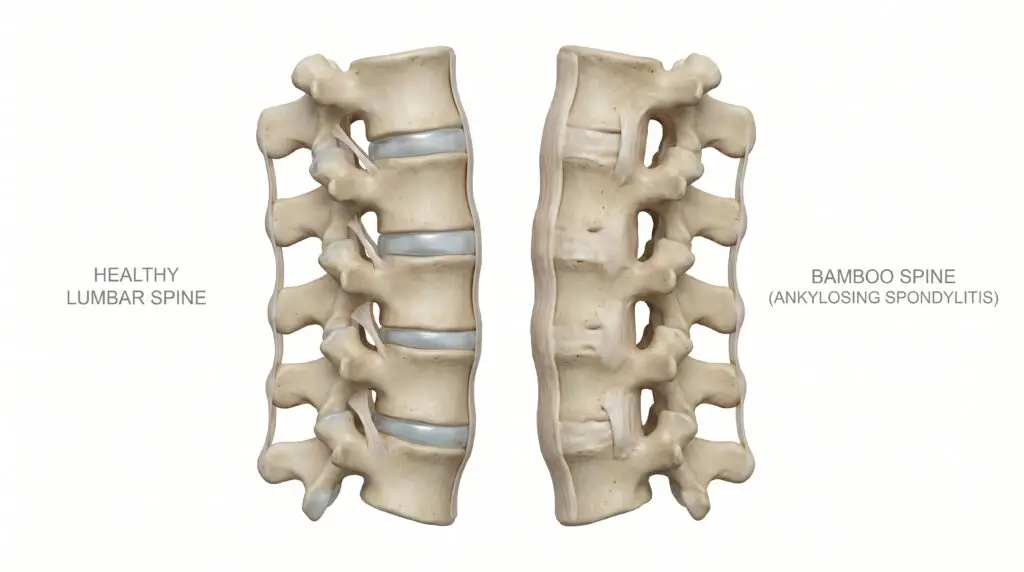
In more advanced cases, ankylosing spondylitis may cause changes in posture, reduced chest expansion, spinal fusion, or difficulty moving the neck and back.
Can Ankylosing Spondylitis Qualify for Social Security Disability?
Yes, in some cases. Ankylosing spondylitis may qualify for Social Security Disability benefits if it causes severe functional limitations that prevent full-time work.
Social Security generally does not approve benefits based only on a diagnosis.
SSA evaluates:
- the severity of back and joint symptoms
- imaging findings
- physical examination findings
- spinal range of motion
- gait and posture
- hip involvement
- fatigue
- flares
- treatment history
- medication side effects
- ability to sit, stand, walk, lift, carry, bend, twist, and maintain pace
- ability to attend work consistently
- whether symptoms are expected to last at least 12 months
The key issue is whether ankylosing spondylitis prevents reliable, sustained employment.
For example, ankylosing spondylitis may support a disability claim when it causes:
- inability to sit for long periods
- inability to stand or walk long enough for work
- need to change positions frequently
- difficulty bending or twisting
- inability to lift and carry reliably
- severe fatigue
- frequent flares
- poor sleep from pain
- reduced concentration from pain or fatigue
- excessive absences
- inability to complete a full workday
If these limitations are medically documented and prevent full-time work, disability benefits may be available.
Ankylosing Spondylitis and Inflammatory Back Pain
Inflammatory back pain is often different from ordinary back strain or degenerative disc disease.
A person with ankylosing spondylitis may experience:
- stiffness after rest
- severe morning stiffness
- pain that wakes them at night
- pain that improves somewhat with movement
- alternating buttock pain
- pain that worsens after prolonged sitting
- reduced flexibility over time
- difficulty bending or rotating the spine
In a work setting, inflammatory back pain may affect:
- sitting tolerance
- standing tolerance
- walking tolerance
- ability to bend
- ability to twist
- lifting ability
- ability to maintain posture
- ability to work at a consistent pace
This is especially important because many jobs require sustained posture, even when the job is considered “sedentary.”
Ankylosing Spondylitis and Spinal Stiffness
Spinal stiffness is one of the most important symptoms in ankylosing spondylitis claims.
Stiffness may affect work by limiting:
- bending
- twisting
- turning the head
- reaching
- sitting upright
- standing still
- walking normally
- getting in and out of chairs
- driving
- changing positions quickly
- responding safely to hazards
Neck stiffness may be especially important for jobs requiring driving, machinery operation, surveillance, patient care, warehouse work, construction, or any work requiring frequent scanning of the environment.
If spinal stiffness prevents normal movement throughout the workday, it should be documented in treatment records and RFC evidence.
Ankylosing Spondylitis and Sitting Limitations
Ankylosing spondylitis can make sedentary work difficult. Sitting for long periods may worsen stiffness, pain, hip discomfort, or fatigue.
A person may need to:
- stand frequently
- walk around to reduce stiffness
- change positions often
- recline or lie down during severe flares
- avoid prolonged sitting
- use special seating
- take unscheduled breaks
This matters because Social Security may deny a claim by finding that the person can perform sedentary work. But sedentary work still requires the ability to sit long enough, stay on task, maintain pace, attend consistently, and complete a full workday.
A person with ankylosing spondylitis may be unable to perform sedentary work if they cannot sit reliably or need position changes beyond normal employer tolerances.
Ankylosing Spondylitis and Standing or Walking Limitations
Ankylosing spondylitis may also limit standing and walking, especially when the hips, pelvis, lower back, knees, or feet are involved.
Standing and walking limitations may include:
- difficulty standing in one place
- pain after short walking distances
- reduced stride length
- stiffness after sitting
- difficulty climbing stairs
- need for a cane or assistive device
- difficulty walking on uneven surfaces
- fatigue after limited activity
- increased pain after exertion
These limitations can affect jobs involving retail, food service, healthcare, security, construction, warehouse work, delivery, manufacturing, maintenance, and other physical occupations.
Ankylosing Spondylitis and Fatigue
Fatigue is common in inflammatory diseases. Ankylosing spondylitis-related fatigue may come from inflammation, chronic pain, poor sleep, medication effects, depression, anemia, or the effort required to move through the day.
Fatigue may affect work by causing:
- reduced stamina
- slower pace
- need for rest breaks
- inability to work full shifts
- difficulty working consecutive days
- poor concentration
- missed work after flares
- inability to recover after activity
Fatigue can be disabling even when joint or spine findings do not fully capture the person’s daily limitations.
Ankylosing Spondylitis and Sleep Problems
Pain and stiffness can make sleep difficult. Some people with ankylosing spondylitis wake during the night because of back pain, hip pain, or stiffness.
Poor sleep may worsen:
- fatigue
- brain fog
- irritability
- concentration problems
- pain sensitivity
- mood symptoms
- work attendance
- productivity
Sleep disruption may be important in a disability claim when it contributes to daytime fatigue, reduced pace, or inability to complete full workdays.
Ankylosing Spondylitis and Flares
Ankylosing spondylitis often involves flares. During a flare, symptoms may become significantly worse.
Flares may cause:
- severe back pain
- increased stiffness
- hip pain
- fatigue
- reduced mobility
- difficulty sleeping
- difficulty sitting or standing
- missed workdays
- medication changes
- doctor visits
- reduced ability to complete daily activities
Social Security evaluates whether a person can work reliably over time. A person may function on some days but still be unable to sustain employment if flares cause excessive absences or inconsistent productivity.
Ankylosing Spondylitis and Hip, Shoulder, or Peripheral Joint Pain
Although ankylosing spondylitis primarily affects the spine and sacroiliac joints, it can also affect other joints.
Peripheral joint involvement may include:
- hip pain
- shoulder pain
- knee pain
- ankle pain
- heel pain
- rib or chest wall pain
- tendon or ligament pain
Hip involvement can be especially work-limiting because it may affect walking, standing, climbing stairs, sitting, and getting in or out of chairs.
Shoulder involvement may affect reaching, lifting, carrying, pushing, pulling, and overhead work.
Ankylosing Spondylitis and Chest Wall or Breathing Limitations
Some people with ankylosing spondylitis experience stiffness or inflammation involving the ribs and chest wall. This may make deep breathing uncomfortable or limit chest expansion.
Work-related problems may include:
- pain with deep breathing
- reduced stamina
- difficulty with exertion
- fatigue
- shortness of breath-like symptoms
- difficulty with physically demanding work
- difficulty tolerating respiratory illness
If breathing limitations are present, medical records should document chest wall symptoms, pulmonary testing if performed, and any exertional restrictions.
Ankylosing Spondylitis and Eye Inflammation
Some people with ankylosing spondylitis develop eye inflammation, such as uveitis or iritis.
Eye symptoms may include:
- eye pain
- redness
- light sensitivity
- blurred vision
- headaches
- difficulty reading
- difficulty using screens
- missed work for urgent treatment
Vision symptoms may affect computer work, driving, reading, paperwork, machinery, safety-sensitive work, and public-facing duties.
Ankylosing Spondylitis and Mental Health
Living with chronic pain, stiffness, fatigue, and reduced mobility can contribute to depression, anxiety, irritability, panic symptoms, and social withdrawal.
Mental health symptoms may affect work by causing:
- reduced motivation
- poor concentration
- difficulty handling stress
- social withdrawal
- irritability
- panic symptoms
- missed workdays
- reduced pace
- difficulty completing tasks
If mental health symptoms are significant, they should be documented and considered as part of the overall disability claim.
Ankylosing Spondylitis and Residual Functional Capacity
Residual Functional Capacity, or RFC, describes what a person can still do despite medical limitations.
For ankylosing spondylitis, RFC limitations may involve:
- limited sitting
- limited standing
- difficulty walking
- need to alternate positions
- limited bending
- limited twisting
- no climbing
- limited lifting and carrying
- difficulty reaching
- limited neck rotation
- no ladders or hazardous work if mobility is impaired
- reduced pace due to pain or fatigue
- need for rest breaks
- absences from flares
- difficulty concentrating due to pain or poor sleep
- inability to complete a full workday
A strong disability claim explains how ankylosing spondylitis affects specific work functions.
For example:
- Spinal stiffness may limit sitting, bending, and twisting.
- Hip pain may limit standing and walking.
- Neck stiffness may affect driving or safety-sensitive work.
- Fatigue may reduce pace and attendance.
- Flares may cause unpredictable absences.
- Pain may interfere with concentration and task completion.
Ankylosing Spondylitis and Sedentary Work
Sedentary work is not always realistic for someone with ankylosing spondylitis.
Sedentary jobs still require:
- sitting for long periods
- staying on task
- maintaining pace
- attending work regularly
- using a computer or phone
- turning the head and neck
- reaching for files or supplies
- walking to restrooms or meetings
- completing full workdays
Ankylosing spondylitis may prevent sedentary work if the person:
- cannot sit long enough
- needs frequent unscheduled position changes
- must lie down during the day
- cannot maintain focus because of pain
- misses work due to flares
- cannot sustain pace because of fatigue
- has neck stiffness that limits screen use, driving, or workplace safety
A disability claim should explain why the person cannot sustain even seated work if sedentary work is the issue.
Ankylosing Spondylitis and Past Work
RFC is used to determine whether a person can return to past work.
Ankylosing spondylitis may prevent past work involving:
- heavy lifting
- repeated bending
- twisting
- prolonged standing
- prolonged sitting
- climbing stairs or ladders
- driving
- warehouse work
- construction
- manufacturing
- healthcare or patient care
- retail
- food service
- maintenance
- security
- delivery work
For someone whose past work required physical labor, spinal stiffness, hip pain, fatigue, and flares may make returning to that work impossible.
Ankylosing Spondylitis, Age, and Vocational Factors
Social Security does not evaluate RFC in isolation. Age, education, and work history may also matter.
This can be important for older workers with ankylosing spondylitis and a history of physically demanding work.
For example:
- A worker over 50 with a long history of heavy labor may have fewer realistic job options.
- A person with limited education may have fewer transferable skills.
- A person who cannot sit long enough for sedentary work may have limited vocational options.
- A person with no transferable skills may have difficulty adjusting to other work.
The medical evidence must still support the functional restrictions.
Relevant Social Security Blue Book Listings for Ankylosing Spondylitis
Ankylosing spondylitis may be evaluated under different Social Security Blue Book listings depending on the symptoms and complications.
Potentially relevant listing areas may include:
- inflammatory arthritis
- musculoskeletal disorders
- spine disorders
- immune system disorders
- vision-related listings if uveitis or other eye complications cause serious visual limitations
- respiratory listings if chest wall involvement or related respiratory problems cause significant limitations
Many ankylosing spondylitis claims do not meet a Blue Book listing. Even if a person does not meet a listing, ankylosing spondylitis may still support disability through a Residual Functional Capacity assessment.
In many cases, the most important question is whether pain, stiffness, fatigue, limited mobility, and flares prevent reliable full-time work.
Common Medications for Ankylosing Spondylitis
Prescription medication history can help show ongoing treatment, but taking medication alone does not prove disability.
Common treatments may include:
- NSAIDs
- steroids in some situations
- physical therapy
- biologic medications
- TNF inhibitors
- IL-17 inhibitors
- pain medications
- muscle relaxers in some cases
- medications for related conditions or complications
Biologic and advanced medications may include:
Medication use may help show that the condition is serious and requires ongoing treatment. The key issue is whether symptoms continue to limit work despite treatment.
Medication Side Effects and Ankylosing Spondylitis Disability Claims
Medication side effects may affect work if they are documented and contribute to functional limitations.
Possible side effects may include:
- fatigue
- dizziness
- nausea
- headaches
- brain fog
- stomach upset
- increased infection risk from biologics
- medication monitoring appointments
- injection or infusion reactions
- steroid-related mood or sleep changes
- NSAID-related gastrointestinal problems
Social Security may consider medication side effects when they affect the ability to work safely, consistently, or productively.
Medical Evidence That May Support an Ankylosing Spondylitis Disability Claim
Strong medical evidence is important in ankylosing spondylitis claims.
Helpful evidence may include:
- rheumatology records
- primary care records
- imaging studies
- X-rays
- MRI reports
- sacroiliac joint imaging
- spine imaging
- physical examination findings
- range of motion measurements
- gait observations
- posture findings
- hip exam findings
- inflammatory marker testing
- HLA-B27 testing if performed
- medication history
- biologic treatment records
- physical therapy records
- records of flares
- records of fatigue
- pain management records
- ophthalmology records if eye inflammation occurs
- physician statements about work limitations
The strongest evidence connects the diagnosis to specific work problems, such as sitting limits, standing limits, walking limits, bending restrictions, absences, or inability to complete a full workday.
Imaging Evidence in Ankylosing Spondylitis Claims
Imaging can help document sacroiliac joint inflammation, spinal changes, fusion, or other structural findings.
Helpful imaging may include:
- pelvic X-rays
- sacroiliac joint X-rays
- MRI of the sacroiliac joints
- MRI of the spine
- cervical spine imaging
- thoracic spine imaging
- lumbar spine imaging
- hip imaging if hip symptoms are present
Imaging is important, but Social Security still evaluates functional limitations. Some people have severe symptoms even when imaging findings do not fully explain daily pain and stiffness.
Physical Examination Findings That May Matter
Physical examination findings may help show how ankylosing spondylitis affects function.
Relevant findings may include:
- reduced spinal range of motion
- reduced neck range of motion
- abnormal posture
- difficulty bending
- sacroiliac tenderness
- hip tenderness
- reduced hip motion
- abnormal gait
- difficulty rising from a chair
- muscle weakness
- stiffness observed during exams
- use of a cane or assistive device
- pain with movement
Repeated findings across multiple visits may help show persistent limitations.
Evidence of Fatigue and Flares
Because ankylosing spondylitis symptoms can fluctuate, evidence of fatigue and flares may be very important.
Helpful evidence may include:
- flare frequency
- flare duration
- symptoms during flares
- missed workdays
- medication changes
- steroid use or treatment escalation
- biologic therapy records
- need for rest after activity
- poor sleep documentation
- provider statements about expected absences
- symptom logs
Social Security evaluates whether a person can sustain work over time, not just whether they can function during a brief exam or on a better day.
Doctor Statements for Ankylosing Spondylitis Work Limitations
A treating provider’s statement may help explain how ankylosing spondylitis affects work.
A useful statement may address:
- sitting tolerance
- standing tolerance
- walking tolerance
- lifting and carrying limits
- bending and twisting restrictions
- neck movement restrictions
- need to change positions
- need for rest breaks
- fatigue severity
- flare frequency
- likely absences
- medication side effects
- whether symptoms persist despite treatment
- expected duration of limitations
The most helpful opinions are specific, consistent with treatment records, and tied to work-related functions.
Tracking Ankylosing Spondylitis Symptoms for a Disability Claim
A symptom log may help document how ankylosing spondylitis affects daily life. A useful log may include:
- pain level
- morning stiffness duration
- sitting tolerance
- standing tolerance
- walking distance
- need to change positions
- sleep disruption
- fatigue level
- flare dates
- activities that worsen symptoms
- missed work or activities
- medication side effects
- doctor appointments
- physical therapy
- eye symptoms
- rest breaks needed
- recovery time after activity
A symptom log is not a substitute for medical evidence, but it may help support treatment records and testimony.
Examples of Work Limitations Caused by Ankylosing Spondylitis
Ankylosing spondylitis may support disability eligibility when it causes limitations such as:
- inability to sit for long periods
- inability to stand for long periods
- limited walking tolerance
- difficulty bending or twisting
- reduced neck movement
- difficulty lifting or carrying
- need to change positions frequently
- need for unscheduled rest breaks
- severe fatigue
- reduced pace from pain
- absences from flares
- inability to complete a full workday
- inability to sustain full-time work
At a disability hearing, these limitations may be important because a vocational expert may consider whether a person with those restrictions could sustain competitive employment.
Signs Ankylosing Spondylitis May Support a Disability Claim
You may want to explore disability eligibility if ankylosing spondylitis causes:
- severe inflammatory back pain
- marked morning stiffness
- inability to sit long enough for work
- difficulty standing or walking
- limited spinal motion
- hip pain or reduced hip mobility
- neck stiffness affecting driving or safety
- severe fatigue
- frequent flares
- sleep disruption
- biologic treatment despite persistent symptoms
- excessive absences
- failed attempts to keep working
When ankylosing spondylitis prevents reliable, sustained full-time employment, disability benefits may be available.
When to Speak With a Social Security Disability Lawyer
Ankylosing spondylitis disability claims can be challenging because symptoms may fluctuate, imaging may not always tell the whole story, and Social Security may assume a person can perform sedentary work.
Many people seek legal help when:
- they are unsure whether ankylosing spondylitis qualifies
- their SSDI claim has been denied
- they have chronic inflammatory back pain and stiffness
- they cannot sit, stand, or walk long enough to work
- biologic medication has not restored work capacity
- fatigue and flares interfere with employment
- their records do not clearly explain RFC limitations
- they are preparing for a disability hearing
Our social security disability attorneys can help evaluate how ankylosing spondylitis affects RFC and what evidence may be needed.
FAQs: Ankylosing Spondylitis and Social Security Disability Benefits
Can ankylosing spondylitis qualify for Social Security Disability?
Yes. Ankylosing spondylitis may qualify for Social Security Disability if it meets or equals a listing or if the evidence shows that pain, stiffness, fatigue, flares, and functional limitations prevent reliable full-time work.
Does ankylosing spondylitis automatically qualify for SSDI?
No. A diagnosis of ankylosing spondylitis alone does not automatically qualify someone for SSDI. The key issue is whether the condition causes work-related limitations severe enough to prevent full-time employment.
What ankylosing spondylitis symptoms matter most in a disability claim?
Important symptoms may include inflammatory back pain, morning stiffness, reduced spinal motion, hip pain, neck stiffness, fatigue, sleep disruption, flares, difficulty sitting, difficulty standing, and difficulty walking.
Can ankylosing spondylitis prevent sedentary work?
Yes. Sedentary work may still be difficult if ankylosing spondylitis causes pain with sitting, need for frequent position changes, fatigue, poor concentration, absences from flares, or inability to complete a full workday.
What evidence helps prove ankylosing spondylitis in an SSDI claim?
Helpful evidence may include rheumatology records, imaging, MRI reports, X-rays, physical exam findings, range of motion findings, medication history, biologic treatment records, physical therapy records, flare documentation, fatigue documentation, and physician statements about work limitations.
Can biologic medications support an ankylosing spondylitis disability claim?
They can help show serious ongoing treatment, but taking a biologic medication alone does not prove disability. Social Security evaluates whether symptoms and limitations persist despite treatment.
Can fatigue from ankylosing spondylitis affect residual functional capacity?
Yes. Fatigue may affect RFC by limiting stamina, pace, concentration, attendance, and the ability to complete a full workday or workweek.
What should I do if ankylosing spondylitis prevents me from working?
You may want to speak with a Social Security Disability attorney to evaluate whether your medical records, symptoms, treatment history, RFC limitations, and work history may support an SSDI claim.
Contact MLF Legal for a Free Disability Case Evaluation
If ankylosing spondylitis, inflammatory back pain, spinal stiffness, hip pain, fatigue, medication side effects, or another medical condition prevents you from working, you may qualify for Social Security Disability benefits.
MLF Legal represents disability applicants nationwide. Based in Dallas, Texas, we help individuals across the country pursue disability benefits.
Our social security lawyers can review your situation for free and explain your options.
📞 Call MLF Legal at 214-357-1782 to request a free consultation.
Next Steps:
1st Sign up For a Free One-on-One Disability Case Evaluation
Contact us today to schedule your personalized one-on-one free phone consultation with one of our dedicated legal professionals. Our experienced social security lawyers are here to provide the expert legal guidance and support you need throughout the entire process of your case.
We understand the complexities involved in social security disability claims and are committed to helping you achieve the best possible outcome. Don’t hesitate to reach out and take the first step toward securing the justice you deserve.
2nd Download Free E-Books
Social Security Disability
Navigating the Social Security Disability Benefits process can be complex, but understanding the key steps can help. From gathering medical records to completing the application, this process ensures eligible individuals receive the support they need. Seeking guidance from experts can simplify the journey and increase the chances of a successful outcome.
Call MLF Legal today
214-357-1782
Fill out our online form
for a free consultation.
We only get paid if we win your case.