
PIP Joint Injuries in Texas Workers’ Compensation Claims
FREE CONSULTATION
Contact Us About Your Case
FREE Consultation Today.
PIP Joint Injuries in Texas Workers’ Compensation Claims
PIP joint injuries are among the most common finger injuries seen in Texas workers’ compensation claims. The proximal interphalangeal (PIP) joint, commonly called the middle finger joint, is critical for gripping, lifting, pinching, and performing fine motor tasks. Because the PIP joint is heavily involved in almost every hand movement, even a seemingly minor injury can lead to significant pain, stiffness, weakness, and long‑term disability.
Workers in construction, manufacturing, warehousing, transportation, oilfield operations, healthcare, and industrial settings frequently injure the PIP joint through crush injuries, falls, machinery accidents, heavy lifting, and sudden twisting or pulling forces.
Insurance carriers often minimize these injuries as simple finger sprains. In reality, PIP joint injuries may involve fractures, ligament tears, tendon disruptions, dislocations, instability, and post‑traumatic arthritis.
This post explains how PIP joint injuries occur, how they’re diagnosed, what treatment may be required, and how injured workers can protect their claims.
What Is the PIP Joint?
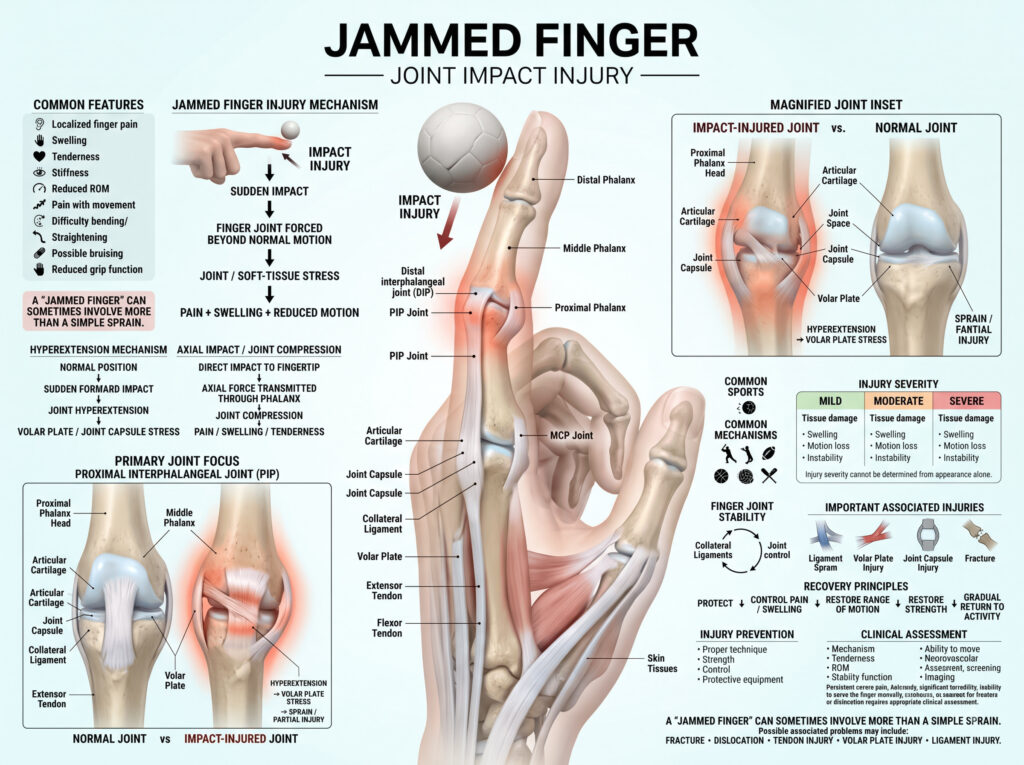
The proximal interphalangeal (PIP) joint is the middle joint of the finger located between:
- The proximal phalanx
- The middle phalanx
The PIP joint is stabilized by:
- Collateral ligaments
- Volar plate
- Extensor tendon mechanism
- Flexor tendons
- Joint capsule
These structures work together to provide:
- Finger stability
- Grip strength
- Pinching ability
- Range of motion
- Fine motor control
Because so many structures interact at the PIP joint, injuries frequently involve multiple tissues simultaneously.
Common Work Related Causes of PIP Joint Injuries
PIP joint injuries are strongly associated with:
- Machinery accidents
- Crush injuries
- Falls onto the hand
- Sudden pulling injuries
- Fingers caught in equipment
- Heavy lifting
- Direct blows
- Twisting injuries
- Vehicle accidents
- Repetitive manual labor
These mechanisms are fully consistent with compensable injuries under Texas workers’ compensation.
Types of PIP Joint Injuries
Several different injuries can affect the PIP joint.
PIP Joint Sprains
Stretching of the ligaments without complete tearing.
Collateral Ligament Tears
Damage to the side stabilizing ligaments of the joint.
Volar Plate Injuries
Injuries caused by hyperextension of the finger.
See Volar Plate Injuries.
PIP Joint Dislocations
The joint surfaces become displaced.
See Finger Dislocations.
Fracture Dislocations
A dislocation combined with a fracture.
Central Slip Injuries
Damage to the extensor tendon mechanism.
Symptoms of PIP Joint Injuries
Workers often report:
- Finger pain
- Swelling
- Bruising
- Joint stiffness
- Difficulty gripping
- Weak grip strength
- Joint instability
- Clicking or popping
- Loss of motion
- Finger deformity
Symptoms may appear immediately after an accident or gradually worsen over time.
How PIP Joint Injuries Affect Work Activities
PIP joint injuries frequently interfere with:
- Tool use
- Gripping objects
- Operating machinery
- Lifting materials
- Writing
- Keyboard work
- Carrying equipment
- Fine motor tasks
Even small motion losses can significantly reduce overall hand function.
Diagnosis of PIP Joint Injuries
Diagnosis may include:
Physical Examination
A physician may evaluate:
- Joint stability
- Range of motion
- Tenderness
- Grip strength
- Finger alignment
X-Ray
Used to identify:
- Fractures
- Dislocations
- Avulsion injuries
- Joint alignment problems
Ultrasound
Helpful for evaluating:
- Ligament tears
- Tendon injuries
- Soft tissue abnormalities
MRI
Often used for:
- Complex injuries
- Surgical planning
- Disputed workers’ compensation cases
Accurate diagnosis is critical because untreated instability can result in permanent dysfunction.
Medical Treatment for PIP Joint Injuries
Workers may be entitled to:
Conservative Treatment
For many injuries:
- Splinting
- Buddy taping
- Anti‑inflammatory medications
- Hand therapy
- Activity modification
Injections
Certain chronic inflammatory conditions may benefit from corticosteroid injections.
Surgery
Moderate to severe injuries may require:
- Ligament repair
- Volar plate repair
- Fracture fixation
- Joint stabilization
- Tendon repair
- Reconstruction procedures
Rehabilitation
Treatment often includes:
- Hand therapy
- Range‑of‑motion exercises
- Strengthening programs
- Functional retraining
– Functional Restoration Programs
Recovery Timeline
Recovery varies depending on severity:
- Mild sprains: 2–6 weeks
- Ligament tears: 6–12 weeks
- Dislocations: 6–10 weeks
- Complex injuries: 3–6 months
- Post‑surgical recovery: 3–6 months
Workers performing heavy labor frequently require extended restrictions.
Complications of PIP Joint Injuries
If untreated or undertreated, PIP joint injuries can lead to:
- Chronic pain
- Joint instability
- Finger stiffness
- Loss of motion
- Grip weakness
- Boutonnière deformity
- Post‑traumatic arthritis
- Permanent impairment
These complications often increase impairment ratings.
Post Traumatic Arthritis Following PIP Joint Injuries
The PIP joint is especially vulnerable to arthritis after:
- Fractures
- Dislocations
- Ligament tears
- Volar plate injuries
- Chronic instability
Workers may develop:
- Chronic stiffness
- Progressive pain
- Reduced motion
- Functional limitations
Impairment Ratings for PIP Joint Injuries
Impairment ratings may be based on:
- Loss of motion
- Grip strength deficits
- Joint instability
- Surgical outcomes
- Chronic pain
- Functional limitations
Workers with persistent stiffness or instability frequently qualify for measurable permanent impairment.
Why Insurance Companies Dispute PIP Joint Injury Claims
Carriers often argue:
- The injury is merely a sprain
- Symptoms are minor
- The worker has fully recovered
- Treatment is unnecessary
- The condition is degenerative
- The limitations are unrelated to work
These disputes can be challenged through:
See Aggravation Injuries.
How MLF Legal Proves PIP Joint Injuries Are Work Related
Our Workers’ Compensation Lawyers assist clients by:
- Proving the injury resulted from workplace trauma
- Linking instability and dysfunction to the accident
- Obtaining MRI, ultrasound, and specialist evaluations
- Fighting for surgery and therapy approvals
- Preparing workers for designated doctor exams
- Challenging low impairment ratings
- Winning disputes at BRCs and CCHs
PIP joint injury claims are highly winnable when supported by appropriate medical evidence.
The Bottom Line
PIP joint injuries are often far more serious than they initially appear. Even a minor injury can lead to permanent stiffness, instability, arthritis, and loss of hand function if not properly treated. If you suffered a PIP joint injury at work, you need a lawyer who understands the medical issues, legal standards, and workers’ compensation system necessary to maximize your recovery.
Call MLF Legal Today!
If you suffered a PIP joint injury at work, call the Texas Workers’ Compensation Lawyers at MLF Legal today.
We fight for injured workers — not insurance companies.
FAQs: PIP Joint Injuries in Texas Workers’ Compensation Claims
Yes. PIP joint injuries are compensable when caused or aggravated by workplace activities or trauma.
Some injuries can be treated conservatively, but unstable dislocations, ligament tears, and fracture‑dislocations often require surgery.
Physical examinations, X‑rays, ultrasound, and MRI studies are commonly used.
Yes. Many workers develop post‑traumatic arthritis following PIP fractures, dislocations, or ligament injuries.
Yes. Loss of motion, chronic pain, instability, and surgical outcomes frequently result in measurable permanent impairment.
Injured at work in Texas and your employer doesn’t have workers’ comp?
You may have the right to sue and recover full compensation.
Contact MLF Legal today for a free consultation. You pay nothing unless we win your case.
Next Steps:
1st
Sign up For a Free One-on-One Work Comp Case Evaluation
NEXT LEGAL STEP
Get a Legal Opinion
Contact us today to schedule your personalized one-on-one free phone consultation with one of our dedicated legal professionals. Our experienced Worker’s Comp Lawyers are here to provide the expert legal guidance and support you need throughout the entire process of your case.
We understand the complexities involved in Worker’s Compensation claims and are committed to helping you achieve the best possible outcome. Don’t hesitate to reach out and take the first step toward securing the justice you deserve.
2nd
Download Free E-Books
NEXT LEGAL STEP
Workers' Compensation
Applying for workers compensation can be a challenging process. It involves filing a claim, providing medical documentation, and navigating the approval process. Seeking guidance from a workers’ compensation attorney can help ensure your rights are protected and your claim is handled properly.
LET’S GET STARTED
Call MLF Legal today
214-357-1782
Fill out our online form
for a free consultation.
We only get paid if we win your case.