
Bipolar Disorder and Social Security Disability Benefits
TELL US WHAT HAPPENED SO WE CAN HELP. FREE CONSULTATION

Contact Us About Your Case
FREE Consultation Today.
Bipolar Disorder and SSDI: Understanding Your Rights
Bipolar disorder is a serious mental health condition that causes extreme shifts in mood, energy, and behavior. These episodes can make it difficult — and sometimes impossible — to maintain full‑time employment. Many Americans with bipolar disorder struggle with reliability, concentration, emotional stability, and the ability to interact appropriately in a workplace.
If bipolar disorder affects your ability to work, you may qualify for Social Security Disability Insurance (SSDI).
At MLF Legal, our social security disability lawyers help Bipolar Disorder and Social Security Disability claimants gather the right evidence, document functional limitations, and build strong mental health disability claims.
For help with your case, call 214‑357‑1782.

How the SSA Evaluates Bipolar Disorder
Bipolar disorder falls under Listing 12.04: Depressive, Bipolar, and Related Disorders in the SSA Blue Book. To qualify under this listing, you must show:
A medically documented history of bipolar disorder
Severe limitations in functioning, such as:
Understanding or applying information
Interacting with others
Maintaining pace or concentration
Adapting to changes or managing stress
Even if you do not meet the listing exactly, you may still qualify through Residual Functional Capacity (RFC) limitations that show you cannot sustain full‑time work.
Common Bipolar Symptoms That Affect Work
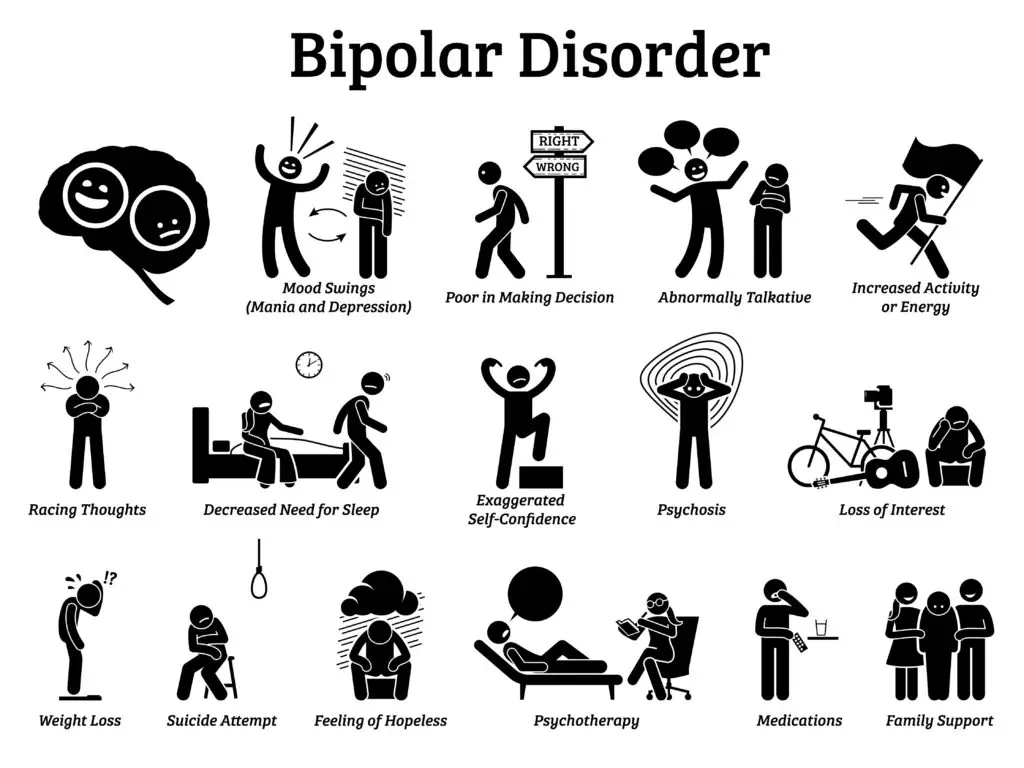
Bipolar disorder involves alternating episodes of mania, hypomania, and depression. Each phase can create significant work‑related challenges.
Manic or Hypomanic Symptoms
Impulsive or risky behavior
Racing thoughts
Decreased need for sleep
Irritability or agitation
Difficulty following instructions
Poor judgment or decision‑making
Depressive Symptoms
Difficulty concentrating
Memory problems
Social withdrawal
Suicidal thoughts
Inability to maintain pace or attendance
These symptoms can make it impossible to meet employer expectations for reliability, productivity, and appropriate behavior.
Types of Bipolar Disorder That May Qualify for SSDI
Any form of bipolar disorder can qualify if symptoms significantly impair functioning:
Bipolar I Disorder
Bipolar II Disorder
Cyclothymic Disorder
Rapid‑cycling bipolar disorder
Treatment‑resistant bipolar disorder
Bipolar disorder with co‑occurring conditions (anxiety, PTSD, ADHD, substance‑induced mood disorders)
Co‑occurring conditions often strengthen a Bipolar Disorder and Social Securitydisability claim because they compound functional limitations.
Evidence That Strengthens a Bipolar Disability Claim
Bipolar disorder and social security disability claims are often denied due to inconsistent documentation.
Strong evidence includes:
Diagnosis from a psychiatrist or psychologist
Medication history (mood stabilizers, antipsychotics, antidepressants)
Therapy notes (CBT, DBT, mood‑tracking therapy)
Hospitalizations or crisis interventions
Documentation of manic or depressive episodes
Statements from treating providers
Work records showing absences, performance issues, or behavioral concerns
MLF Legal helps clients gather and organize this evidence to meet SSA standards.
Why Bipolar Disorder Disability Claims Are Often Denied
Bipolar Disorder and social security disability claims face unique challenges:
Symptoms are often minimized or misunderstood
Many adults were never formally diagnosed as children
The SSA expects extensive documentation
Claimants may appear “high functioning” despite severe limitations
Inconsistent work history can be misinterpreted
Our social security disability lawyers know how to address these issues and build a compelling case.
How MLF Legal Helps People With Bipolar Disability Claims
We assist with:
Filing initial SSDI applications
Appealing denials
Gathering medical and functional evidence
Developing RFC arguments tailored to bipolar limitations
Communicating with the SSA on your behalf
You don’t have to navigate the process alone. Bipolar disorder is real, disabling, and deserving of support.

FAQs: Bipolar Disorder and Social Security Disability Benefits in Texas
Can bipolar disorder qualify for SSDI?
Yes. If bipolar symptoms prevent you from maintaining full‑time work, you may qualify for SSDI.
Do I need a psychiatrist to diagnose bipolar disorder?
A diagnosis from a licensed mental health professional significantly strengthens your claim.
Can I qualify if my symptoms come and go?
Yes. The SSA evaluates your ability to function consistently, not just during stable periods.
Does medication affect my eligibility?
The SSA considers how you function with treatment. If symptoms persist, you may still qualify.
What if my bipolar claim was denied?
MLF Legal can help you appeal and build stronger evidence for approval.
Call MLF Legal Today
If bipolar disorder prevents you from maintaining full‑time work, you may qualify for SSDI benefits. Let our team guide you through the process with clarity and compassion.
MLF Legal represents disability applicants nationwide. Based in Dallas, Texas, we help individuals across the country pursue disability benefits.
Our social security lawyers can review your situation for free and explain your options.
📞 Call MLF Legal at 214-357-1782 to request a free consultation.
Next Steps:
1st Sign up For a Free One-on-One Disability Case Evaluation
Contact us today to schedule your personalized one-on-one free phone consultation with one of our dedicated legal professionals. Our experienced social security lawyers are here to provide the expert legal guidance and support you need throughout the entire process of your case.
We understand the complexities involved in social security disability claims and are committed to helping you achieve the best possible outcome. Don’t hesitate to reach out and take the first step toward securing the justice you deserve.
2nd Download Free E-Books
Social Security Disability
Navigating the Social Security Disability Benefits process can be complex, but understanding the key steps can help. From gathering medical records to completing the application, this process ensures eligible individuals receive the support they need. Seeking guidance from experts can simplify the journey and increase the chances of a successful outcome.
Call MLF Legal today
214-357-1782
Fill out our online form
for a free consultation.
We only get paid if we win your case.