
Biceps Tendon Tears in Texas Workers’ Compensation Claims
FREE CONSULTATION
Contact Us About Your Case
FREE Consultation Today.
Biceps Tendon Tears in Texas Workers’ Compensation Claims
Biceps tendon tears are common workplace injuries that can cause significant shoulder pain, weakness, loss of lifting ability, and permanent functional limitations. In Texas workers’ compensation claims, these injuries frequently occur during heavy lifting accidents, falls, sudden pulling events, and traumatic shoulder injuries.
Unfortunately, biceps tendon tears are often disputed by insurance carriers because imaging may show preexisting degeneration or age-related changes. As a result, workers are frequently told their injury is “wear and tear” rather than the result of workplace trauma.
This post explains how biceps tendon tears occur, how they are diagnosed, what treatment may be required, and how injured workers can protect their workers’ compensation claims.
Understanding Biceps Tendon Anatomy
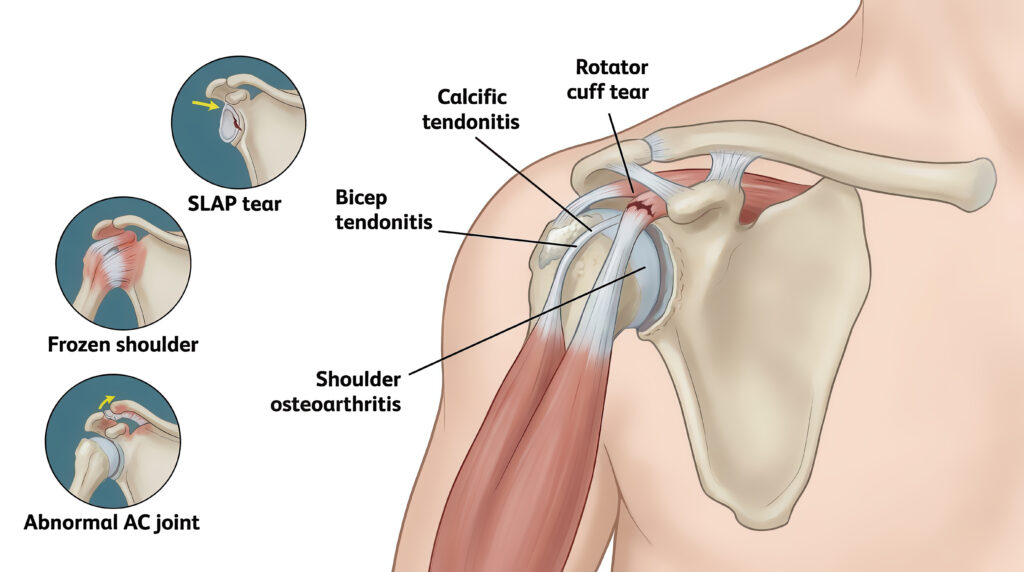
The biceps muscle has two tendons that attach it to the shoulder:
Long Head of the Biceps Tendon
The long head travels through the shoulder joint and attaches to the superior labrum.
It helps:
- Stabilize the shoulder
- Assist overhead activities
- Control lifting motions
- Support shoulder movement
Short Head of the Biceps Tendon
The short head attaches outside the shoulder joint and is less commonly injured.
In workers’ compensation cases, injuries most often involve the long head of the biceps tendon.
See Labral Tears.
Common Work-Related Causes of Biceps Tendon Tears
Biceps tendon tears are strongly associated with:
- Heavy lifting
- Sudden pulling injuries
- Catching falling objects
- Falls onto an outstretched arm
- Shoulder dislocations
- Machinery accidents
- Repetitive overhead work
- Forceful pushing or pulling
- Vehicle accidents
- Construction accidents
These mechanisms are fully consistent with compensable injuries under Texas workers’ compensation.
How Biceps Tendon Tears Occur
A strong causation analysis should explain the biomechanics of injury.
Heavy Lifting Injuries
One of the most common workplace mechanisms.
The Biomechanics
When a worker lifts a heavy object away from the body, the shoulder and biceps tendon must stabilize the load.
This creates:
- Tensile forces
- Rotational forces
- Eccentric loading
If the load exceeds the structural capacity of the tendon, fibers may begin to tear.
In many cases the injury occurs when:
- The object unexpectedly shifts
- The worker loses balance
- The worker attempts to catch a dropping load
Catching a Falling Object
This mechanism frequently appears in workers’ compensation litigation.
The Biomechanics
When a worker attempts to stop a falling object:
- The shoulder rapidly decelerates
- The biceps contracts forcefully
- The tendon absorbs tremendous eccentric loading forces
Eccentric loading is one of the most damaging loads a tendon can experience.
The sudden force may result in:
- Partial tearing
- Complete rupture
- Labral injury
- Rotator cuff injury
Falls Onto an Outstretched Arm
Falls frequently cause simultaneous injury to:
- The rotator cuff
- Labrum
- Biceps tendon
The Biomechanics
As body weight travels through the arm, the shoulder experiences:
- Traction forces
- Compression forces
- Rotational stress
The biceps tendon attempts to stabilize the shoulder during impact.
These forces may exceed the tissue’s tensile limits and cause tearing.
Repetitive Overhead Work
Workers in construction, manufacturing, painting, electrical work, and warehousing frequently perform repetitive overhead activities.
The Biomechanics
Repeated overhead use can create:
- Tendon inflammation
- Friction within the bicipital groove
- Shoulder instability
- Progressive tendon degeneration
Over time, additional workplace stress may convert a degenerative tendon into a symptomatic tear.
Types of Biceps Tendon Tears
Lorem ipsum dolor sit amet, consectetur adipiscing elit. Ut elit tellus, luctus nec ullamcorper mattis, pulvinar dapibus leo.
Partial Thickness Tear
Only a portion of the tendon is damaged.
Symptoms often include:
- Pain
- Weakness
- Clicking
- Loss of endurance
Complete Long Head Tear
The tendon completely ruptures.
Workers often report:
- A sudden popping sensation
- Immediate pain
- Bruising
- Arm weakness
Distal Biceps Tendon Tear
Although more commonly considered an elbow injury, distal tears may occur during lifting accidents.
These injuries frequently result in substantial strength loss.
SLAP-Associated Biceps Injury
The biceps tendon attachment may tear the superior labrum.
See Labral Tears.
Symptoms of a Biceps Tendon Tear
Workers commonly report:
- Shoulder pain
- Pain in the front of the shoulder
- Weakness
- Popping sensations
- Difficulty lifting
- Reduced endurance
- Night pain
- Pain with overhead activities
- Arm cramping
- Cosmetic deformity (“Popeye deformity”)
Symptoms frequently worsen with work activities.
Popeye Deformity
A complete rupture of the long head tendon may cause the biceps muscle to retract downward.
This creates a bulge in the upper arm commonly known as a:
Popeye Deformity
Workers may notice:
- Visible muscle bunching
- Weakness
- Cramping
- Loss of endurance
This objective finding often supports traumatic causation.
Biceps Tendon Tears Often Occur With Other Shoulder Injuries
Biceps pathology frequently occurs alongside:
- Rotator cuff tears
- Labral tears
- Shoulder instability
- Shoulder impingement
- Shoulder dislocations
- AC joint injuries
A complete shoulder evaluation is often necessary.
Diagnosis of Biceps Tendon Tears
Workers may be entitled to:
Physical Examination
A physician may evaluate:
- Tenderness
- Strength
- Range of motion
- Stability
- Deformity
X-Ray
Used to evaluate:
- Arthritis
- Bone abnormalities
- Alternative causes of pain
MRI
MRI commonly identifies:
- Partial tears
- Complete ruptures
- Labral injuries
- Rotator cuff injuries
Ultrasound
Often useful for:
- Tendon visualization
- Dynamic evaluation
- Tendon instability
Accurate diagnosis is essential for securing appropriate treatment and benefits.
Medical Treatment for Biceps Tendon Tears
Workers may be entitled to:
Conservative Treatment
Some injuries respond to:
- Anti-inflammatory medications
- Physical therapy
- Activity modification
- Work restrictions
Injections
Treatment may include:
- Corticosteroid injections
- Ultrasound-guided injections
Surgery
More serious injuries may require:
- Biceps tenodesis
- Biceps tenotomy
- Tendon repair
- Labral repair
- Rotator cuff repair
Rehabilitation
After surgery workers often require:
- Physical therapy
- Motion restoration
- Strengthening
- Functional retraining
– Functional Restoration Programs
Recovery Timeline
Typical recovery includes:
- Mild tears: 6–12 weeks
- Conservative treatment: 2–4 months
- Biceps tenodesis: 4–6 months
- Complex shoulder reconstruction: 6–12 months
Workers performing heavy labor often require prolonged restrictions.
Complications of Biceps Tendon Tears
If untreated or undertreated, biceps tendon tears can lead to:
- Chronic pain
- Persistent weakness
- Shoulder instability
- Cramping
- Reduced endurance
- Loss of lifting ability
- Post-traumatic arthritis
- Permanent impairment
These complications often increase impairment ratings.
Impairment Ratings for Biceps Tendon Tears
Impairment ratings may be based on:
- Loss of range of motion
- Strength deficits
- Surgical outcomes
- Chronic pain
- Functional limitations
- Associated shoulder injuries
Workers with persistent weakness and loss of function frequently qualify for measurable permanent impairment.
Why Insurance Companies Dispute Biceps Tendon Tear Claims
Carriers often argue:
- The tear is degenerative
- The condition was preexisting
- Surgery is unnecessary
- MRI findings are age related
- Symptoms are caused by non-work factors
- Treatment exceeds the compensable injury
These disputes can be challenged through:
How MLF Legal Proves Biceps Tendon Tears Are Work-Related
Our Workers’ Compensation Lawyers assist clients by:
- Establishing the mechanism of injury
- Explaining the forces involved in tendon failure
- Securing orthopedic specialist evaluations
- Obtaining MRI evidence
- Fighting for surgery approvals
- Preparing workers for designated doctor examinations
- Challenging low impairment ratings
- Winning disputes at BRCs and CCHs
Biceps tendon tear claims are highly winnable when supported by proper medical evidence.
The Bottom Line
Biceps tendon tears are serious shoulder injuries that can significantly affect a worker’s strength, endurance, and ability to perform physical job duties. Whether the injury results from heavy lifting, a fall, a sudden pull, or repetitive overhead work, prompt diagnosis and treatment are critical to maximizing recovery and protecting workers’ compensation benefits.
Call to Action
If you suffered a biceps tendon tear at work, call the workers’ compensation lawyers at MLF Legal today.
We fight for injured workers — not insurance companies.
FAQs: Biceps Tendon Tears in Texas Workers’ Compensation Claims
Yes. Biceps tendon tears are compensable when caused or aggravated by workplace trauma or repetitive work activities.
A Popeye deformity occurs when a ruptured biceps tendon retracts and causes the muscle to bunch in the upper arm.
Some do not, but significant tears often require procedures such as biceps tenodesis or tendon repair.
Yes. Heavy lifting is one of the most common mechanisms of injury.
Yes. Persistent weakness, pain, loss of endurance, and surgical outcomes may support a permanent impairment rating.
Injured at work in Texas and your employer doesn’t have workers’ comp?
You may have the right to sue and recover full compensation.
Contact MLF Legal today for a free consultation. You pay nothing unless we win your case.
Next Steps:
1st
Sign up For a Free One-on-One Work Comp Case Evaluation
NEXT LEGAL STEP
Get a Legal Opinion
Contact us today to schedule your personalized one-on-one free phone consultation with one of our dedicated legal professionals. Our experienced Worker’s Comp Lawyers are here to provide the expert legal guidance and support you need throughout the entire process of your case.
We understand the complexities involved in Worker’s Compensation claims and are committed to helping you achieve the best possible outcome. Don’t hesitate to reach out and take the first step toward securing the justice you deserve.
2nd
Download Free E-Books
NEXT LEGAL STEP
Workers' Compensation
Applying for workers compensation can be a challenging process. It involves filing a claim, providing medical documentation, and navigating the approval process. Seeking guidance from a workers’ compensation attorney can help ensure your rights are protected and your claim is handled properly.
LET’S GET STARTED
Call MLF Legal today
214-357-1782
Fill out our online form
for a free consultation.
We only get paid if we win your case.