
Hand & Finger Injuries in Texas Workers’ Compensation Claims
FREE CONSULTATION
Contact Us About Your Case
FREE Consultation Today.
Hand & Finger Injuries in Texas Workers’ Compensation Claims
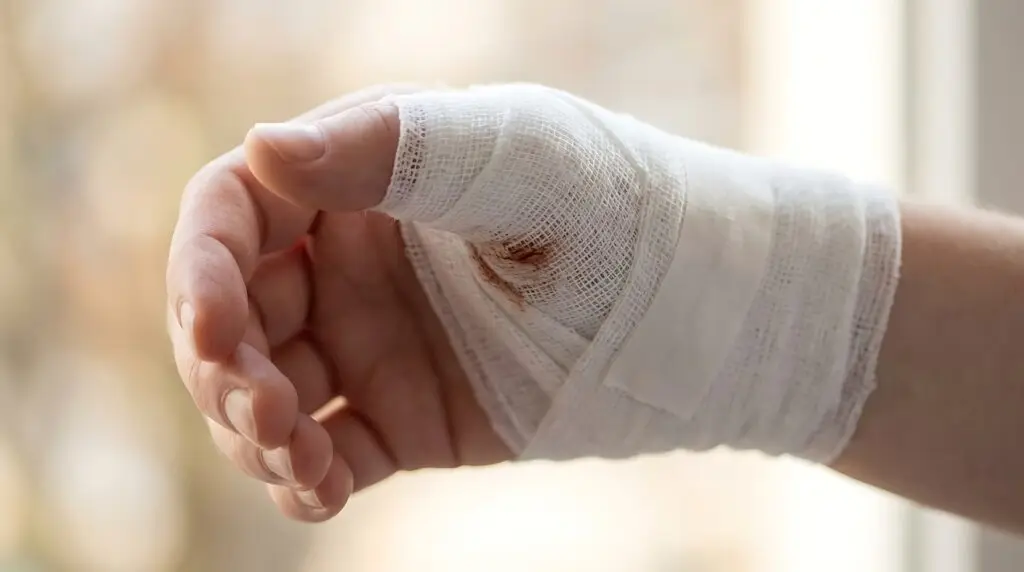
Hand and finger injuries are among the most common and most disabling injuries in Texas workers’ compensation claims. Workers in construction, warehousing, manufacturing, oilfield work, transportation, food service, healthcare, and any job requiring gripping, lifting, pushing, pulling, or tool use are at high risk.
Because the hand is essential for nearly every job task, even “minor” injuries can cause major functional loss — and insurance companies frequently dispute these claims, calling them “degenerative,” “minor,” or “not work‑related.”
This page provides a strategic overview of hand and finger injuries in Texas workers’ compensation, including:
- Anatomy
- Common injury types
- Mechanisms of injury
- Diagnosis
- Treatment
- Impairment ratings
- Insurance disputes
- How MLF Legal’s workers’ comp lawyers win these cases
It also links to deeper subpages for each hand/finger injury category.
Hand & Finger Anatomy Overview
The hand is made up of:
- Bones: metacarpals, phalanges (proximal, middle, distal)
- Tendons: flexor and extensor tendons
- Ligaments: stabilizing structures connecting bones
- Nerves: median, ulnar, and radial nerves
- Blood vessels: digital arteries and veins
- Soft tissue: pulleys, sheaths, fascia
This complexity means hand injuries often involve multiple structures, making diagnosis and treatment more challenging.
Common Work Related Hand & Finger Injuries
Below are the most frequent hand and finger injuries seen in Texas workers’ compensation claims
1. Hand & Finger Fractures
Common types:
2. Flexor Tendon Injuries
Cause difficulty gripping or making a fist.
3. Extensor Tendon Injuries
Cause difficulty lifting or extending the fingers.
4. Trigger Finger (Stenosing Tenosynovitis)
Painful catching or locking of the finger.
See Trigger Finger.
5. Carpal Tunnel Syndrome (Median Nerve Compression)
Often begins in the hand with numbness and tingling.
6. Ulnar Nerve Compression (Guyon’s Canal Syndrome)
Causes numbness in ring/little fingers and grip weakness.
7. Radial Nerve Compression
Burning pain and numbness on the back of the hand.
8. Finger Dislocations
Often caused by crush injuries, falls, or sudden pulling.
See finger dislocations.
9. Hand Sprains & Ligament Tears
Includes collateral ligament tears and MCP/IP joint instability.
See Hand Ligament Tears.
10. Crush Injuries
Severe trauma from machinery, vehicles, or falling objects.
See Hand Crush Injuries.
11. Amputations & Partial Amputations
High‑severity injuries requiring surgery and long‑term care.
12. Hand Arthritis (Post Traumatic)
Develops after fractures, tendon injuries, or ligament tears.
See Hand Arthritis.
How Hand & Finger Injuries Happen at Work
Common mechanisms include:
- Machinery accidents
- Crush injuries
- Slips and trips
- Falls from height
- Heavy lifting
- Repetitive gripping or twisting
- Tool vibration
- Vehicle collisions
- Direct blows
- Overuse and repetitive strain
- Working in awkward positions
These mechanisms are fully consistent with compensable hand injuries.
Symptoms of Hand & Finger Injuries
Workers often report:
- Pain
- Swelling
- Clicking or popping
- Weak grip strength
- Numbness or tingling
- Instability
- Loss of range of motion
- Difficulty lifting or carrying
- Difficulty using tools
- Finger locking or catching
Diagnosis of Hand & Finger Injuries
Diagnosis may include:
- Physical examination
- X‑ray
- MRI
- CT scan
- Ultrasound
- Nerve conduction studies (NCS/EMG)
Accurate diagnosis is essential for proving causation and securing treatment.
Medical Treatment for Hand & Finger Injuries
Workers may be entitled to:
- Anti‑inflammatory medications
- Bracing or splinting
- Physical therapy
- Activity modification
- Corticosteroid injections
- Tendon repair
- Fracture fixation
- Nerve decompression
- Ligament reconstruction
- Amputation or revision surgery
- Work hardening
- Functional restoration programs
Complications of Hand & Finger Injuries
If untreated or undertreated, hand injuries can lead to:
- Chronic pain
- Instability
- Nerve damage
- Loss of grip strength
- Post‑traumatic arthritis
- Permanent impairment
- Finger deformity
- Loss of function
Impairment Ratings for Hand & Finger Injuries
Impairment ratings may be based on:
- Loss of motion
- Strength deficits
- Nerve damage
- Surgical outcomes
- Chronic pain
- Instability
- Amputation level
Hand injuries frequently result in measurable impairment.
Why Insurance Companies Dispute Hand & Finger Injuries
Carriers often argue:
- The injury is “degenerative”
- Symptoms are “intermittent”
- The mechanism was “insufficient”
- The worker had prior hand pain
- Nerve symptoms are “unrelated”
- The condition is “not work‑related”
These disputes can be challenged through:
See Aggravation Injuries.
How MLF Legal Helps Injured Workers With Hand & Finger Injuries
We assist clients by:
- Proving the hand injury is work‑related
- Securing causation letters
- Challenging degenerative‑condition arguments
- Securing imaging and specialist referrals
- Fighting for injections or surgery
- Preparing workers for designated doctor exams
- Challenging low impairment ratings
- Winning disputes at BRCs and CCHs
Hand injuries are winnable — but only with the right evidence and strategy.
The Bottom Line
Hand and finger injuries are common — and commonly disputed — in Texas workers’ compensation. If you suffered a hand injury at work, you need a lawyer who understands the medical issues, the legal standards, and the strategies necessary to win your case.
Call MLF Legal Today!
If you suffered a hand or finger injury at work, call the Texas Workers’ Compensation Lawyers at MLF Legal today.
📞 214‑357‑1782
We fight for injured workers — not insurance companies.
FAQs: Hand & Finger Injuries in Texas Workers’ Compensation Claims
Yes. They are compensable if caused or aggravated by work activities.
Many do — especially fractures, tendon injuries, and nerve compression.
X‑ray, MRI, CT, ultrasound, and nerve conduction studies.
You can challenge the denial through extent‑of‑injury litigation.
Yes. Loss of motion, nerve injury, and surgical outcomes often result in measurable impairment.
Injured at work in Texas and your employer doesn’t have workers’ comp?
You may have the right to sue and recover full compensation.
Contact MLF Legal today for a free consultation. You pay nothing unless we win your case.
Next Steps:
1st
Sign up For a Free One-on-One Work Comp Case Evaluation
NEXT LEGAL STEP
Get a Legal Opinion
Contact us today to schedule your personalized one-on-one free phone consultation with one of our dedicated legal professionals. Our experienced Worker’s Comp Lawyers are here to provide the expert legal guidance and support you need throughout the entire process of your case.
We understand the complexities involved in Worker’s Compensation claims and are committed to helping you achieve the best possible outcome. Don’t hesitate to reach out and take the first step toward securing the justice you deserve.
2nd
Download Free E-Books
NEXT LEGAL STEP
Workers' Compensation
Applying for workers compensation can be a challenging process. It involves filing a claim, providing medical documentation, and navigating the approval process. Seeking guidance from a workers’ compensation attorney can help ensure your rights are protected and your claim is handled properly.
LET’S GET STARTED
Call MLF Legal today
214-357-1782
Fill out our online form
for a free consultation.
We only get paid if we win your case.