
Wrist Nerve Compression Injuries in Texas Workers’ Compensation Claims
FREE CONSULTATION
Contact Us About Your Case
FREE Consultation Today.
Wrist Nerve Compression Injuries in Texas Workers’ Compensation Claims
Wrist nerve compression injuries are among the most disabling — and most frequently disputed — conditions in Texas workers’ compensation claims. The wrist contains three major nerves:
- Median nerve (carpal tunnel)
- Ulnar nerve (Guyon’s canal)
- Radial nerve (superficial radial nerve entrapment)
When compressed, these nerves cause numbness, tingling, burning pain, weakness, and loss of grip strength. Workers often struggle with tool use, lifting, gripping, typing, and repetitive tasks.
Despite clear medical evidence, insurance carriers frequently deny these claims, calling them “degenerative,” “non‑work‑related,” or “not caused by repetitive strain.” This post explains how wrist nerve compression injuries develop, how they’re diagnosed, what treatment is available, and how injured workers can protect their claims.
Wrist Nerve Anatomy Overview
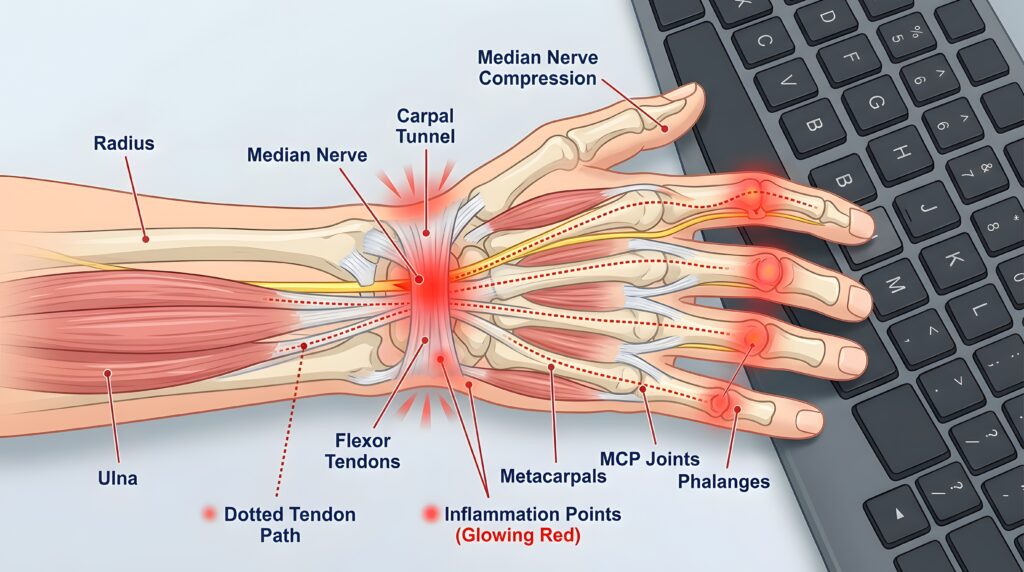
The wrist contains three primary nerves:
- Median nerve — controls thumb, index, and middle finger sensation and grip strength
- Ulnar nerve — controls ring/little finger sensation and intrinsic hand muscles
- Radial nerve — provides sensation to the back of the hand and assists wrist extension
Each nerve travels through narrow anatomical tunnels that can become compressed during work activities.
See Wrist Injuries.
Common Work Related Causes of Nerve Compression
Nerve compression injuries are strongly associated with:
- Repetitive gripping
- Tool vibration (drills, grinders, jackhammers)
- Forceful grasping
- Assembly line work
- Awkward wrist positioning
- Frequent lifting
- Direct blows to the wrist
- Prolonged typing or scanning
- Heavy manual labor
These mechanisms are fully consistent with compensable injuries under Texas workers’ compensation.
The Three Major Wrist Nerve Compression Injuries
1. Carpal Tunnel Syndrome (Median Nerve Compression)
Carpal tunnel syndrome (CTS) occurs when the median nerve becomes compressed inside the carpal tunnel.
Symptoms
- Numbness/tingling in thumb, index, middle fingers
- Burning pain
- Nighttime symptoms
- Weak grip strength
- Dropping objects
Diagnosis
- Phalen’s test
- Tinel’s sign
- NCS/EMG (gold standard)
- Ultrasound
- MRI
Treatment
- Bracing
- Anti‑inflammatory medications
- Steroid injections
- Carpal tunnel release surgery
2. Ulnar Nerve Compression (Guyon’s Canal Syndrome)
Ulnar nerve compression occurs in Guyon’s canal, a narrow tunnel on the ulnar (little finger) side of the wrist.
Symptoms
- Numbness in ring/little fingers
- Weak grip
- Difficulty spreading fingers
- Pain on the ulnar side of the wrist
- Clawing in severe cases
See Ulnar Nerve Injuries.
Common Work‑Related Causes
- Tool vibration
- Repetitive pressure on the palm
- Direct trauma
- Heavy gripping
Diagnosis
- Tinel’s sign at Guyon’s canal
- NCS/EMG
- Ultrasound
- MRI
Treatment
- Bracing
- Activity modification
- Steroid injections
- Surgical decompression
3. Radial Nerve Compression (Superficial Radial Nerve Entrapment)
Radial nerve compression — often called Wartenberg’s syndrome — affects the superficial radial nerve on the thumb‑side of the wrist.
Symptoms
- Burning pain on the back of the hand
- Numbness near the thumb
- Pain worsened by gripping
- Sensitivity to touch
Common Work‑Related Causes
- Tight gloves
- Repetitive gripping
- Tool vibration
- Direct blows
- Awkward wrist positioning
Diagnosis
- Tinel’s sign over radial nerve
- NCS/EMG
- Ultrasound
Treatment
- Bracing
- Anti‑inflammatory medications
- Activity modification
- Surgical decompression (rare)
How Wrist Nerve Compression Injuries Happen at Work
Common mechanisms include:
- Repetitive gripping or twisting
- Tool vibration
- Heavy lifting
- Direct blows
- Awkward wrist positioning
- Overuse and repetitive strain
- Working in tight or confined spaces
These mechanisms are fully consistent with compensable wrist injuries.
Diagnosis of Wrist Nerve Compression
Diagnosis may include:
- Physical examination
- NCS/EMG
- Ultrasound
- MRI
- Grip strength testing
Accurate diagnosis is essential for proving causation and securing treatment.
Medical Treatment
Workers may be entitled to:
- Anti‑inflammatory medications
- Bracing
- Physical therapy
- Activity modification
- Steroid injections
- Surgical decompression (median, ulnar, or radial nerve)
- Work hardening
- Functional restoration programs
Complications
If untreated or undertreated, nerve compression can lead to:
- Chronic nerve damage
- Grip weakness
- Permanent numbness
- Muscle atrophy
- Loss of fine motor control
- Permanent impairment
Impairment Ratings
Impairment ratings may be based on:
- Sensory deficits
- Grip strength loss
- Nerve conduction abnormalities
- Surgical outcomes
- Chronic pain
- Functional limitations
Wrist nerve compression injuries frequently result in measurable impairment.
Why Insurance Companies Dispute Nerve Compression Claims
Carriers often argue:
- The condition is “degenerative”
- Symptoms are “intermittent”
- The mechanism was “insufficient”
- The worker had prior numbness
- Nerve symptoms are “unrelated”
- The condition is “not work‑related”
These disputes can be challenged through:
See Aggravation Injuries.
How MLF Legal Proves Nerve Compression Is Work Related
Our Workers’ Compensation Lawyers assist clients by:
- Proving nerve compression is caused or aggravated by work
- Challenging “degenerative condition” arguments
- Securing NCS/EMG testing
- Fighting for injections or surgery
- Preparing workers for designated doctor exams
- Challenging low impairment ratings
- Winning disputes at BRCs and CCHs
Wrist nerve compression claims are winnable — but only with the right evidence and strategy.
The Bottom Line
Wrist nerve compression injuries are serious and often disabling. If you suffered median, ulnar, or radial nerve compression at work, you need a lawyer who understands the medical issues, the legal standards, and the strategies necessary to win your case.
Call to Action
If you suffered a wrist nerve compression injury at work, call the Texas workers’ compensation lawyers at MLF Legal today.
We fight for injured workers — not insurance companies.
FAQs: Wrist Nerve Compression Injuries in Texas Workers’ Compensation Claims
Yes. They are compensable if caused or aggravated by work activities.
Moderate to severe cases may require decompression.
NCS/EMG, ultrasound, MRI, and physical exam.
You can challenge the denial through extent‑of‑injury litigation.
Yes. Sensory loss, weakness, and surgical outcomes often result in measurable impairment.
Injured at work in Texas and your employer doesn’t have workers’ comp?
You may have the right to sue and recover full compensation.
Contact MLF Legal today for a free consultation. You pay nothing unless we win your case.
Next Steps:
1st
Sign up For a Free One-on-One Work Comp Case Evaluation
NEXT LEGAL STEP
Get a Legal Opinion
Contact us today to schedule your personalized one-on-one free phone consultation with one of our dedicated legal professionals. Our experienced Worker’s Comp Lawyers are here to provide the expert legal guidance and support you need throughout the entire process of your case.
We understand the complexities involved in Worker’s Compensation claims and are committed to helping you achieve the best possible outcome. Don’t hesitate to reach out and take the first step toward securing the justice you deserve.
2nd
Download Free E-Books
NEXT LEGAL STEP
Workers' Compensation
Applying for workers compensation can be a challenging process. It involves filing a claim, providing medical documentation, and navigating the approval process. Seeking guidance from a workers’ compensation attorney can help ensure your rights are protected and your claim is handled properly.
LET’S GET STARTED
Call MLF Legal today
214-357-1782
Fill out our online form
for a free consultation.
We only get paid if we win your case.