
Can I Work With COPD?
TELL US WHAT HAPPENED SO WE CAN HELP. FREE CONSULTATION

Contact Us About Your Case
FREE Consultation Today.
Can I Work With COPD?
Many people with COPD want to keep working as long as they can. Some people can continue working with COPD if symptoms are mild, controlled with treatment, and compatible with their job duties. Others reach a point where shortness of breath, fatigue, oxygen use, flare-ups, environmental triggers, or frequent absences make full-time work unrealistic.
The question is not simply whether you have COPD. The better question is:
Can you work reliably, safely, and consistently despite COPD?
COPD does not automatically qualify someone for Social Security Disability benefits. Social Security evaluates how COPD affects your ability to perform work activities such as walking, standing, lifting, carrying, climbing, staying on task, attending work, and tolerating workplace conditions.
COPD may affect work when it causes:
- shortness of breath
- chronic coughing
- wheezing
- fatigue
- reduced stamina
- difficulty walking
- difficulty climbing stairs
- oxygen use
- frequent respiratory infections
- COPD exacerbations
- emergency room visits
- hospitalizations
- need for breathing treatments
- environmental restrictions
- medication side effects
This guide explains when a person may still be able to work with COPD, when COPD may become disabling, how Social Security evaluates COPD work limitations, and what medical evidence may help support a disability claim.
What Is COPD?
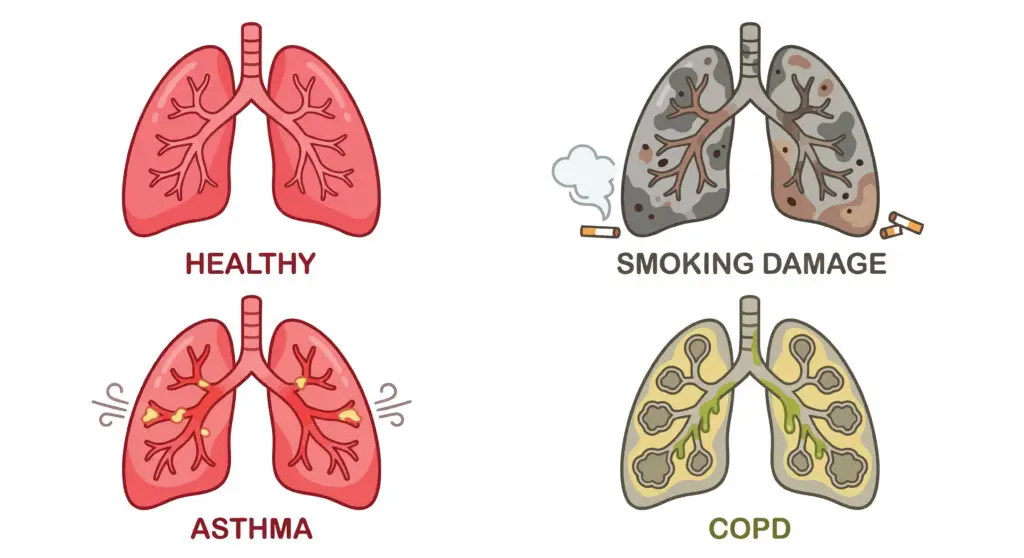
COPD stands for chronic obstructive pulmonary disease. It is a chronic lung disease that makes it harder to breathe. Often, COPD includes chronic bronchitis, emphysema, or both.
COPD can cause:
- shortness of breath
- chronic cough
- mucus production
- wheezing
- chest tightness
- fatigue
- reduced exercise tolerance
- frequent respiratory infections
- flare-ups or exacerbations
COPD is usually a progressive condition. Some people remain stable for long periods. Others experience worsening symptoms over time.
In Social Security Disability claims, the issue is not just the diagnosis. The issue is how COPD affects the ability to work on a regular and continuing basis.
Can You Work With COPD?
Yes, some people can work with COPD. Whether you can work depends on the severity of your symptoms, the type of work you do, your treatment response, and your overall functional capacity.
A person with COPD may be able to keep working if:
- symptoms are mild or moderate
- breathing is stable with medication
- walking and standing are not severely limited
- oxygen is not required or does not interfere with work
- flare-ups are rare
- the workplace does not expose the person to respiratory irritants
- the job allows a manageable pace
- absences are not excessive
A person may have more difficulty working if COPD causes:
- shortness of breath with minimal activity
- inability to walk across a workplace
- difficulty climbing stairs
- inability to lift or carry
- need for frequent breaks
- oxygen use that limits mobility
- frequent rescue inhaler or nebulizer use
- repeated steroid bursts
- emergency room visits
- hospitalizations
- severe fatigue
- missed workdays
- inability to tolerate dust, fumes, smoke, heat, cold, or humidity
Social Security looks at whether COPD prevents full-time competitive employment, not whether a person can perform a few activities at home or function briefly on a good day.
When Does COPD Make Working Difficult?
COPD can make work difficult when breathing symptoms interfere with ordinary job demands.
Work often requires more than sitting still. Even sedentary jobs may require walking from a parking lot, walking to a workstation, attending meetings, using stairs, carrying files, speaking on the phone, staying alert, and maintaining pace.
COPD may interfere with work when symptoms limit:
- walking distance
- standing tolerance
- stair climbing
- lifting and carrying
- bending or stooping
- speaking for long periods
- exposure to workplace air quality
- ability to complete tasks without breathing breaks
- ability to maintain reliable attendance
A person may look comfortable during a short appointment but become short of breath during real-world work activity. That difference matters in a disability claim.
COPD and Shortness of Breath at Work
Shortness of breath is often the central work limitation in COPD.
Shortness of breath may affect the ability to:
- walk across a building
- climb stairs
- stand in one place
- lift or carry supplies
- bend or squat
- talk for long periods
- work at a steady pace
- recover after exertion
- complete a full shift
Some people with COPD can breathe comfortably at rest but become limited with activity. This is important because work usually requires repeated activity throughout the day.
A disability claim should explain:
- what activities trigger shortness of breath
- how far the person can walk
- whether stairs are possible
- how often rest breaks are needed
- whether symptoms improve with medication
- whether breathing problems persist despite treatment
COPD and Fatigue at Work
Fatigue is common with COPD. Breathing may require extra effort, and poor sleep, coughing, low oxygen levels, infections, medication side effects, anxiety, or heart problems may worsen fatigue.
COPD fatigue may affect work by causing:
- reduced stamina
- slower pace
- need for rest breaks
- poor concentration
- difficulty completing tasks
- inability to work full shifts
- inability to work consecutive days
- recovery time after activity
- missed work after flare-ups
Fatigue can be disabling even when a person is not actively gasping for air. Social Security should consider whether fatigue prevents sustained work throughout a normal workday and workweek.
COPD and Walking Limitations
Many jobs require more walking than people realize. A person may need to walk from a parking lot, move between work areas, reach a restroom, attend meetings, or respond to workplace demands.
COPD may limit walking because of:
- shortness of breath
- low oxygen levels
- fatigue
- leg weakness
- dizziness
- need for oxygen equipment
- poor endurance
- coughing or wheezing with exertion
Walking limitations may affect jobs involving:
- retail
- healthcare
- food service
- warehouse work
- security
- teaching
- delivery
- construction
- maintenance
- manufacturing
- cleaning
- office jobs in larger buildings
Helpful evidence may include pulmonary function tests, oxygen saturation readings, exercise testing, treatment notes, and provider statements describing walking tolerance.
COPD and Standing Limitations
Standing can be difficult for people with COPD, especially when shortness of breath, fatigue, dizziness, or weakness is present.
Standing limitations may affect jobs involving:
- cashier work
- assembly work
- nursing or patient care
- food preparation
- security
- teaching
- retail
- manufacturing
- warehouse work
- cleaning
- maintenance
A person may need to sit frequently, use breathing treatments, rest after activity, or avoid prolonged standing.
If standing is limited, medical records should describe how long the person can stand and what symptoms occur with prolonged standing.
COPD and Lifting or Carrying
COPD may limit lifting and carrying because exertion can increase shortness of breath, coughing, chest tightness, fatigue, or dizziness.
Work restrictions may involve limits on:
- heavy lifting
- frequent lifting
- carrying objects while walking
- pushing and pulling
- overhead work
- fast-paced physical activity
- repeated exertion
These restrictions are especially important for people whose past work involved construction, warehouses, delivery, stocking, healthcare, manufacturing, food service, or cleaning.
COPD and Climbing Stairs
Stair climbing is often difficult for people with COPD because it increases breathing demand.
Stair limitations may affect:
- workplace access
- apartment or office buildings
- warehouse jobs
- delivery jobs
- healthcare work
- maintenance work
- security jobs
- emergency response work
- construction work
A person may be able to walk short distances on level ground but still be unable to climb stairs reliably. Medical evidence should document stair tolerance when it is relevant.
COPD and Environmental Work Restrictions
Environmental restrictions are often one of the most important issues in COPD work limitation claims.
A person with COPD may need to avoid:
- dust
- fumes
- smoke
- chemical odors
- cleaning products
- perfumes
- gases
- poor ventilation
- extreme heat
- extreme cold
- humidity
- pollen
- mold
- respiratory irritants
These restrictions may eliminate jobs in:
- construction
- manufacturing
- warehouses
- painting
- automotive work
- cleaning
- food service
- landscaping
- agriculture
- salons
- laboratories
- maintenance
- factories
- industrial settings
Even if a person can sit, stand, or walk for some period of time, environmental restrictions may still prevent many types of work.
COPD and Oxygen Use at Work
Some people with COPD require supplemental oxygen. Oxygen use can significantly affect work capacity.
Social Security may consider:
- if oxygen is prescribed
- whether oxygen is used continuously
- whether oxygen is used only with exertion
- oxygen saturation readings
- portable oxygen needs
- mobility limits caused by oxygen equipment
- workplace compatibility
- safety restrictions around heat, flames, chemicals, or machinery
- whether oxygen use affects pace or attendance
Oxygen use may limit jobs involving physical exertion, hazards, open flames, poor ventilation, climbing, fast-paced movement, or long walking distances.
Although oxygen use does not automatically prove disability, it can be powerful evidence when it shows serious respiratory impairment and work-related restrictions.
COPD and Rescue Inhaler or Nebulizer Use
Many people with COPD use maintenance inhalers, rescue inhalers, nebulizers, or other breathing treatments.
Medication history may include:
- Spiriva
- Trelegy
- Advair
- Symbicort
- Albuterol
- nebulizer treatments
- inhaled steroids
- bronchodilators
- oral steroids
- antibiotics during exacerbations
Frequent rescue inhaler or nebulizer use may show that symptoms remain active despite treatment.
Work-related issues may include:
- needing breaks for breathing treatments
- inability to stay at a workstation
- side effects such as tremors or nervousness
- missed work due to flare-ups
- difficulty maintaining pace
- need for medical follow-up
Prescription Medication use alone does not prove disability. The claim should show what symptoms remain despite treatment.
COPD Exacerbations and Work Absences
COPD can worsen suddenly. These episodes are often called exacerbations, flare-ups, or attacks.
COPD exacerbations may involve:
- increased shortness of breath
- increased coughing
- development of increased mucus
- wheezing
- chest tightness
- respiratory infection
- need for steroids
- need for antibiotics
- urgent care visits
- emergency room treatment
- hospitalization
- recovery time lasting days or weeks
A person may be able to work during stable periods but still be unable to sustain employment if COPD exacerbations cause excessive absences.
In Social Security Disability claims, attendance matters. Competitive employment generally requires reliable attendance, predictable performance, and the ability to complete a normal workweek.
COPD and Hospitalizations
Hospitalizations can be important evidence in a COPD disability claim.
Hospital records may show:
- severity of exacerbations
- oxygen levels
- respiratory distress
- imaging findings
- medication changes
- need for steroids or antibiotics
- need for oxygen
- complications
- recovery time
- worsening disease course
Repeated emergency room visits or hospitalizations may support a claim that COPD is not controlled well enough for reliable full-time work.
COPD and Sedentary Work
Some people assume that if they cannot do physical work, they can still do sedentary work. But sedentary work may still be difficult for someone with COPD.
Sedentary jobs still require:
- regular attendance
- staying on task
- maintaining pace
- walking to and from the workstation
- walking to restrooms or meetings
- speaking on the phone
- sitting upright
- handling stress
- tolerating workplace air quality
- completing a full workday
COPD may prevent sedentary work if the person:
- needs excessive breathing breaks
- has severe fatigue
- cannot walk enough to function in the workplace
- requires oxygen that limits mobility
- has frequent exacerbations
- misses too much work
- cannot tolerate dust, fumes, perfumes, or poor ventilation
- becomes off task from shortness of breath or coughing
- cannot maintain pace because of fatigue
A disability claim should explain why even seated work is not realistic when that is the issue.
COPD and Physical Work
COPD may prevent physical work earlier than sedentary work because physical jobs often require exertion.
For example, COPD may interfere with jobs requiring:
- lifting
- carrying
- walking
- standing
- climbing
- bending
- outdoor work
- heat exposure
- dust or fumes
- fast-paced movement
- use of tools or equipment
- work in warehouses, factories, or construction sites
A person with COPD may not be able to return to past work if that work required exertion or exposure to respiratory irritants.
COPD and Past Work
Social Security considers whether a person can return to past work.
COPD may prevent past work involving:
- construction
- warehouse work
- delivery work
- maintenance
- manufacturing
- cleaning
- food service
- retail
- healthcare
- security
- landscaping
- truck driving
- factory work
- industrial labor
- outdoor work
The more physically demanding or environmentally irritating the past work, the more important COPD-related restrictions may become.
COPD, Age, and Vocational Factors
Social Security also considers age, education, and work history.
This can be important for older workers with COPD.
For example:
- A worker over 50 with a history of heavy labor may have fewer realistic job options.
- A person with limited education may have fewer transferable skills.
- A person who must avoid fumes, dust, heat, cold, or humidity may have fewer available jobs.
- A person who cannot walk or stand long enough for light work may be limited to sedentary work.
- A person who cannot sustain even sedentary work may qualify based on RFC limitations.
The medical evidence must still support the restrictions.
COPD and Residual Functional Capacity
Residual Functional Capacity, or RFC, is Social Security’s assessment of what a person can still do despite medical limitations.
For COPD, RFC limitations may involve:
- limited walking
- limited standing
- no or limited lifting
- limited carrying
- limited climbing
- no ladders or scaffolds
- avoidance of dust, fumes, smoke, gases, chemicals, odors, or poor ventilation
- avoidance of heat, cold, or humidity
- need for oxygen
- need for breathing breaks
- reduced pace
- absences from exacerbations
- off-task time from shortness of breath or fatigue
- no hazardous machinery if dizziness or oxygen use is involved
- inability to complete a full workday
A strong COPD disability claim explains how breathing symptoms translate into work restrictions.
For example:
- Shortness of breath may limit walking, standing, lifting, and pace.
- Fatigue may reduce stamina and productivity.
- Oxygen use may create mobility and safety limitations.
- Exacerbations may cause absences.
- Environmental triggers may eliminate many jobs.
- Medication side effects may affect pace, safety, or reliability.
Can You Work Full-Time With COPD?
Some people can work full-time with COPD. Others cannot.
The key question is whether the person can work on a regular and continuing basis. Full-time work generally requires the ability to sustain activity throughout a normal workday and workweek.
A person with COPD may struggle with full-time work if they have:
- severe shortness of breath
- limited walking tolerance
- frequent need for breaks
- oxygen use
- repeated exacerbations
- excessive absences
- fatigue that prevents full shifts
- inability to tolerate workplace air quality
- frequent medical appointments
- hospitalizations
- medication side effects
Being able to perform limited chores or attend occasional appointments does not necessarily mean a person can sustain full-time competitive employment.
Can You Work Part-Time With COPD?
Some people with COPD can work part-time but not full-time. This may happen when a person can perform limited activity but cannot sustain a full schedule.
A person may be limited to part-time activity because of:
- fatigue
- shortness of breath
- need for rest after activity
- frequent medical treatment
- recovery time after exertion
- exacerbations
- oxygen use
- limited stamina
For Social Security Disability, the issue is usually whether the person can perform substantial gainful activity on a sustained basis. Part-time work may or may not affect a claim depending on earnings, hours, limitations, and circumstances.
If a person tries to work but cannot sustain the job because of COPD, that failed work attempt may be important evidence.
Should I Quit Working Because of COPD?
This is a medical, financial, and legal decision. A person should not quit work based only on a diagnosis. COPD affects people differently.
Before stopping work, it may help to consider:
- what your doctor says about your restrictions
- whether your job exposes you to respiratory irritants
- whether accommodations are possible
- if symptoms are worsening
- whether oxygen use affects work
- whether absences are becoming excessive
- if and how you can safely perform the job
- whether your earnings affect SSDI or SSI eligibility
- whether your medical records document your work limitations
A social security disability lawyer can help evaluate how COPD-related work problems may affect a potential claim.
Workplace Accommodations for COPD
Some people with COPD may continue working with accommodations. Possible accommodations may include:
- reduced exposure to dust or fumes
- improved ventilation
- avoiding temperature extremes
- closer parking
- modified duties
- reduced lifting
- fewer stairs
- more frequent breaks
- ability to sit as needed
- remote work if job duties allow
- schedule flexibility for medical appointments
- avoiding smoke, chemicals, perfumes, or cleaning products
Accommodations are not always available or effective. If accommodations do not allow a person to work reliably, the person may need to consider whether disability benefits are appropriate.
What Jobs Are Harder With COPD?
COPD may make certain jobs especially difficult, particularly jobs involving exertion or poor air quality.
Difficult jobs may include:
- construction
- roofing
- landscaping
- warehouse work
- factory work
- manufacturing
- cleaning
- food service
- delivery
- truck driving
- auto repair
- painting
- welding
- security
- healthcare jobs requiring walking or lifting
- jobs involving dust, fumes, smoke, chemicals, or extreme temperatures
The exact limitations depend on the person’s symptoms, test results, oxygen needs, and treatment history.
What Jobs Might Be Easier With COPD?
Some people with mild or controlled COPD may do better in jobs that are:
- seated
- low exertion
- climate-controlled
- well ventilated
- flexible
- low exposure to respiratory irritants
- not fast-paced
- not physically demanding
- compatible with medical appointments
However, even seated work may be unrealistic if COPD causes severe fatigue, frequent breaks, oxygen-related limitations, environmental intolerance, or excessive absences.
Medical Evidence That Helps Prove COPD Work Limitations
Strong medical evidence is important because Social Security needs more than a diagnosis.
Helpful evidence may include:
- pulmonology records
- primary care records
- pulmonary function testing
- spirometry results
- FEV1 and FVC measurements
- DLCO testing when performed
- oxygen saturation readings
- exercise oximetry
- arterial blood gas testing
- chest X-rays
- CT scans
- emergency room records
- hospitalization records
- records of COPD exacerbations
- steroid or antibiotic treatment records
- rescue inhaler use
- nebulizer records
- oxygen prescriptions
- sleep study records if relevant
- cardiology records if heart disease or pulmonary hypertension is involved
- medication history
- physician statements about work restrictions
The strongest records connect COPD symptoms to specific work limitations.
Pulmonary Function Testing and COPD Work Capacity
Pulmonary function testing can be important in COPD claims. These tests may measure airflow, lung volume, and gas exchange.
Common evidence may include:
- FEV1
- FVC
- FEV1/FVC ratio
- DLCO
- oxygen saturation
- exercise testing
- bronchodilator response
Pulmonary function test results can support the severity of COPD, but RFC still depends on how the condition affects work activities.
For example, test results may support limits on walking, lifting, climbing, exposure to respiratory irritants, oxygen use, and ability to maintain pace.
Doctor Statements for COPD Work Limitations
A treating provider’s statement may help explain how COPD affects work.
A useful statement may address:
- how far the person can walk
- how long the person can stand
- weight a person can lift
- whether stairs should be limited
- whether oxygen is required
- if respiratory irritants must be avoided
- whether heat, cold, or humidity worsen symptoms
- how often exacerbations occur
- whether breathing breaks are needed
- how often the person may miss work
- whether fatigue affects pace or productivity
- if side effects affect functioning
- whether symptoms persist despite treatment
The most helpful opinions are specific, consistent with medical records, and tied to work-related functions.
Tracking COPD Symptoms for a Disability Claim
A symptom log may help document how COPD affects daily life. A useful log may include:
- shortness of breath episodes
- walking distance
- stair tolerance
- oxygen saturation readings if monitored
- rescue inhaler use
- nebulizer use
- coughing or wheezing episodes
- fatigue level
- environmental triggers
- exacerbation dates
- urgent care or ER visits
- missed work or activities
- medication side effects
- recovery time after activity
A symptom log is not a substitute for medical evidence, but it may help support treatment records and testimony.
Signs COPD May Prevent Full-Time Work
COPD may support disability eligibility when it causes:
- shortness of breath with minimal activity
- inability to walk across a workplace
- inability to stand long enough for work
- complete inability to climb stairs
- need for oxygen
- frequent rescue inhaler or nebulizer use
- repeated steroid bursts
- frequent COPD exacerbations
- emergency room visits
- hospitalizations
- severe fatigue
- inability to tolerate respiratory irritants
- missed workdays
- inability to complete a full workday
- inability to sustain full-time work
When these limitations are medically documented and persistent, the claim may be stronger.
When to Speak With a Social Security Disability Lawyer
COPD disability claims can be challenging because Social Security may focus heavily on test results without fully appreciating day-to-day work limitations. RFC evidence can be critical.
Many people seek legal help when:
- their disability claim has been denied
- they have COPD but do not meet a listing
- shortness of breath prevents work
- oxygen use affects mobility
- fatigue prevents full shifts
- environmental restrictions eliminate past work
- exacerbations cause absences
- pulmonary function tests do not fully explain their daily limitations
- they are preparing for a disability hearing
Our social security disability attorneys can help evaluate how COPD affects RFC and what evidence may be needed.

FAQs: Can I Work With COPD?
Can I work with COPD?
Some people can work with COPD if symptoms are controlled and job duties are compatible with their limitations. Others cannot sustain full-time work because of shortness of breath, fatigue, oxygen use, flare-ups, environmental restrictions, or absences.
Does COPD automatically qualify for Social Security Disability?
No. COPD does not automatically qualify someone for Social Security Disability. Social Security evaluates the severity of the condition, medical testing, treatment history, symptoms, and work-related limitations.
What COPD symptoms make working difficult?
COPD symptoms that may affect work include shortness of breath, chronic coughing, wheezing, fatigue, low stamina, difficulty walking, difficulty climbing stairs, oxygen use, frequent infections, and COPD exacerbations.
Can COPD prevent sedentary work?
Yes. Sedentary work may still be difficult if COPD causes severe fatigue, frequent breathing breaks, oxygen-related limitations, poor tolerance for workplace air quality, excessive absences, or inability to complete a full workday.
Can I get disability if I use oxygen for COPD?
Oxygen use may support a disability claim, especially if it limits mobility, creates safety restrictions, or shows severe respiratory impairment. However, oxygen use alone does not automatically guarantee approval.
What jobs are hard with COPD?
Jobs involving physical exertion, dust, fumes, smoke, chemicals, poor ventilation, heat, cold, humidity, or frequent walking may be difficult for someone with COPD. Examples include construction, warehouses, factories, cleaning, delivery, landscaping, manufacturing, and food service.
What evidence helps prove COPD work limitations?
Helpful evidence may include pulmonology records, pulmonary function tests, oxygen saturation readings, imaging, emergency room records, hospitalization records, exacerbation records, rescue inhaler use, oxygen prescriptions, and doctor statements about work restrictions.
What should I do if I cannot work because of COPD?
You may want to speak with a Social Security Disability attorney to evaluate whether your COPD symptoms, treatment history, medical evidence, RFC limitations, and work history may support a disability claim.
Contact MLF Legal for a Free Disability Case Evaluation
If COPD, shortness of breath, oxygen use, fatigue, respiratory flare-ups, environmental restrictions, medication side effects, or another medical condition prevents you from working, you may qualify for Social Security Disability benefits.
MLF Legal represents disability applicants nationwide. Based in Dallas, Texas, we help individuals across the country pursue disability benefits.
Our social security lawyers can review your situation for free and explain your options.
📞 Call MLF Legal at 214-357-1782 to request a free consultation.
Next Steps:
1st Sign up For a Free One-on-One Disability Case Evaluation
Contact us today to schedule your personalized one-on-one free phone consultation with one of our dedicated legal professionals. Our experienced social security lawyers are here to provide the expert legal guidance and support you need throughout the entire process of your case.
We understand the complexities involved in social security disability claims and are committed to helping you achieve the best possible outcome. Don’t hesitate to reach out and take the first step toward securing the justice you deserve.
2nd Download Free E-Books
Social Security Disability
Navigating the Social Security Disability Benefits process can be complex, but understanding the key steps can help. From gathering medical records to completing the application, this process ensures eligible individuals receive the support they need. Seeking guidance from experts can simplify the journey and increase the chances of a successful outcome.
Call MLF Legal today
214-357-1782
Fill out our online form
for a free consultation.
We only get paid if we win your case.