
Why You Should Never Rely on the Other Driver’s Photos After a Crash
FREE CONSULTATION
Contact Us About Your Case
FREE Consultation Today.
Why You Should Never Rely on the Other Driver’s Photos After a Crash
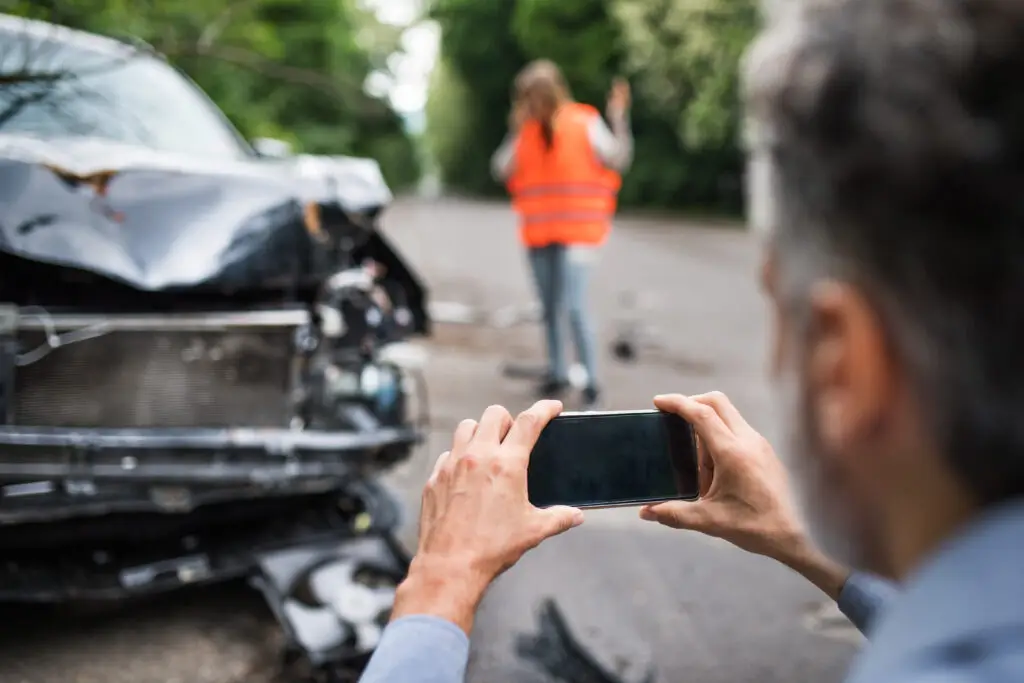
After a car wreck, everything happens fast. People are shaken, confused, and trying to figure out what to do next. In the chaos, the other driver may say, “Don’t worry — I took photos. I’ll send them to you.” It sounds helpful, but relying on the other driver’s photos is one of the biggest mistakes you can make after a crash.
Photos are some of the most important pieces of evidence in a car wreck claim. They help establish fault, document damage, and preserve details that may disappear within minutes. But when the only photos come from the other driver — the person who may be responsible for the crash — you’re putting your entire claim in their hands.
At MLF Legal, we’ve seen countless cases where the other driver’s photos were incomplete, misleading, or never provided at all. Protecting your claim starts with protecting your evidence.
Why Photos Matter So Much After a Car Wreck
Photos help tell the story of the crash. They capture:
- Vehicle damage
- Road conditions
- Weather
- Traffic signals
- Skid marks
- Debris patterns
- Vehicle positions
- Injuries
- Surrounding hazards
Insurance companies rely heavily on photos to determine fault. Without your own photos, you’re at a disadvantage from the start.
The Risks of Relying on the Other Driver’s Photos
Depending on the other driver for evidence is dangerous. Here’s why.
1. Their Photos May Be Selective or Incomplete
The other driver has every incentive to take photos that:
- Minimize their damage
- Exaggerate your damage
- Avoid showing skid marks
- Avoid showing their lane position
- Avoid capturing traffic signs or signals
- Avoid showing contributing hazards
They may take photos that help their version of events — not yours.
2. They May Take Photos That Misrepresent the Scene
A driver who knows they caused the crash may:
- Move their vehicle before taking photos
- Angle the camera to hide damage
- Zoom in to avoid showing context
- Take photos only of your vehicle
- Avoid taking photos of their own skid marks or debris
A single misleading photo can distort the entire narrative.
3. They May Never Send the Photos at All
This is extremely common. Drivers often promise to send photos but:
- Forget
- Change their mind
- Block your number
- Give false contact information
- Let their insurance company tell them not to share
Once they leave the scene, you lose control of the evidence.
4. Their Photos May Be Used Against You
If the other driver’s photos are the only ones available, the insurance company may:
- Use them to argue you were at fault
- Claim the damage is inconsistent with your story
- Suggest the crash was minor
- Downplay your injuries
- Dispute the severity of the impact
Without your own photos, you have no way to counter their narrative.
5. Their Photos May Not Capture Your Injuries
Injury documentation is critical. The other driver will not:
- Photograph your bruises
- Capture your seatbelt marks
- Document cuts or swelling
- Show your pain or limited mobility
Without your own photos, you lose valuable evidence of your injuries.
6. Their Photos May Not Capture Time Sensitive Evidence
Some evidence disappears quickly, such as:
- Skid marks
- Debris
- Fluid leaks
- Weather conditions
- Traffic patterns
- Vehicle positions
If the other driver takes photos too late — or not at all — that evidence is gone forever.
Why You Must Take Your Own Photos
Taking your own photos ensures:
- Accuracy — You capture the scene as it truly was.
- Completeness — You document everything, not just what helps the other driver.
- Control — You decide what evidence is preserved.
- Protection — You prevent the other driver from shaping the narrative.
Your photos can make or break your claim.
What Photos You Should Take After a Crash
If you’re physically able, take photos of:
Vehicle Damage
- All sides of both vehicles
- Close‑ups and wide shots
- License plates
- Interior damage
The Scene
- Roadway
- Traffic signals
- Skid marks
- Debris
- Weather conditions
- Construction zones
Vehicle Positions
- Before vehicles are moved
- From multiple angles
- Showing lane markings
Injuries
- Bruises
- Cuts
- Swelling
- Seatbelt marks
Other Evidence
- Driver’s license
- Insurance card
- Witness vehicles or people
The more photos you take, the better.
How Insurance Companies Use Photos Against You
Insurance companies often try to:
- Claim the damage is inconsistent with your injuries
- Argue the crash was low‑impact
- Suggest you were partially at fault
- Dispute the severity of the collision
- Minimize your medical treatment
Your photos help counter these tactics.
How MLF Legal Uses Photos to Strengthen Your Case
Our personal injury lawyers use your photos to:
- Reconstruct the crash
- Identify negligent behavior
- Challenge inaccurate statements
- Support claims for pain and suffering
- Prove speed, distraction, or improper lane use
- Demonstrate the severity of the impact
Photos often lead to faster, higher settlements because they remove uncertainty.
What to Do If You Didn’t Take Photos at the Scene
All is not lost. We can still help by:
- Obtaining surveillance footage
- Securing dash‑cam video
- Gathering witness photos
- Requesting police body‑cam footage
- Inspecting vehicle damage
- Using accident reconstruction experts
But taking your own photos is always the best option.
When to Call a Dallas Car Accident Lawyer
You should contact a lawyer immediately if:
- The other driver took photos but you didn’t
- The insurance company is disputing fault
- You suffered injuries
- You’re unsure how to use the available evidence
- You received a low settlement offer
Evidence is everything — and we know how to use it.
Call the Dallas car wreck lawyers at MLF Legal at 214‑357‑1782 for a free consultation.
FAQs: Why You Should Never Rely on the Other Driver’s Photos After a Crash
Do not rely on it. Many drivers never send the photos, send only selective images, or send low‑quality pictures that don’t show the full scene. Once they leave the scene, you lose control of the evidence. Always take your own photos, even if the other driver seems cooperative.
Yes. If their photos are the only ones available, the insurance company may use them to argue that the crash was minor, that you were partially at fault, or that your injuries are inconsistent with the damage. Without your own photos, it becomes harder to challenge their interpretation.
Your health comes first. If you’re unable to take photos, ask a passenger, witness, or family member to do it. If no one can, your lawyer can still gather evidence later through surveillance footage, dash‑cam video, police body‑cam footage, and vehicle inspections.
Not always. Police may take photos in serious crashes, but in many cases — especially minor collisions — they do not. Even when they do, their photos may not capture everything you need for a strong claim.
Yes. Photos taken later are still helpful, but they may not show critical details like vehicle positions, skid marks, or debris patterns. That’s why taking photos immediately after the crash is so important.
As many as possible. There is no such thing as “too many” photos after a crash. Take wide shots, close‑ups, multiple angles, and photos of anything that might matter. Your lawyer will sort through them and determine what is most useful.
Injured at work in Texas and your employer doesn’t have workers’ comp?
You may have the right to sue and recover full compensation.
Contact MLF Legal today for a free consultation. You pay nothing unless we win your case.
Call MLF Legal today
214-357-1782
Fill out our online form
for a free consultation.
We only get paid if we win your case.