
How Do You Prove a Property Owner Knew About a Dangerous Condition?
FREE CONSULTATION
Contact Us About Your Case
FREE Consultation Today.
How Do You Prove a Property Owner Knew About a Dangerous Condition?
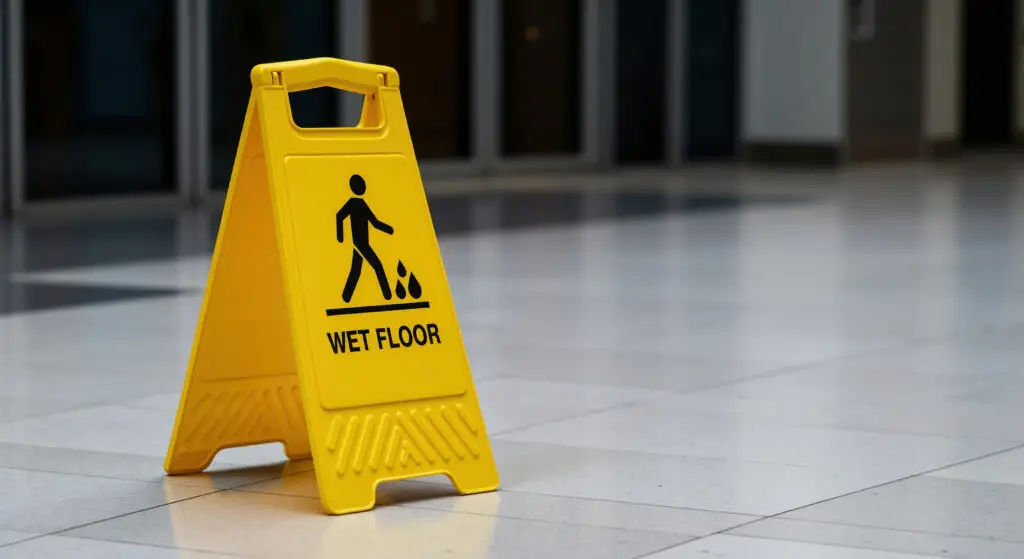
A photograph of a wet floor or broken stair may help explain why you fell. But a Texas premises liability claim often requires another answer: Did the property owner or operator know about the dangerous condition, or should they have discovered it?
To prove a property owner knew about a dangerous condition, you may need complaints, inspection records, surveillance footage, repair requests, or witness testimony. The evidence must relate to the particular condition and the time before your injury.
MLF Legal, PLLC’s personal injury attorneys can investigate notice, evaluate the available records, and explain what your claim requires.
Why Knowledge Matters in a Texas Premises Liability Claim
For a typical injured invitee, Texas law requires proof of actual or constructive knowledge, an unreasonable risk of harm, failure to use reasonable care to address the risk, and an injury proximately caused by that failure.
The Texas Supreme Court discusses these elements in Austin v. Kroger Texas, L.P.. Proving notice is important, but it does not establish every part of a claim.
Your visitor status also matters. Invitee claims generally permit actual or constructive knowledge. Ordinary licensee claims generally require actual knowledge of a dangerous condition unknown to the visitor. Special statutes and circumstances may change the applicable duty.
Actual Knowledge vs. Constructive Knowledge
Actual Knowledge: Awareness of the Existing Condition
Actual knowledge concerns awareness that the dangerous condition existed at the time of the accident. Evidence may include an employee’s observation or a complaint received before the injury.
Knowing that a hazard might develop is different from knowing the relevant condition existed.
Constructive Knowledge: A Condition That Should Have Been Discovered
Constructive knowledge can be established by showing that the condition existed long enough to be discovered through reasonable inspection.
The Texas Supreme Court explains the distinction in Albertsons, LLC v. Mohammadi, No. 23-0041.
For a temporary spill, evidence of how long it existed is often crucial. There is no automatic number of minutes that establishes notice in every case. The timeline and surrounding circumstances require review.
Evidence That May Help Prove Notice
1. Complaints Made Before the Accident
A complaint identifying the same hazard before your injury may help show that the appropriate person received notice.
Relevant records could include:
- Apartment maintenance requests.
- Emails or text messages to management.
- Customer complaints to store employees.
- Work orders describing the specific defect.
The details matter. A report about a broken stair in another building may not establish notice of the stair involved in your fall. Preserve the full message, date, location, and any response.
2. Surveillance Footage
Video may help establish when a condition appeared, who passed through the area, and whether anyone inspected or addressed it.
Footage showing only the fall may leave the notice question unresolved. Earlier footage can be more useful for reconstructing the timeline.
Ask an attorney about promptly seeking preservation. A request does not guarantee that footage exists or that it will be voluntarily released.
3. Inspection and Cleaning Records
Inspection logs may help show when an area was last checked and what staff recorded. Cleaning records can help identify work performed near the incident location.
An internal policy may provide context, but a missed inspection does not automatically prove legally sufficient notice. The records must be assessed alongside evidence of the condition itself.
4. Maintenance and Repair Records
Records concerning a leaking refrigerator, damaged railing, or broken stair may help identify earlier reports and the response.
Focus on whether the records describe the condition involved in your injury. Evidence that equipment required service at some point does not necessarily establish knowledge of the particular danger when the accident occurred.
5. Witnesses and Employee Statements
Someone who saw the hazard before the accident may help establish timing. Someone who reported it may help identify when and to whom notice was given.
Write down statements accurately. For example, “I told the manager about that puddle earlier” warrants investigation into the timing, location, and recipient. Avoid turning an uncertain recollection into a more definite statement.
6. Photographs and Physical Evidence
Photographs can document the condition, location, and warnings. However, a photograph taken after an accident generally does not establish, by itself, how long the condition existed beforehand.
A qualified expert may help evaluate some defects or deterioration. Expert analysis must fit the evidence; it cannot replace missing facts with speculation.
Why the Timeline Is So Important
A temporary spill and a longstanding structural defect present different questions.
For a spill, investigators may compare video timestamps, witness observations, and inspection records. For a damaged stair, repair requests and earlier photographs may be more useful.
In Galvan v. Camden Property Trust, the court explained that evidence of duration is necessary to assess the opportunity to discover a condition under a constructive-knowledge theory. The absence of evidence supporting actual knowledge or the relevant timeline defeated the claim.
A photograph proving a hazard existed at the moment of injury may therefore leave a critical gap.
Does Creating the Condition Automatically Prove Knowledge?
No. Evidence that a defendant created a condition may be relevant, but it does not automatically establish actual knowledge of the resulting danger.
In Mohammadi, the Texas Supreme Court distinguished awareness of circumstances that might lead to a wet floor from actual knowledge of the wet-floor condition. A claim still needs evidence supporting the applicable knowledge requirement.
This distinction matters when a claimant argues that an employee’s handling of merchandise or equipment must have made the business aware of a resulting hazard.
Common Gaps in Notice Evidence
Notice can be difficult to prove when the evidence shows only:
- A hazard after the injury.
- An employee nearby without a reliable timeline.
- A complaint about a different condition.
- General awareness that accidents are possible.
- An assumption that a defect must have existed for a long time.
These gaps do not mean every claim fails. They identify questions that an investigation must address.
What Can You Do to Preserve Evidence?
Seek medical care first. When safe and reasonably possible:
- Photograph the condition and surrounding area.
- Report the accident and request an incident report.
- Obtain witness names and contact details.
- Save earlier complaints and repair requests.
- Preserve original photos, messages, and relevant documents.
- Write down what you observed and what others said.
- Contact an attorney promptly about preservation and deadlines.
Do not recreate a hazard, alter records, or guess about how long a condition existed. Accurate information helps your attorney evaluate both strengths and weaknesses.
Many Texas personal injury lawsuits have a two-year filing period measured from accrual, often the injury date, under Section 16.003. Exceptions may apply. Evidence can disappear much sooner, so do not wait until the deadline approaches.
Contact MLF Legal About an Unsafe Property Injury
Notice is often the difference between identifying a hazard and supporting a premises liability claim. A thorough review asks what the responsible party knew, when they knew it, and what happened afterward.
If you were injured on unsafe property in Dallas–Fort Worth or elsewhere in Texas, MLF Legal can review the circumstances and evaluate the evidence needed to pursue compensation.
Contact the premises liability attorneys at MLF Legal, PLLC to discuss your premises liability injury.
FAQs: How Do You Prove a Property Owner Knew About a Dangerous Condition?
Not necessarily. Relevant employee observations, reports, or constructive-knowledge evidence may matter. Whether knowledge can be attributed to the defendant depends on the facts and applicable law.
It may help if it identifies the relevant condition, was received before the accident, and reached the appropriate party. It does not automatically prove the entire claim.
A photograph may identify the hazard, but additional evidence may be needed to establish knowledge and timing.
Preserve the original message, portal confirmation, email thread, or other delivery records. Witness testimony and the recipient’s records may also warrant investigation.
Possibly. Other evidence may help reconstruct the timeline or establish actual knowledge. Tell your attorney what you know without filling gaps with assumptions.
Injured at work in Texas and your employer doesn’t have workers’ comp?
You may have the right to sue and recover full compensation.
Contact MLF Legal today for a free consultation. You pay nothing unless we win your case.
Call MLF Legal today
214-357-1782
Fill out our online form
for a free consultation.
We only get paid if we win your case.